

Malaysia’s Banking Innovation Race: When Governance Becomes the New Fintech Advantage
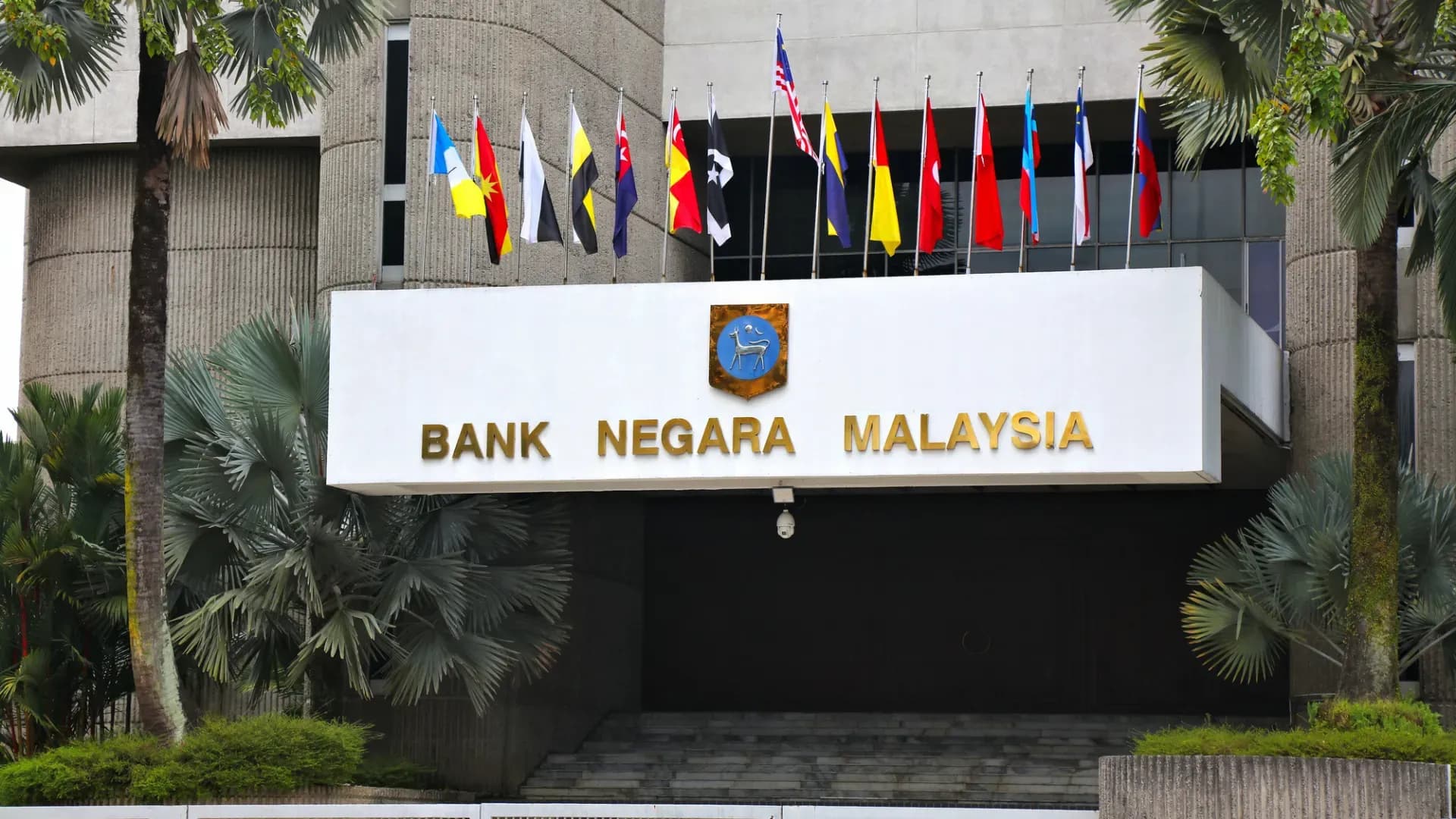

Malaysia is entering a new chapter in financial innovation. Across Southeast Asia, banks and fintech companies are racing to deploy artificial intelligence, digital banking, open finance, tokenisation and instant payments. Yet the defining question for Malaysia may no longer be how quickly its financial institutions can adopt new technology. It may be whether they can build enough trust, governance and resilience around that technology to turn regulation itself into a competitive advantage.
The shift is already visible. Bank Negara Malaysia (BNM) says more than 70% of Malaysian financial service providers have implemented at least one artificial intelligence application. Adoption is increasingly moving beyond experimentation, with financial institutions using AI for productivity, risk management, fraud detection and customer services. For Malaysia, this creates an opportunity to position governance not as a brake on innovation, but as part of the infrastructure that allows innovation to scale safely.
Malaysia’s digital banking market has moved rapidly from licensing and experimentation towards a more mature operating environment. BNM reported that by the end of 2025 all five licensed digital banks had begun operations, collectively serving around 2.4 million customers and holding RM4.2 billion in deposits. Importantly, approximately 65% of their customers came from unserved or underserved segments, including low-income households, young people and gig workers.
This development changes the competitive landscape. Digital banks are no longer simply competing with conventional institutions on application design or transaction speed. Their longer-term proposition depends on whether they can use data intelligently while maintaining customer confidence, responsible lending standards and operational resilience. That is where governance becomes commercially significant. BNM has introduced its Digital Bank Inclusion Monitoring and Evaluation Framework, requiring digital banks to incorporate financial inclusion into strategy, governance and product design. The approach demonstrates a wider regulatory philosophy: technological innovation should produce measurable customer value rather than simply create another digital interface.
Artificial intelligence is perhaps the clearest test of Malaysia’s governance ambitions. AI can help banks detect suspicious transactions, evaluate credit risks, automate compliance processes and personalise financial products. But the more deeply AI becomes embedded in decision-making, the more difficult questions arise around accountability, explainability, bias, data quality and human oversight. BNM Governor Abdul Rasheed Ghaffour highlighted this challenge at the AICB Nexus 2026 conference, arguing that innovation cannot succeed without governance and assurance. He also emphasised that responsibility cannot simply be transferred to an algorithm as AI becomes more influential in financial decision-making.
The Malaysian banking industry has also developed an AI Governance Framework, an industry-led set of guidelines and practices for managing AI-related risks, supported by BNM. This is significant because governance is moving closer to the design stage of financial technology rather than remaining a compliance exercise carried out after products have been developed. For banks, this could ultimately become a competitive differentiator. Customers may appreciate faster decisions, but they also need confidence that automated decisions are secure, explainable and subject to appropriate oversight.
Malaysia’s regulatory sandbox provides another indication of this philosophy. BNM’s framework allows fintech solutions with genuine value propositions to be tested in a controlled environment, while maintaining safeguards around financial stability, transaction integrity, fair conduct and consumer protection. As of June 2026, the sandbox had received 139 applications, with solutions spanning insurance, money services, banking and lending, payments and other areas. Five solutions were in testing, including initiatives involving digital banking, remittances, electronic know-your-customer processes and video KYC.
The introduction of the Green Lane in 2024 also created an accelerated route for financial institutions with strong risk-management capabilities to test innovative solutions facing regulatory barriers. This represents a potentially important model for the wider region: rather than treating regulation and innovation as competing forces, regulators can create structured pathways through which responsible experimentation becomes easier. The commercial implication is straightforward. A predictable regulatory environment can reduce uncertainty for fintech investors, banks and technology providers while giving customers stronger protections.
The next major transformation may come from open finance. BNM is developing a framework for secure, consent-based sharing of customer information across the financial sector, with phased implementation planned from 2027. The objective is to establish a more interoperable ecosystem in which customers have greater control over their financial data and institutions can build new services around authorised information sharing. PayNet’s Open Finance Malaysia initiative illustrates the potential commercial impact. Secure data sharing could support more sophisticated personal financial management, improve credit underwriting and potentially help institutions serve customers who have historically lacked extensive credit records.
This could create a new competitive arena. Banks may increasingly compete not only through interest rates or branch networks, but through the quality of financial insights, consent mechanisms and digital experiences they provide. However, open finance also raises the value of governance. The more financial information moves between institutions and platforms, the greater the importance of cybersecurity, customer consent, authentication, data standards and accountability.
Malaysia is also exploring the next frontier of financial infrastructure through asset tokenisation. BNM’s Digital Asset Innovation Hub is providing a controlled environment for experiments involving tokenised financial assets and settlement mechanisms. The initiatives already include Maybank’s tokenised deposits for payments, CIMB’s tokenised deposits for settlement of tokenised securities, and a Standard Chartered Bank Malaysia and Capital A initiative involving ringgit stablecoins for business-to-business settlement. Participants are expected to demonstrate sound governance, internal controls, risk management and compliance capabilities.
This is an important distinction. Malaysia is not approaching tokenisation purely as a technology trend. The emphasis is on whether the technology can operate within a credible financial framework. If these experiments progress successfully, tokenisation could eventually improve settlement efficiency, enable new financial products and support more programmable forms of financial infrastructure. Yet its commercial success will depend heavily on governance and interoperability rather than the novelty of blockchain technology itself.
Malaysia’s fintech ambitions are also being supported by a rapidly expanding digital payments ecosystem. PayNet reported that Malaysia processed 8.44 billion digital payment transactions during 2025. Bank transaction volumes increased by 30.69%, while non-bank transaction volumes grew by 71.7%. DuitNow QR adoption has also expanded significantly, with more than three million registered touchpoints nationwide. Cross-border QR transactions increased 2.5 times to 29.7 million transactions during 2025, reinforcing Malaysia’s participation in the wider ASEAN digital-payments ecosystem.