
Can Clean Electricity Turn the Nordics into Europe’s Data Centre Capital?

Europe is attempting to strengthen its domestic AI capabilities while remaining heavily dependent on overseas technology companies and computing infrastructure.
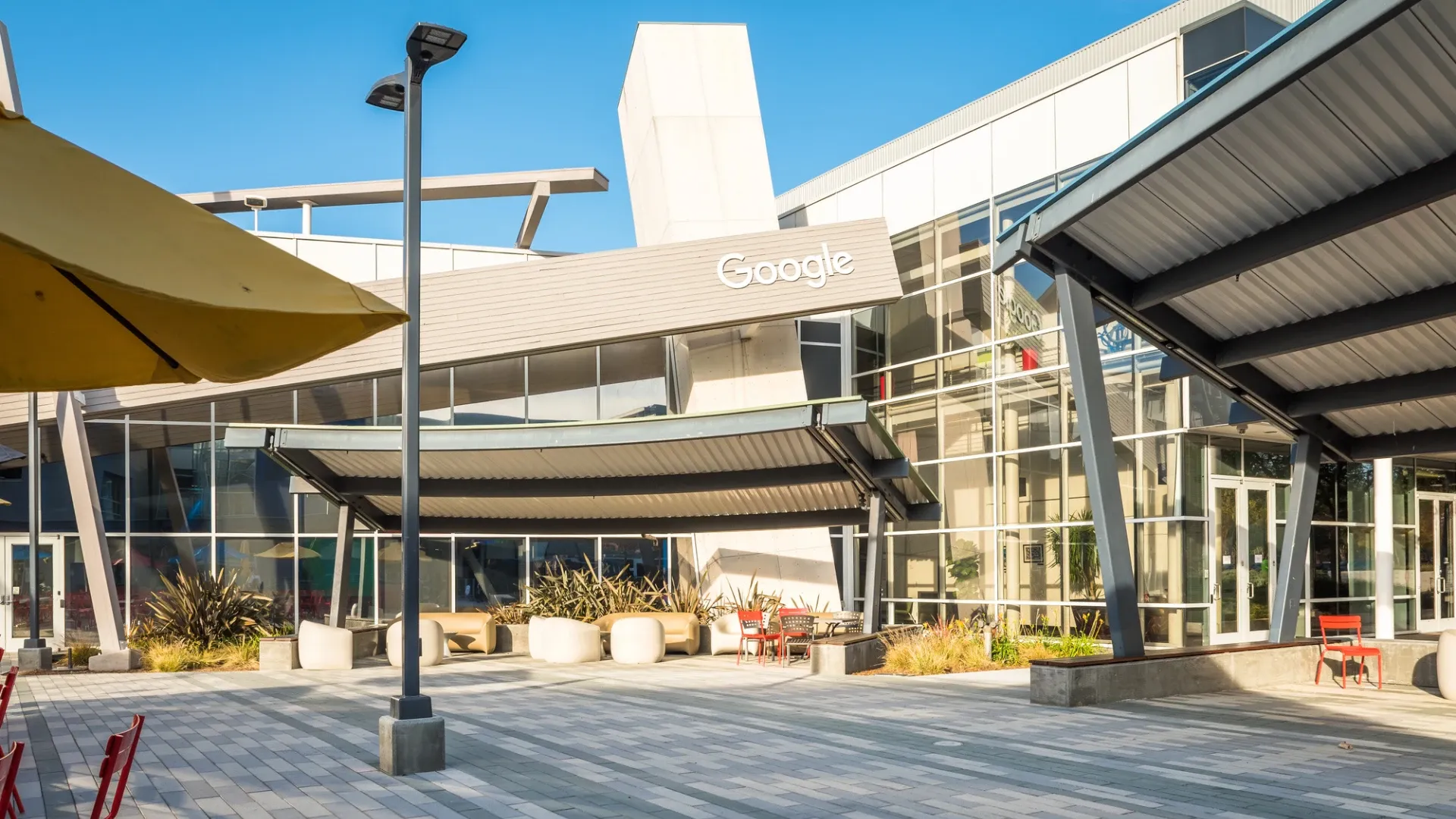
Europe’s artificial intelligence race is increasingly becoming an energy race, and Finland has emerged as one of the continent’s most intriguing answers to the question of where tomorrow’s computing infrastructure should be built. The country’s combination of nuclear generation, expanding renewable power, a reliable electricity grid and naturally cold climate is turning electricity from a background utility into a strategic economic asset. The latest catalyst is Google’s announcement of a €13 billion investment in AI infrastructure in Finland over the next two years, its largest European investment to date. The programme includes three new data centres in northern Finland and a landmark agreement with Fortum to secure up to 50% of the output of the Loviisa nuclear power plant for 22 years.
The significance extends well beyond a single technology investment. Google’s decision demonstrates how hyperscalers are increasingly evaluating data-centre locations according to access to dependable, low-carbon electricity as much as traditional considerations such as connectivity and proximity to customers. Loviisa’s nuclear generation gives Finland something particularly valuable for AI infrastructure: predictable, around-the-clock electricity without the direct carbon emissions associated with fossil-fuel generation. Fortum has stated that the agreement will support the extension of Loviisa’s operating life to 2050, effectively linking Finland’s nuclear future with the rapidly expanding requirements of the digital economy.
The second part of Finland’s proposition is less technologically sophisticated but equally important: temperature. Artificial intelligence workloads require enormous quantities of electricity and generate substantial heat. Cooling can therefore become one of the most significant operational considerations for large data centres. Finland’s naturally cold climate allows operators to reduce the energy required to maintain server temperatures, creating an advantage that warmer European markets cannot easily reproduce.
Google has already demonstrated the potential of this model through its long-established data-centre presence in Hamina, where the company converted a former paper mill into a data centre and uses seawater for cooling. The company’s latest investment suggests that this is no longer simply a sustainability experiment but part of a much larger infrastructure strategy. Finland can combine low-carbon electricity with favourable environmental conditions, potentially allowing AI computing facilities to achieve a more competitive energy profile while operating at massive scale.
What makes Finland particularly interesting is that its data-centre strategy is beginning to connect electricity production, digital infrastructure and local heating systems into one economic ecosystem. Microsoft and Fortum are already developing a major heat-recovery project around Microsoft’s data centres in the Helsinki region. Fortum says approximately 75% of the data centres’ waste heat will eventually be recovered for district heating, with the facilities expected to provide around 40% of the district heating requirement in the surrounding area.
This changes the traditional economic argument surrounding data centres. Rather than treating them solely as large electricity consumers, Finland is attempting to position them as participants in the wider energy system. Electricity powers the servers, the servers generate heat, and that heat can then support homes, businesses and public infrastructure. The result is a circular model in which digital infrastructure can contribute to the efficiency of the physical economy surrounding it. Business Finland has highlighted precisely this advantage, noting that Finland offers affordable electricity and a highly reliable grid, while the Microsoft-Fortum heating collaboration could cover up to 40% of the heating needs of the surrounding region.
Google’s latest commitment could accelerate this model dramatically. The company expects the construction phase of its Finnish expansion to contribute around €3.6 billion to GDP during 2027 and 2028, while the completed infrastructure is expected to support roughly 7,000 jobs annually. Google is also committing funding towards AI skills development and exploring additional nuclear and renewable-energy projects with Fortum. The economic consequences could extend into construction, engineering, telecommunications, energy storage, grid development, property and specialist technology services. A hyperscale data centre does not operate in isolation. It creates demand for electrical equipment, cooling technology, security systems, fibre connectivity, construction expertise and long-term energy contracts. As more AI infrastructure enters Finland, these supporting industries could become a significant part of the country’s emerging digital-energy economy.
The timing is also important. Europe is attempting to strengthen its domestic AI capabilities while remaining heavily dependent on overseas technology companies and computing infrastructure. Finland is becoming an increasingly important part of that effort. In August 2026, the European High Performance Computing Joint Undertaking signed a €387.8 million contract for LUMI-AI, a new AI-focused supercomputer that will be deployed in Finland alongside the existing LUMI system. The machine is expected to become operational in the second half of 2027. LUMI-AI gives Finland another strategic dimension. The country is not merely attracting private-sector hyperscalers; it is also becoming a European centre for publicly supported high-performance computing and AI research. Together, commercial data centres and European supercomputing infrastructure could establish a powerful cluster of computing capacity, research expertise and energy availability.
There is, however, a significant question behind Finland’s AI opportunity: how much additional electricity can the country provide without placing pressure on prices, grids and households? The answer is becoming increasingly important as hyperscale investments accelerate. Finland has already attracted substantial planned data-centre capacity, and industry estimates indicate that several gigawatts of additional demand are under development or consideration. Fingrid, Finland’s transmission-system operator, has previously identified data centres as one of the major sources of future electricity-demand growth.
The political debate has now moved closer to the centre of the investment story. Following Google’s announcement, Finnish opposition parties warned that rapid data-centre expansion could strain electricity supply and potentially place upward pressure on energy prices. They have called for more coordinated national oversight of data-centre permitting and electricity capacity. Prime Minister Petteri Orpo, by contrast, has argued that Finland has sufficient electricity capacity and that the investment will benefit the economy without undermining electricity affordability.
This tension will define the next stage of Finland’s strategy. Clean electricity may attract AI companies, but excessive demand could undermine the very competitive advantage that attracted them. Finland is not competing alone. Sweden, Norway, Denmark and Iceland possess many of the same structural advantages, particularly renewable electricity, cool climates and sophisticated digital infrastructure. Sweden has already established a strong data-centre ecosystem, while Norway possesses abundant hydropower and an increasingly attractive environment for energy-intensive computing.
Market estimates indicate that Sweden represented approximately 45% of Nordic data-centre construction power capacity in 2025, compared with roughly 22% for Norway and 13% for Finland. Yet Finland’s recent hyperscale investments could rapidly change the competitive balance.