
America’s Digital Land Rush: How AI Is Rewriting the Rules of Commercial Real Estate

Artificial intelligence is no longer simply reshaping America’s technology industry. It is changing the geography, economics and investment logic of commercial real estate. Across the United States, demand for data-centre campuses is transforming land into digital infrastructure, turning electricity access into a property advantage and creating a new class of real-estate assets built around computing rather than conventional office, retail or industrial activity. As AI models become more powerful and increasingly computationally demanding, the data centre has emerged as one of the most strategically important forms of commercial property in the American market.
The scale of the expansion is becoming difficult to ignore. CBRE’s latest North America Data Center Trends report found that primary-market data centre supply reached a record 10,903 megawatts in the first half of 2026, up 33.7% year on year. Yet vacancy fell to just 1.4%, despite the rapid addition of new capacity. Net absorption increased by 11.7% to 1,456.2MW, with hyperscalers and AI companies competing for increasingly scarce blocks of power and capacity.
This imbalance between supply and demand is at the heart of America’s data centre property boom. Traditional commercial property markets are generally influenced by factors such as location, transport links, employment centres, population growth and tenant demand. Data centres still require suitable land and connectivity, but AI has introduced another decisive variable: access to reliable electricity at the right scale and at the right time.
For developers, this is creating a fundamental shift in the meaning of location. A site that appears inexpensive or strategically positioned may have limited value if it cannot secure sufficient power. Conversely, land close to substations, transmission infrastructure and available generation capacity can become considerably more attractive. CBRE says site selectors are increasingly favouring projects of 250MW or more on sites exceeding 125 acres, while lengthy power-procurement timelines are pushing some operators towards behind-the-meter generation, existing generation sites and other alternative solutions.
The transformation is also visible in construction activity. CBRE reported that capacity under construction across primary North American markets increased by 24.8% in the first half of 2026 to 7,481.1MW. More than 80% of that capacity had already been committed through pre-leasing, demonstrating how technology companies are securing infrastructure well before buildings are completed. Northern Virginia remains a critical centre, while Atlanta overtook it in terms of total construction capacity during the first half of the year.
JLL’s mid-year 2026 data also illustrates the extraordinary scale of the market. It reported 25GW of absorption across North America in the first half alone, approximately twice the level recorded a year earlier. The consultancy said 66GW was under construction, with 95% already pre-committed. Texas had the largest combined existing and under-construction capacity at 26GW, followed by Virginia at 13GW.
The numbers demonstrate why institutional capital is increasingly treating data centres as a mainstream real-estate asset rather than a niche technology infrastructure play. In 2025, private-equity investment in US data centres reached $45.7bn, representing 72% of the $63.35bn invested in the country's data-centre sector, according to S&P Global Market Intelligence. The figures underline the growing connection between AI infrastructure and commercial property finance.
The investment story, however, extends beyond the buildings themselves. Financing structures are evolving as developers attempt to fund increasingly expensive campuses. CBRE reported $1.7bn of North American data-centre investment sales during the first half of 2026, alongside significant debt financing, joint ventures and platform investments. Data-centre-related single-asset, single-borrower commercial mortgage-backed securities issuance reached $4.9bn during the same period.
Construction economics are also changing. Cushman & Wakefield reported in September 2026 that data-centre construction costs had increased by an average of 21% per megawatt since its previous guide was published in late 2024. Higher skilled-labour costs, supply-chain pressures, land economics and more expensive critical components are all contributing to the increase. CBRE estimates that the most demanding high-density projects can cost between $14m and $16m per megawatt.
Power, meanwhile, is becoming one of the defining constraints on America's AI property expansion. Goldman Sachs Research estimates that US data-centre power demand could rise from 31GW in 2025 to 41GW in 2026 and 66GW in 2027. That would push data centres' share of total US peak summer electricity demand from 4.1% in 2025 to approximately 8.5% in 2027.
The consequence is a new competition for infrastructure. Developers are not merely searching for land; they are searching for land that can be connected to meaningful power capacity without waiting a decade. In some markets, that is becoming more important than the traditional advantages associated with urban proximity.
This dynamic is encouraging development beyond established hubs such as Northern Virginia and Silicon Valley. Texas, Ohio, Indiana, Michigan, Pennsylvania and parts of the Carolinas are attracting attention because of their potential combination of available land, energy resources, transmission infrastructure and development opportunities. CBRE has highlighted ERCOT and PJM territories as areas receiving substantial developer interest.
Yet the expansion is not without friction. Local authorities and communities are increasingly questioning the infrastructure requirements associated with large data centres, particularly electricity consumption, water use, noise and the potential impact on utility costs. JLL reported a significant gap between broad public support for US leadership in artificial intelligence and support for data-centre development within local communities.
The issue of speculative power demand adds another layer of complexity. Reuters reported in September that electricity requests from very large users, many of them data centres, had exceeded 700GW across parts of the Midwest, Mid-Atlantic and South. Regulators have raised concerns that some requests may be duplicative or associated with projects that lack sufficient funding or development certainty. Texas subsequently paused new data-centre grid connections while reviewing demand requests.
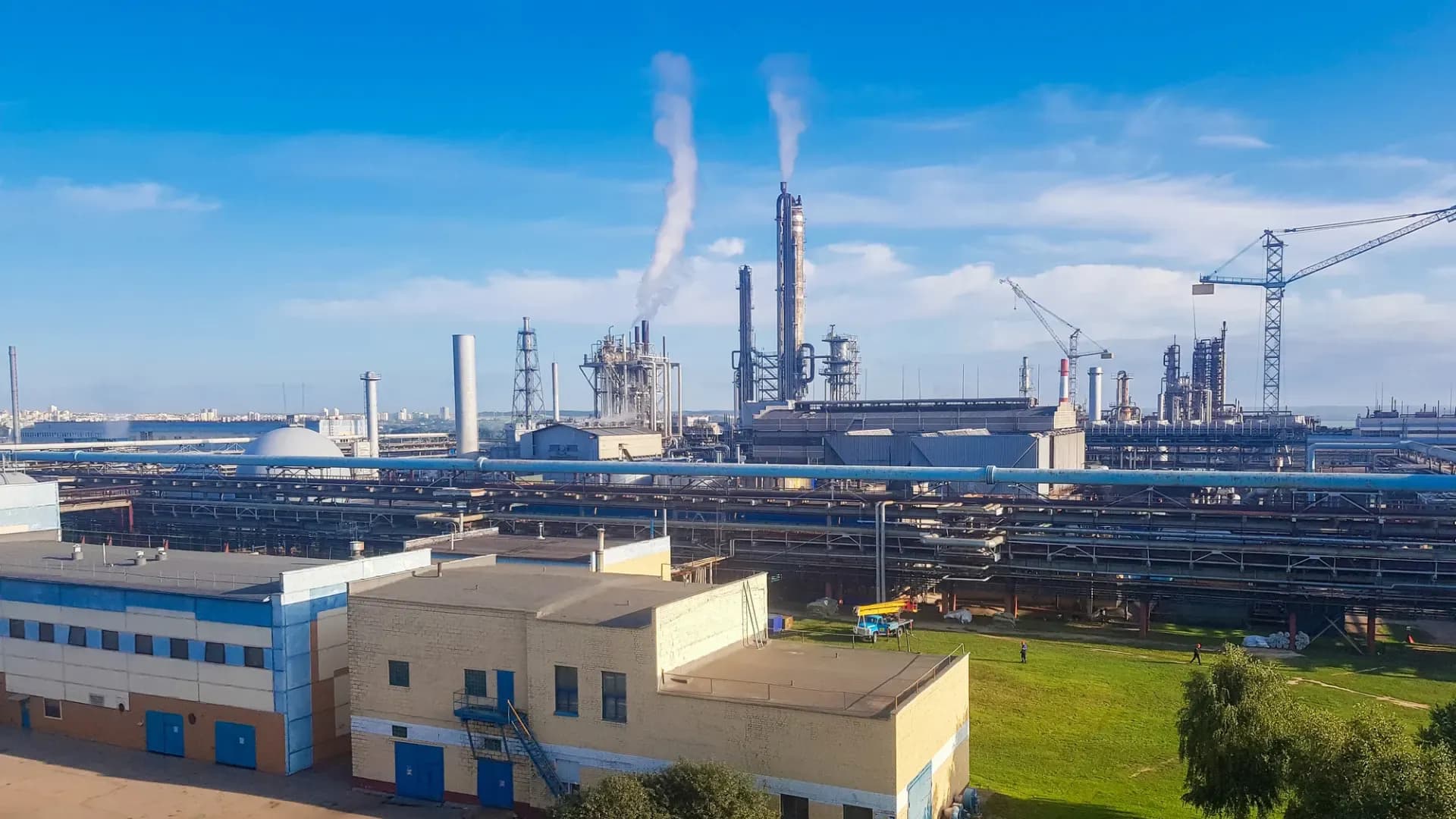
For commercial real estate, the implications are substantial. Industrial land with power access can acquire strategic value that was difficult to imagine before the AI boom. Former industrial sites, generation facilities and locations near transmission corridors may attract attention from developers looking to shorten the journey from land acquisition to energisation.
The effect is also beginning to extend into surrounding property markets. A September 2026 report from the National Association of REALTORS® found that the effect of data centres on housing varies considerably by local market. The organisation noted that data centres remain highly concentrated geographically, with 92% of US counties having no mapped data centres, while a small number of major clusters account for a significant share of national activity.
Ultimately, AI is rewriting American commercial real estate because it is changing what makes a property valuable. In the traditional property market, the question might be whether a building is close to customers, employees or transport networks. In the AI economy, another question increasingly comes first: can the site receive enough electricity to operate the computing infrastructure that modern artificial intelligence requires?
That does not make conventional property fundamentals irrelevant. Land, fibre connectivity, water, planning permissions, taxation, labour availability and community acceptance remain crucial. But the hierarchy is changing. Power availability can now determine whether a piece of land becomes a billion-dollar digital infrastructure opportunity or remains an ordinary development site.
America’s data-centre boom therefore represents more than a construction cycle. It is a revaluation of geography itself. As artificial intelligence pushes computing demand towards unprecedented levels, the most valuable commercial real estate may increasingly be found where land, fibre and electricity converge. The next chapter of America’s property market may not be defined by the tallest offices or busiest shopping districts, but by the quiet industrial landscapes capable of powering the machines behind the AI economy.