

Can Riyadh Become the Gulf’s Next Life-Sciences Capital?
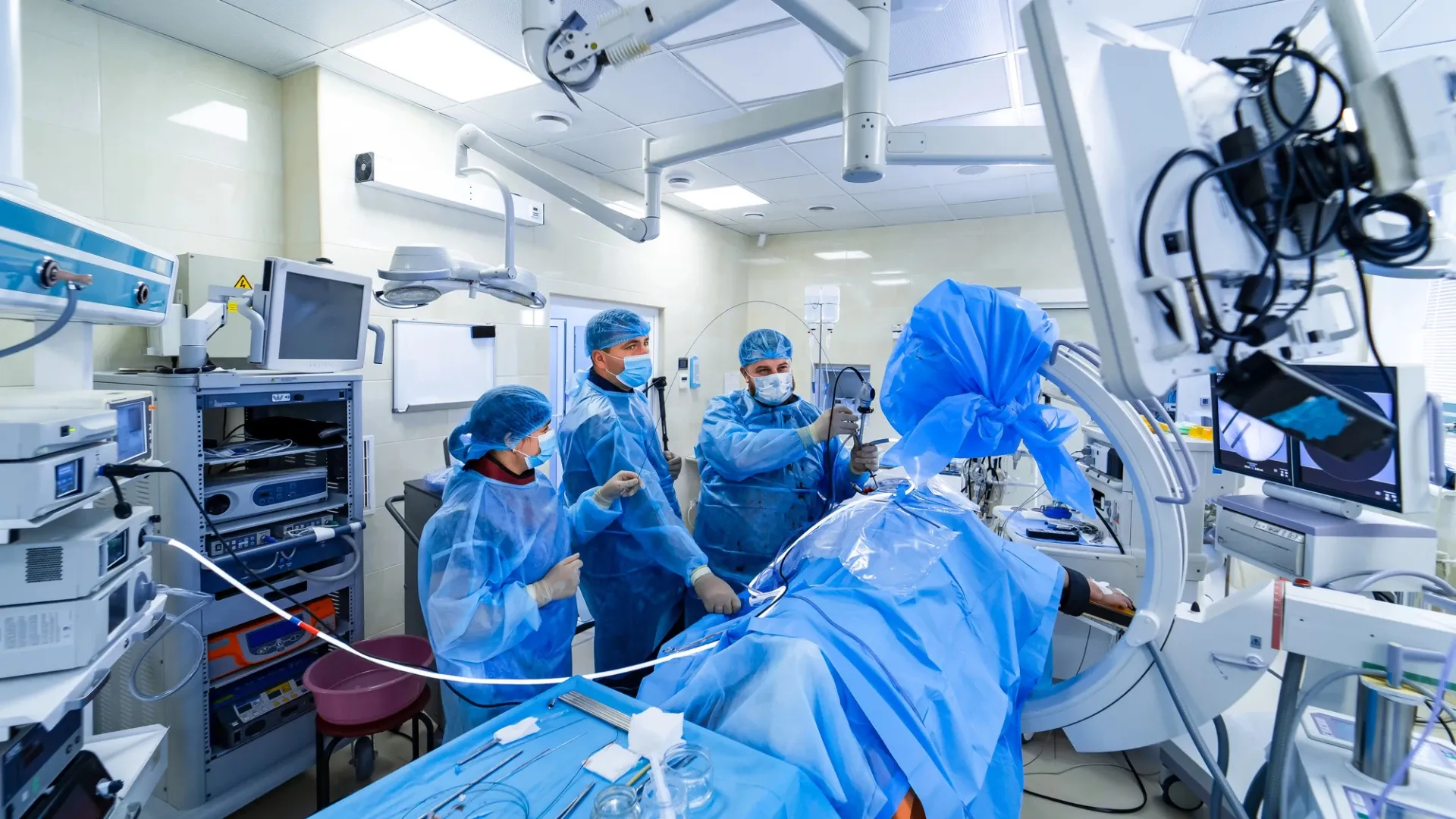

Riyadh’s biotech ambitions also coincide with Saudi Arabia’s aggressive investment in artificial intelligence.
Saudi Arabia is making a calculated move into one of the world economy’s most strategically important industries: biotechnology. What began as part of the Kingdom’s wider Vision 2030 diversification agenda is increasingly developing into a serious attempt to build a regional life-sciences ecosystem around Riyadh. The ambition is substantial. Saudi Arabia wants to become the leading biotechnology hub in the Middle East and North Africa by 2030 and a global biotechnology hub by 2040. Under its National Biotechnology Strategy, the Kingdom expects the sector to contribute more than $34.6 billion to non-oil GDP by 2040, equivalent to roughly 3% of the economy outside oil. It also targets 11,000 high-quality jobs by 2030 and 55,000 by 2040.
Those numbers reveal why biotechnology matters to Riyadh. This is not simply a healthcare initiative. Saudi policymakers increasingly view biotech as an industrial, economic and strategic sector capable of creating high-value intellectual property, reducing dependence on imported medicines and positioning the Kingdom inside global pharmaceutical supply chains. The National Biotechnology Strategy, launched in January 2024, provides the foundation. Its four principal areas are vaccines, biomanufacturing and localisation, genomics, and plant optimisation. Together, they cover everything from pharmaceutical security and precision medicine to food production and environmental sustainability.
For Riyadh, the timing is important. Global pharmaceutical companies are looking for more resilient manufacturing networks, while governments have become increasingly concerned about dependence on concentrated supply chains for medicines, vaccines and advanced therapies. Saudi Arabia is attempting to turn that vulnerability into an investment opportunity. For decades, Saudi Arabia’s pharmaceutical market was primarily an important destination for international products rather than a major centre of biotechnology development. The new strategy seeks to change that model. Local production is at the centre of the transformation. Saudi Arabia wants to establish end-to-end biomanufacturing capabilities, including the ability to produce biologics and biosimilars domestically and eventually export them to regional and international markets.
That ambition is already moving beyond policy documents. In June 2026, Saudi Pharmaceutical Industries and Medical Appliances Corporation, through SPIMACO BIO, signed an exclusive collaboration and licensing agreement with Genetix Biotherapeutics covering the development, commercialisation, manufacturing and localisation of the gene therapies LYFGENIA and ZYNTEGLO in Saudi Arabia and the wider Middle East. The agreement is particularly significant because it involves advanced therapies rather than conventional pharmaceutical manufacturing. The deal illustrates the type of ecosystem Riyadh is trying to construct: international technology and intellectual property entering the Kingdom, local manufacturing capability expanding, and knowledge being transferred to Saudi companies and professionals.
The Kingdom has several advantages that could accelerate its biotechnology ambitions. The first is capital. Saudi Arabia can deploy sovereign and institutional funding on a scale that many emerging biotech markets cannot match. Its Public Investment Fund has also entered a new 2026–2030 strategic phase, with greater emphasis on creating competitive domestic ecosystems and enabling private-sector participation. The second is market size. Saudi Arabia is the largest economy in the Gulf and has a substantial domestic healthcare market. That creates an important foundation for companies developing pharmaceuticals, diagnostics, medical technologies and personalised treatments.
The third is geography. Riyadh sits within a region connecting Europe, Asia and Africa, while Saudi Arabia itself is developing logistics, manufacturing and healthcare infrastructure. A successful biotech cluster could therefore serve not only Saudi patients but also the wider Gulf and MENA markets. The fourth is government purchasing power. Unlike traditional biotech ecosystems that often depend heavily on venture capital and uncertain commercial demand, Saudi Arabia can use public procurement, localisation programmes and national healthcare requirements to create an initial market for emerging technologies. That is one reason the Gulf’s investment model is beginning to attract international attention. Recent industry analysis ahead of the Riyadh Global Medical Biotechnology Summit has highlighted the region’s distinctive combination of sovereign capital, government-backed demand and localisation requirements.
Manufacturing may provide the industrial foundation, but genomics could ultimately give Saudi Arabia a more distinctive competitive position. The Kingdom has a relatively unique population genetic profile, which could support research into diseases particularly relevant to Arab populations. Its biotechnology strategy therefore places genomic data, analytics and precision medicine at the centre of its long-term ambitions. The objective is not simply to collect genetic information. Saudi Arabia wants genomics to support earlier disease detection, personalised treatment and the development of therapies tailored to specific genetic characteristics.
That could become particularly important in areas such as rare genetic disorders, oncology and precision medicine. The commercial implications are potentially considerable. A mature genomics ecosystem can generate opportunities for diagnostics companies, research organisations, pharmaceutical developers, data businesses and clinical-trial operators. It can also make Riyadh more attractive to international pharmaceutical groups searching for diverse patient populations and new research partnerships.
Riyadh’s biotech ambitions also coincide with Saudi Arabia’s aggressive investment in artificial intelligence. The convergence is strategically important. Drug discovery, genomic analysis, diagnostics and clinical research are becoming increasingly dependent on computational tools. A city that can combine AI infrastructure with genomic databases, healthcare institutions and biotechnology companies could develop capabilities that are difficult for traditional pharmaceutical manufacturing hubs to replicate. This creates an opportunity for Riyadh to position itself not merely as a manufacturing location but as a technology-enabled life-sciences centre.
The upcoming Riyadh Global Medical Biotechnology Summit in September 2026 is another indication of that ambition. The event is designed to bring together government, scientific, industrial and investment leaders around Saudi Arabia’s biotechnology objectives. Such events matter because biotech ecosystems are built through networks as much as laboratories. International partnerships, venture funding, clinical research collaborations and technology licensing relationships can determine whether a government strategy becomes a functioning industry.
Riyadh will not be building its life-sciences ambitions in an empty market. The UAE has developed sophisticated healthcare and innovation infrastructure, particularly in Abu Dhabi and Dubai. Qatar has also invested heavily in medical research and biotechnology. Other Gulf states are pursuing pharmaceutical manufacturing, healthcare technology and research capabilities. Its larger domestic market, significant public-sector investment capacity and industrial localisation agenda give Riyadh the ability to pursue biotechnology at a national scale. The challenge will be converting that financial capacity into scientific excellence, successful companies and commercially valuable intellectual property. That is considerably harder than constructing laboratories or announcing investment programmes.