
Qatar’s $30m Bet on the Next Generation of Innovation
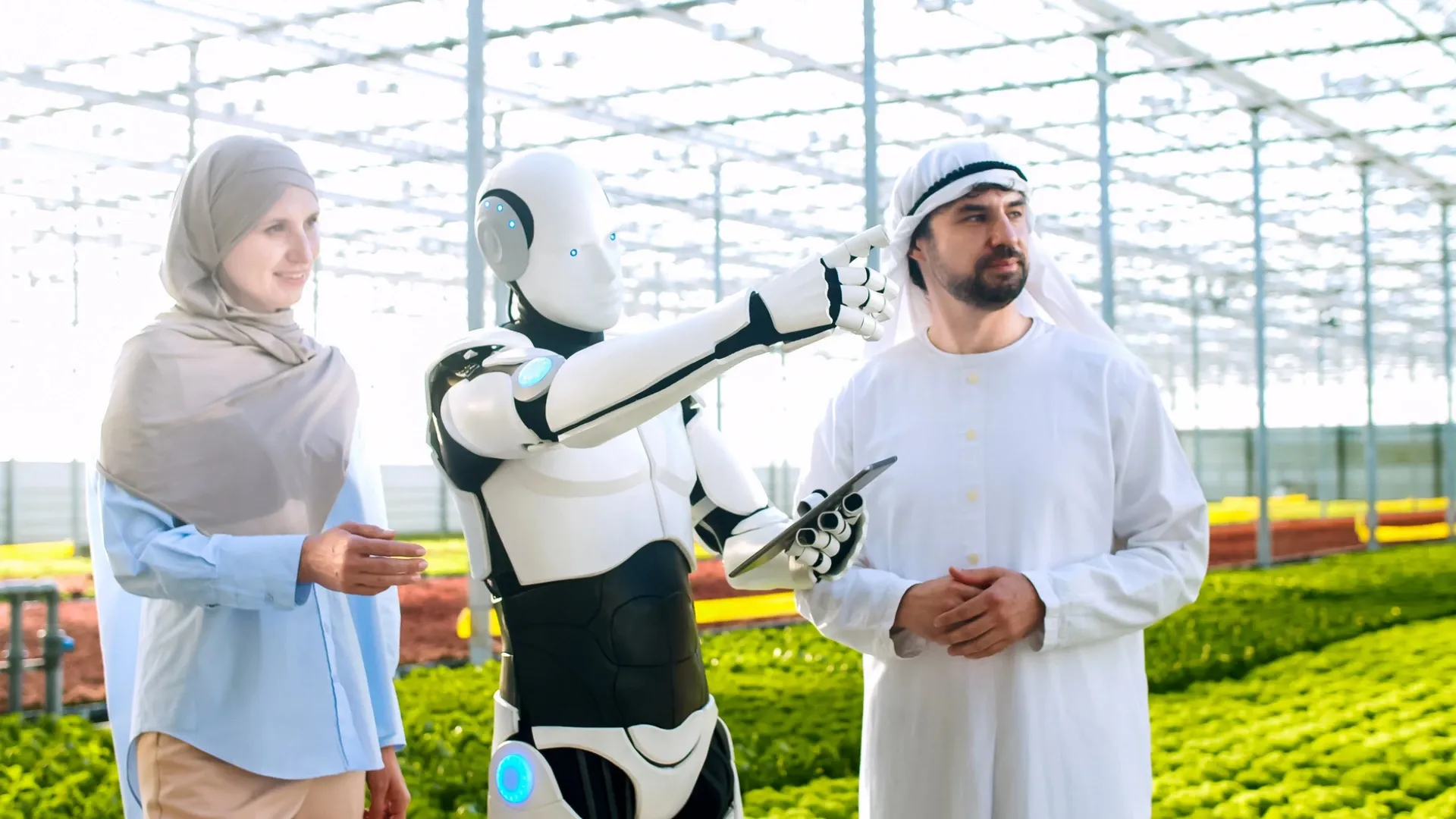

Qatar is seeking to transform its substantial financial resources into long-term capabilities in technology, research and entrepreneurship.
Qatar is making a calculated move beyond its traditional strengths in energy and infrastructure, placing deep technology at the centre of its next phase of economic development. In May 2026, Qatar Science & Technology Park (QSTP), a member of Qatar Foundation, launched a $30 million Tech Venture Fund designed to support early-stage deep-tech companies headquartered in the country. The initiative is one of the clearest signals yet that Doha wants to develop a technology economy capable of competing for talent, capital and intellectual property on the global stage.
The fund is deliberately focused on companies working at the more difficult end of innovation. Its investment interests include artificial intelligence and machine learning, robotics, biotechnology, advanced materials and clean technology, alongside applications such as healthtech, agritech, cleantech, smart infrastructure, aviation technology, mobility and proptech. The emphasis is not simply on digital products that can be launched quickly, but on technologies with substantial technical foundations and the potential to solve significant commercial, environmental or social problems.
For Qatar, the significance of the fund lies in what it represents rather than its $30 million headline value. Deep-tech companies generally require considerably more time, research and specialist expertise to reach the market than conventional software start-ups. They can involve laboratories, advanced equipment, regulatory approvals, specialist scientists and long development cycles. This makes access to early-stage capital particularly important. QSTP is attempting to address that financing challenge while positioning Qatar as a launchpad for international expansion. Companies backed by the fund must be headquartered in Qatar, with their core leadership and operations based locally. At the same time, the fund is structured to connect these businesses with international investors and markets.
That model reflects a broader economic strategy. Qatar is seeking to transform its substantial financial resources into long-term capabilities in technology, research and entrepreneurship. The country’s Third National Development Strategy places economic diversification, innovation and private-sector development among its priorities, making deep tech a natural area for strategic investment. The timing is also significant. In February 2026, Qatar Investment Authority announced an additional $2 billion for its Fund of Funds programme, taking total capital commitments to $3 billion. The programme is intended to attract international venture capital managers to Qatar and strengthen the country’s start-up and venture capital ecosystem, with technology and healthcare among its priority areas. The $30 million QSTP fund therefore sits within a much larger financial architecture rather than operating in isolation.
One of the most interesting features of the QSTP fund is its co-investment structure. Its first group of partners includes Global Ventures, Golden Gate Ventures, White Star Capital, VentureSouq and Builders VC. These firms provide networks extending across the Middle East and North Africa, Southeast Asia, North America, Europe and other international markets.
That international dimension could prove more valuable than the fund’s capital alone. For an emerging deep-tech ecosystem, money is only one part of the equation. Founders also need experienced investors who understand technology commercialisation, access to international customers, scientific networks, follow-on funding and routes into major markets. By co-investing with established venture firms, QSTP can potentially give Qatari companies access to expertise that would otherwise take years to develop domestically. It also creates a two-way opportunity. International venture capital firms gain a stronger connection to Qatar, while Qatari start-ups gain access to investors beyond the relatively small domestic market. This is particularly important because deep-tech businesses rarely depend solely on local demand. A successful biotechnology platform, robotics system, advanced materials company or climate technology venture may ultimately need customers and investors across several continents.
The deep-tech strategy is being supported by a growing network of initiatives. During Web Summit Qatar 2026, Qatar Development Bank reported more than 6,000 applications to its Startup Qatar Investment Programme, with around 40 companies having secured investment and funding exceeding $40 million at that point. QDB has also been expanding the country’s wider investment infrastructure. In February, it partnered with Ooredoo to explore the development of Digital & Beyond Ventures, evolving an existing incubator relationship into a joint investment platform aimed at supporting start-ups and scaling innovation. Meanwhile, QDB has been working with private-sector partners to develop new routes for venture creation. A proposed corporate venture studio with Rubix Holding and Rasmal Ventures is expected, subject to final arrangements, to examine more than 400 venture concepts and help co-develop at least 40 start-ups over five years.
These developments suggest that Qatar is trying to construct an ecosystem rather than simply distribute capital. The country’s research infrastructure is becoming part of that equation too. In February, Qatar announced a partnership involving the Qatar Investment Authority, Qatar Research, Development and Innovation Council and Berlin-based ESMT’s DEEP Institute to establish DEEP Qatar. The initiative is designed to connect research, entrepreneurship and technology transfer, with programmes covering areas including artificial intelligence, health, agriculture and food technology.
The Gulf’s technology race is becoming increasingly competitive. Saudi Arabia, the United Arab Emirates and Qatar are all seeking to attract entrepreneurs, investors, researchers and technology companies as their economies prepare for a future in which hydrocarbons alone cannot define national competitiveness. Qatar has a particular advantage: it can combine substantial financial resources with research institutions, international universities, state-backed infrastructure and a relatively compact domestic market in which new technologies can be tested. QSTP itself says more than $3 billion has been invested in research, development and innovation activities by international companies registered at the park over the past 14 years. More than 300 companies are currently based there, including 20 multinational corporations.
The challenge now is converting that infrastructure into companies capable of scaling beyond Qatar. That will require more than generous funding. Deep-tech ventures need scientists who can become entrepreneurs, strong intellectual-property protection, sophisticated regulatory systems, corporate customers willing to test emerging technologies and sufficient follow-on capital to finance later-stage expansion. Qatar’s recent initiatives indicate that policymakers understand this challenge.
The biggest question for the $30 million fund will ultimately be whether it produces companies rather than simply promising technologies. QSTP has made commercial potential an explicit part of its investment criteria. This is important because deep-tech investment can easily become dominated by impressive research without a clear route to revenue. The fund’s focus on measurable social or climate impact adds another layer, but commercial viability remains essential. There is already evidence that Qatar’s technology ecosystem is developing a stronger pipeline. QSTP has said its earlier fund deployed more than $20 million across nearly 200 start-ups, while the new fund is designed to target a more focused deep-tech opportunity. The next stage will be demonstrating that these investments can move from laboratories and pilot projects into products, exports and sustainable businesses.
Qatar’s $30 million Tech Venture Fund should therefore be viewed as one piece of a much larger economic transformation. The country is not attempting to become the next Silicon Valley overnight. Instead, it is building the foundations of a technology ecosystem through venture capital, research partnerships, international investors, start-up programmes and specialist infrastructure. That strategy could become increasingly important as competition for global technology investment intensifies. Qatar’s advantage will not come simply from having capital available. Its real opportunity is to create an environment where capital, scientific expertise, infrastructure and international networks work together. If QSTP can turn the new fund into a pipeline of successful deep-tech businesses, the impact could extend well beyond the initial $30 million. It could help create intellectual property, highly skilled employment, exportable technology and new industries that strengthen Qatar’s economy for decades.
For a country historically associated with energy wealth, this is a significant change in direction. Qatar is now betting that its next valuable resource may not come from beneath the desert or the sea, but from laboratories, research centres and the ideas of technology entrepreneurs. The $30 million fund is the latest financial commitment to that vision. The real test will be whether those ideas can travel from Doha to the world.