
Why Japan’s Food-Tech Revolution Is Becoming the Restaurant Industry’s Biggest Investment

Japan’s shrinking workforce continues to place immense pressure on the hospitality industry.
Japan has long been recognised as a global pioneer in combining technology with everyday life. From the invention of conveyor-belt sushi to vending machines serving hot meals, the country’s food service industry has consistently embraced innovation. However, a new chapter is unfolding in 2026. Faced with one of the world’s most severe labour shortages, rising operating costs and an ageing population, Japan’s restaurant sector is making one of its biggest strategic investments yet-advanced robotics and artificial intelligence.
What was once viewed as a futuristic novelty has become a commercial necessity. Robots are no longer confined to greeting customers or delivering dishes across dining rooms. They are preparing meals, monitoring food quality, assisting chefs, managing inventory and even learning new tasks through AI-powered systems. For investors, technology providers and restaurant operators alike, Japan’s food-tech revolution is rapidly transforming into one of the country’s most compelling business opportunities.
The shift is being driven by economic realities rather than technological enthusiasm alone. Japan’s shrinking workforce continues to place immense pressure on the hospitality industry. Restaurants across the country have struggled to recruit enough employees, particularly for physically demanding kitchen and service roles. At the same time, wage inflation and changing consumer expectations have increased operational costs, forcing businesses to seek more sustainable solutions. Recent government projections indicate that demographic pressures will continue reducing the available workforce over the coming decades, making productivity-enhancing technologies increasingly essential.
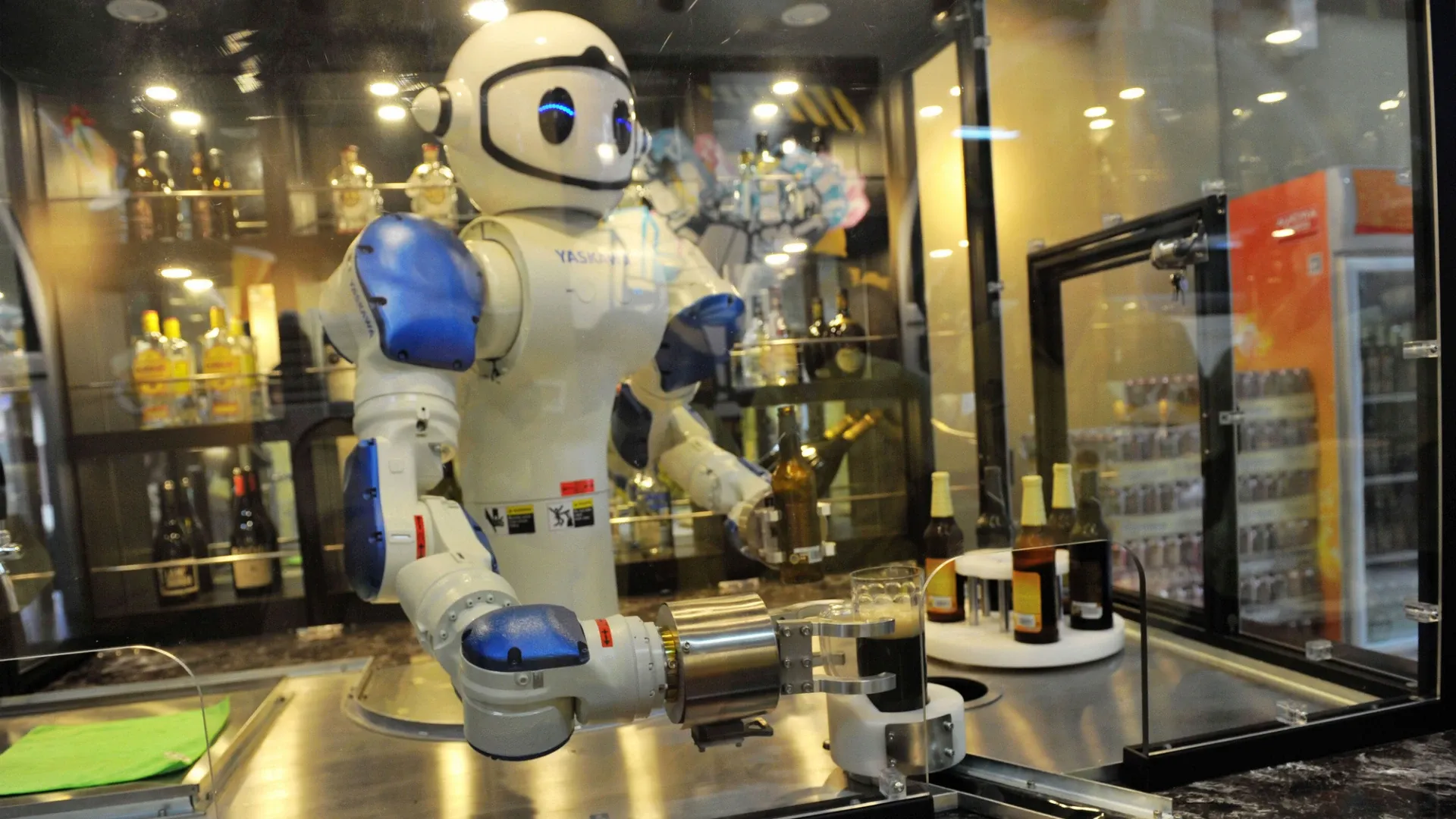
Unlike previous waves of automation that focused mainly on manufacturing, today’s restaurant robotics are designed to work alongside human employees. AI-powered serving robots navigate crowded dining spaces, automated cooking systems prepare meals with remarkable consistency, and intelligent kitchen assistants reduce food waste through real-time monitoring. Rather than replacing staff entirely, these technologies are allowing restaurants to redeploy workers towards customer service, menu innovation and hospitality, areas where human interaction remains irreplaceable.
Major restaurant groups have already demonstrated that automation can improve both efficiency and profitability. Chain restaurants are increasingly deploying robotic waiters capable of carrying multiple dishes simultaneously while reducing staff fatigue during peak dining hours. Automated fryers, noodle preparation systems and beverage stations are also becoming more common, enabling restaurants to deliver consistent quality regardless of staffing levels. Japan now stands among the world’s leading adopters of restaurant automation, with robotic sushi outlets, ramen kitchens and automated izakayas becoming increasingly familiar across major cities such as Tokyo and Osaka.
The investment opportunity extends well beyond restaurants themselves. Technology developers, AI software companies, robotics manufacturers, semiconductor suppliers and cloud computing providers all stand to benefit from the growing demand for intelligent food-service systems. This broader ecosystem is attracting significant public and private investment as Japan positions itself at the forefront of physical AI development.
A major milestone arrived in July 2026 when Nvidia announced partnerships with Japanese robotics leaders including Fanuc, Yaskawa Electric, Kawasaki Heavy Industries and Fujitsu to accelerate the development of AI-powered robots capable of working safely alongside humans. The initiative reflects Japan’s ambition to combine its world-class robotics expertise with next-generation artificial intelligence, creating systems that can adapt to changing environments instead of simply following pre-programmed instructions. The collaboration also aligns with the country’s broader strategy to strengthen AI-driven economic growth while addressing chronic labour shortages.
For restaurant operators, the financial case for robotics has become increasingly persuasive. Although initial installation costs remain significant, businesses are beginning to realise meaningful long-term savings through lower labour expenses, improved operational efficiency and reduced food waste. Robots can operate continuously without fatigue, deliver highly consistent food preparation and minimise costly human errors. They also generate valuable operational data that enables managers to optimise staffing schedules, ingredient purchasing and menu planning.
Food safety represents another powerful advantage. Automated food preparation reduces unnecessary human contact with ingredients while AI monitoring systems can identify irregularities during cooking processes in real time. These capabilities help restaurants maintain higher hygiene standards, an increasingly important consideration following the global pandemic and rising consumer awareness surrounding food safety.
Consumers have also become more accepting of robotic assistance than many industry analysts initially predicted. Rather than viewing automation as impersonal, many diners see it as part of Japan’s distinctive technological culture. In fact, robotic service has evolved into a unique attraction, particularly for international visitors seeking memorable dining experiences. Restaurants featuring intelligent service robots frequently generate social media attention, effectively transforming automation into a marketing asset that attracts new customers.
Investment momentum is unlikely to slow. Market analysts expect global restaurant robotics to expand steadily throughout the coming decade, driven by increasing demand for automation, AI integration and labour-saving technologies. Japan remains one of the strongest contributors to this growth, supported by its mature robotics industry, highly advanced engineering capabilities and favourable government policies encouraging digital transformation.
Government support is becoming an increasingly important catalyst. Japan recently outlined ambitious plans to accelerate the adoption of physical AI across multiple industries, including food manufacturing and hospitality. National investment initiatives aim to strengthen domestic AI infrastructure, robotics research and advanced semiconductor production while encouraging closer collaboration between technology companies and industrial partners. These policies recognise that intelligent automation is no longer simply an industrial upgrade but a strategic economic priority.
Nevertheless, the transition is not without challenges. Smaller independent restaurants often struggle with the substantial upfront costs associated with robotic systems. Many operators also require technical support to integrate AI platforms into existing kitchen workflows. Cybersecurity, software maintenance and employee training have emerged as additional considerations as restaurants become increasingly reliant on connected technologies. Furthermore, maintaining the personal warmth and hospitality that define Japanese dining culture remains essential, ensuring that technology enhances rather than diminishes the customer experience.
Industry experts increasingly believe that the future belongs to hybrid restaurants where humans and intelligent machines complement one another instead of competing. Chefs will continue to focus on creativity, customer engagement and culinary innovation, while robots undertake repetitive, physically demanding or highly standardised tasks. This balanced model enables businesses to preserve authentic hospitality while improving operational resilience and profitability.
The broader implications extend far beyond Japan. Countries across Europe, North America and Asia-Pacific are monitoring Japan’s progress closely as they confront similar demographic pressures and labour shortages. Successful deployment of AI-powered restaurant technologies in Japan could establish a blueprint for the global hospitality industry, encouraging widespread investment in robotics, automation software and intelligent kitchen infrastructure.
Ultimately, Japan’s food-tech revolution is about far more than robots serving meals. It represents a strategic response to structural economic challenges through innovation, productivity and long-term investment. By integrating artificial intelligence with world-leading robotics expertise, Japan is reshaping the future of food service while creating substantial commercial opportunities across technology, manufacturing and hospitality.
As restaurants evolve from labour-intensive businesses into technology-enabled operations, robotics are no longer viewed as experimental equipment. They have become critical business assets capable of improving efficiency, supporting profitability and safeguarding long-term growth. In doing so, Japan is once again demonstrating that the future of hospitality may not simply be about serving better food-it may be about serving it smarter.