
A Strategic Investment to Secure Technological Sovereignty and Global Industrial Leadership

Governments across the continent are reassessing their economic and security priorities as geopolitical tensions intensify and technological competition accelerates.
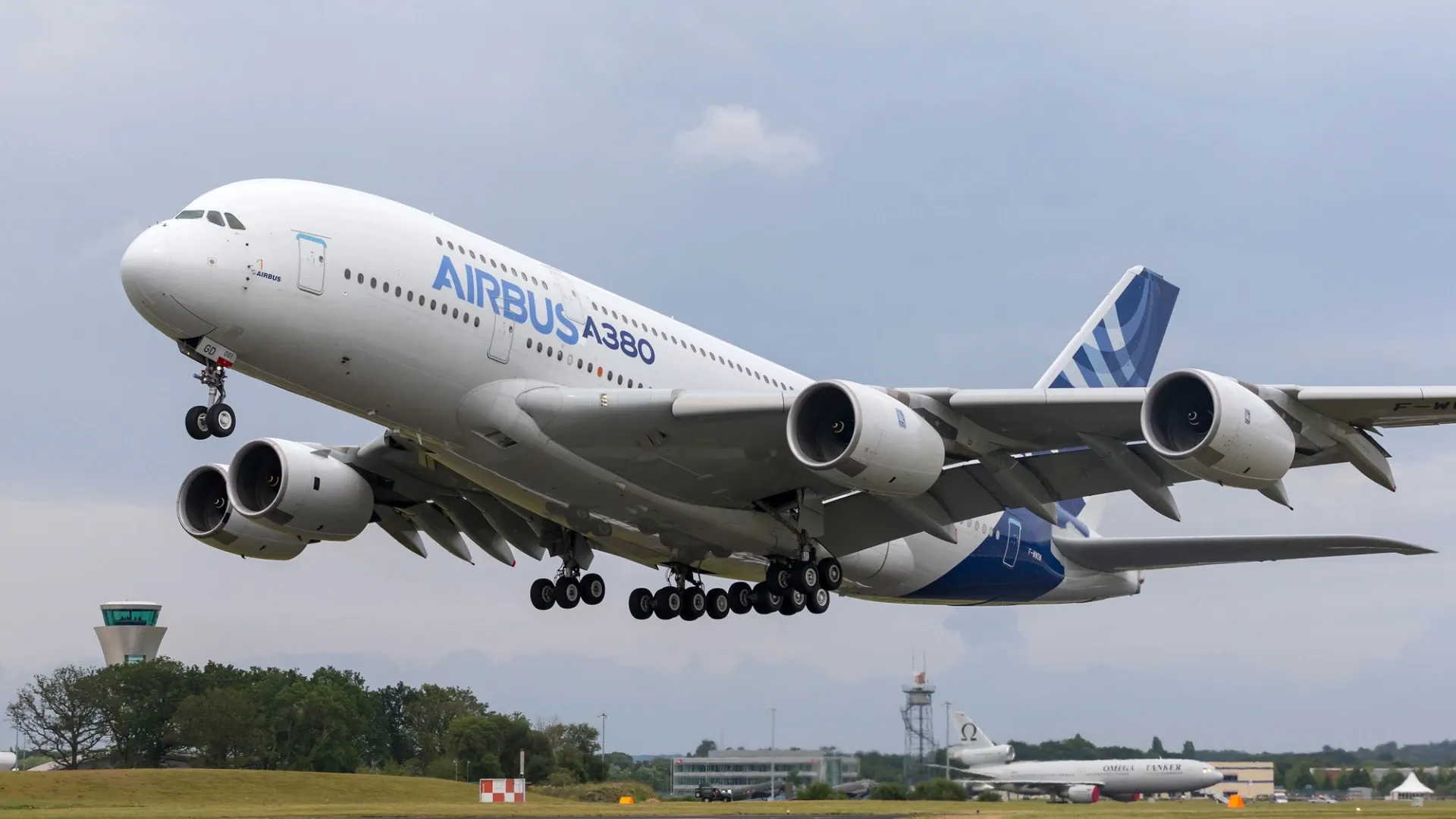
Europe has taken one of its boldest industrial policy steps in recent years by committing a record €3 billion financing package to Airbus through the European Investment Bank (EIB). Far more than a conventional corporate loan, the agreement reflects the European Union’s growing determination to strengthen its technological sovereignty, safeguard its industrial base and compete more effectively with global rivals such as the United States and China.
The landmark package, announced in Brussels, represents the largest corporate loan ever authorised by the EIB. The first €1 billion tranche has already been signed, while the remaining funding will be released over time to support Airbus’ long-term research, development and innovation programmes through 2030. The investment will span commercial aviation, defence, security, advanced manufacturing and next-generation aerospace technologies across France, Germany and Spain.
The announcement arrives at a pivotal moment for Europe. Governments across the continent are reassessing their economic and security priorities as geopolitical tensions intensify and technological competition accelerates. Rather than relying heavily on foreign innovation or external supply chains, the EU is increasingly focusing on building strategic capabilities within its own borders. Airbus, already one of Europe’s most recognised industrial champions, has become central to that ambition.
Unlike previous industrial support measures that largely focused on environmental transition, this initiative places technological sovereignty at the heart of Europe’s economic strategy. European policymakers increasingly argue that maintaining leadership in aerospace, defence, artificial intelligence, satellite communications and advanced manufacturing has become essential not only for economic growth but also for national security and political independence.
The EIB’s President, Nadia Calvino, described the financing as evidence that Europe can mobilise capital quickly and at significant scale when supporting industries that are strategically important for the continent’s future. The agreement demonstrates how European institutions are becoming more proactive in backing companies capable of shaping global technological leadership.
For Airbus, the financing provides more than additional liquidity. The company gains access to long-term funding under highly competitive conditions, allowing management greater financial flexibility while continuing heavy investment in innovation. Developing new aircraft platforms, defence technologies and digital manufacturing systems requires substantial capital over many years before commercial returns emerge. The EIB facility helps reduce financial pressure while enabling Airbus to maintain its ambitious investment roadmap.
Airbus Chief Financial Officer Thomas Toepfer highlighted that the financing strengthens the company’s long-standing partnership with the EIB and provides valuable balance-sheet flexibility. According to Airbus, the favourable lending terms will help minimise financing costs while sustaining investments that enhance European industrial competitiveness.
The significance of the agreement extends well beyond commercial aviation. Airbus has evolved into one of Europe’s most important defence and space technology companies, supplying military aircraft, satellites, cybersecurity systems and advanced communications infrastructure. These capabilities have become increasingly valuable as European governments expand defence spending and seek greater strategic autonomy.
The investment also complements wider European initiatives aimed at consolidating critical technology sectors. Airbus has already announced plans to combine certain satellite operations with fellow European aerospace groups Thales and Leonardo in an effort to establish a stronger regional competitor capable of challenging SpaceX‘s growing dominance in satellite communications and space infrastructure. The EIB financing therefore fits within a much broader industrial strategy designed to strengthen Europe’s position in emerging high-technology markets.
One of the most notable aspects of the financing package is its focus on research and development rather than immediate production expansion. Europe recognises that maintaining long-term competitiveness depends upon sustained investment in innovation rather than short-term manufacturing gains alone.
The funding will support advanced aircraft technologies designed to improve fuel efficiency, reduce emissions and prepare the aerospace industry for future propulsion systems. Simultaneously, investment will strengthen defence capabilities through the development of next-generation military aviation technologies, integrated digital systems and sophisticated security platforms.
Research programmes are also expected to accelerate progress in digital engineering, automation, advanced materials, artificial intelligence and industrial manufacturing techniques. These technologies increasingly determine competitive advantage across multiple sectors beyond aerospace itself.
The broader economic implications are equally significant. Large-scale aerospace research programmes generate substantial demand throughout Europe’s industrial supply chain. Thousands of suppliers—including specialist manufacturers, engineering consultancies, electronics producers, software developers and advanced materials companies—stand to benefit indirectly from Airbus’ expanded investment programme.
Universities, research institutions and technology start-ups collaborating with Airbus are also likely to experience increased opportunities as innovation projects expand over the coming years. This creates a multiplier effect that extends the economic benefits far beyond Airbus’ own operations.
Employment represents another important dimension of the investment. Aerospace remains one of Europe’s highest-value manufacturing sectors, supporting hundreds of thousands of highly skilled jobs across engineering, software development, production, maintenance and scientific research. Continued investment helps preserve existing expertise while creating new opportunities in emerging technology fields.
The agreement also sends a strong signal to international investors regarding Europe’s industrial ambitions. For years, critics argued that Europe struggled to support its largest technology companies with the same scale and speed seen in the United States or China. By approving the largest corporate financing package in its history within only six months of Airbus’ request, the EIB demonstrates a willingness to act more decisively when strategic industries require support.
Nevertheless, the investment is not without challenges. Airbus continues to navigate persistent supply-chain disruptions, rising production costs, labour shortages and increasing global competition. Financing alone cannot eliminate these structural pressures. Delivering next-generation aircraft and defence systems on schedule will still require efficient execution, stable supplier relationships and continued technological breakthroughs.
Moreover, global aerospace competition continues to intensify. Boeing remains Airbus’ principal rival in commercial aviation, while Chinese manufacturers continue expanding their domestic capabilities. In defence and space, American companies retain considerable technological advantages across several strategic sectors. Maintaining European competitiveness will therefore require sustained public and private investment well beyond this single financing package.
Yet the broader direction is becoming increasingly clear. Europe is shifting from a policy framework centred primarily on regulation towards one that actively promotes industrial investment and technological leadership. Strategic sectors such as aerospace, defence, semiconductors, digital infrastructure and advanced manufacturing are receiving growing political and financial support as governments seek greater economic resilience.
The Airbus financing illustrates this evolution particularly well. Rather than representing corporate assistance alone, it reflects an industrial policy designed to strengthen Europe’s long-term competitiveness in industries likely to define future economic power.
For businesses across Europe, the implications extend beyond aerospace. Companies involved in advanced manufacturing, digital engineering, artificial intelligence, cybersecurity, clean technologies and defence innovation may increasingly find themselves operating within an environment where strategic investment receives stronger institutional backing.
As geopolitical competition increasingly revolves around technological capability rather than purely economic scale, Europe appears determined to ensure that its leading industrial champions possess both the financial resources and technological capacity required to compete globally.
The €3 billion commitment to Airbus therefore represents far more than a record-breaking corporate loan. It marks a decisive statement of intent that Europe intends to shape its own technological future rather than depend upon others to define it. If successfully executed, the investment could become one of the defining milestones in Europe’s effort to reinforce its industrial strength, technological sovereignty and global competitiveness for the decade ahead.
Top of Form
Bottom of Form