
Finland Leads Europe’s New Venture Investment Wave into Quantum Technology

Artificial intelligence dominated investment discussions over recent years, but quantum technology has increasingly become a complementary priority as investors recognise its potential to solve computational problems beyond the capabilities of classical computing.
Europe’s quantum technology industry is entering a defining phase as venture capital increasingly shifts towards companies developing next-generation computing, sensing, communications and semiconductor technologies. At the heart of this transformation stands Finland, where an established ecosystem of research institutions, innovative start-ups and government-backed initiatives is attracting significant European and international investment. Rather than being viewed as an experimental scientific discipline, quantum technology is now emerging as one of Europe’s most strategically important commercial industries, encouraging investors to position themselves early in what many believe will become the next major deep technology revolution.
The renewed investment momentum reflects a broader change in how European venture capital firms evaluate long-term innovation opportunities. Artificial intelligence dominated investment discussions over recent years, but quantum technology has increasingly become a complementary priority as investors recognise its potential to solve computational problems beyond the capabilities of classical computing. Financial institutions, pharmaceutical companies, defence organisations, energy businesses and advanced manufacturers are all expected to benefit from practical quantum applications over the coming decade, making the sector increasingly attractive despite its long commercial development cycle.
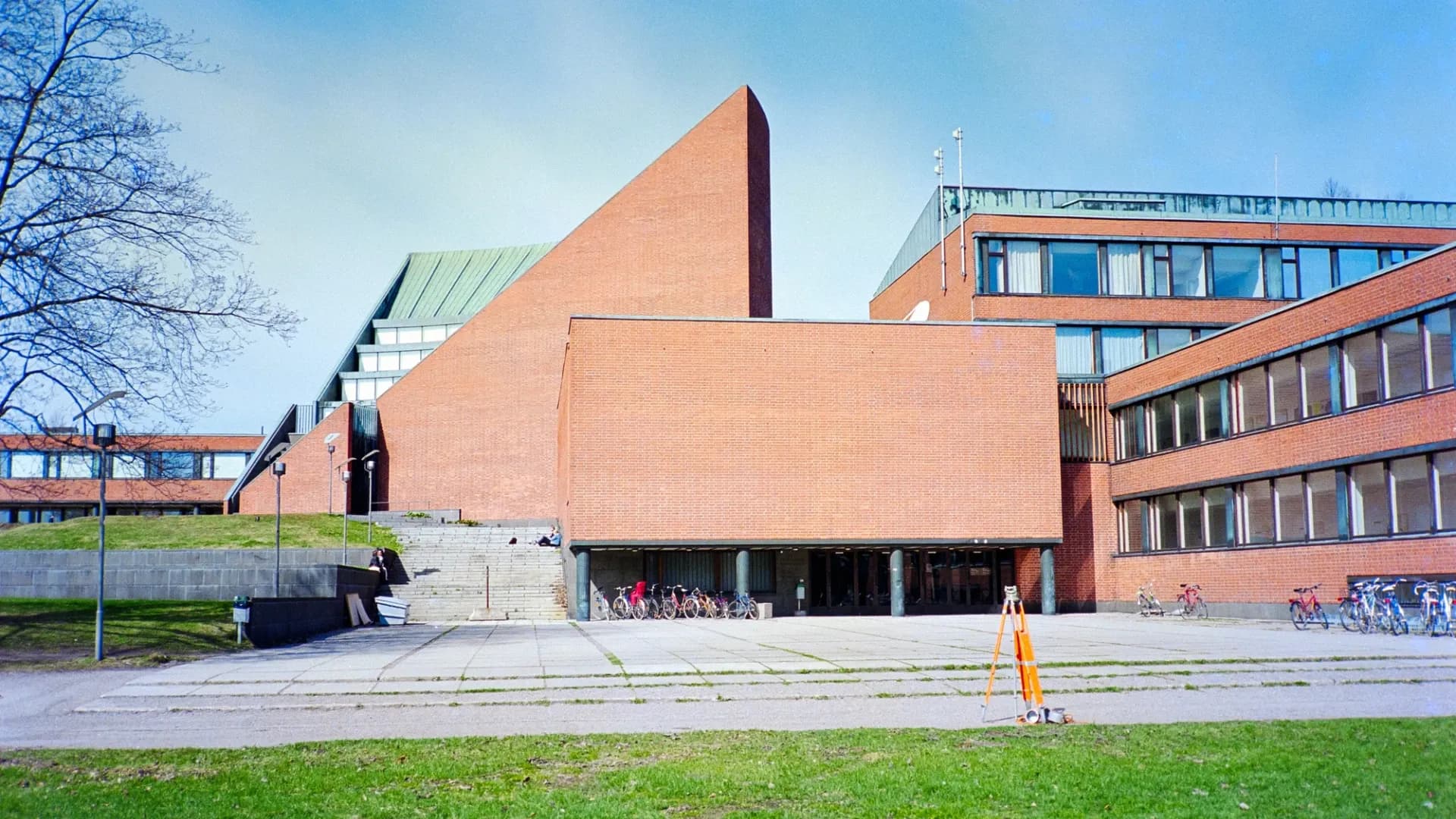
Finland has steadily positioned itself among Europe’s strongest quantum innovation hubs. Years of consistent investment in scientific research, combined with close collaboration between universities, research institutes and private companies, have produced a highly integrated ecosystem capable of attracting large-scale venture capital. Organisations including VTT Technical Research Centre of Finland and Aalto University have played a central role in transforming laboratory breakthroughs into commercially viable technologies, creating a pipeline of companies capable of competing on the global stage. The successful development of Europe’s first domestically built 50-qubit quantum computer represented a significant milestone for both Finland and the wider European technology industry, demonstrating that advanced quantum hardware can be designed and manufactured within Europe.
Much of the latest investor attention has centred on Finnish quantum computing leader IQM Quantum Computers. The company has rapidly evolved from an ambitious university spin-out into one of Europe’s most valuable quantum businesses. During 2026, IQM secured additional financing to accelerate research, expand internationally and strengthen its balance sheet ahead of its planned public market debut. The financing illustrates growing investor confidence that European quantum companies are approaching a commercial scale capable of generating sustainable long-term growth rather than remaining purely research-focused ventures.
IQM’s progress has become symbolic of a wider shift across Europe’s venture capital landscape. Investors are no longer seeking only software companies capable of generating rapid returns. Increasingly, they are prepared to finance capital-intensive deep technology businesses developing advanced hardware, specialised semiconductors and critical infrastructure. This marks an important evolution in European investment philosophy, recognising that technological sovereignty increasingly depends upon owning core technologies rather than relying on overseas suppliers.
Finland’s strength extends well beyond quantum computers themselves. Companies such as Bluefors have become internationally recognised suppliers of cryogenic refrigeration systems, an essential technology required for superconducting quantum processors to function at extremely low temperatures. As quantum computing expands globally, demand for supporting infrastructure has grown alongside demand for quantum processors, creating valuable investment opportunities throughout the supply chain. Rather than concentrating solely on hardware manufacturers, venture capital firms are now funding businesses developing enabling technologies that support the broader quantum ecosystem.
A growing number of Finnish start-ups are also attracting investor attention in specialist fields including quantum algorithms, quantum software, semiconductor design, quantum sensors and advanced control systems. Businesses such as SemiQon, QMill, Algorithmiq and Quanscient represent the expanding diversity of Finland’s quantum landscape. Their activities demonstrate that Europe’s quantum ambitions extend far beyond building quantum computers alone, encompassing an entire industrial value chain capable of creating long-term economic resilience.
The appeal of Finland has also encouraged greater interest in neighbouring European countries developing complementary quantum capabilities. Germany continues investing heavily in quantum hardware and industrial research, while France has expanded funding for quantum software and photonics. The Netherlands has strengthened its position in quantum networking and communications, while Denmark, Sweden and Switzerland continue producing internationally respected quantum research programmes. Rather than competing directly, these countries increasingly form interconnected innovation networks supported by European Union funding programmes, enabling venture investors to build diversified portfolios across multiple quantum disciplines.
European venture capital firms view this collaborative model as one of the region’s greatest competitive strengths. Cross-border research initiatives reduce technological duplication while allowing specialist expertise to emerge within individual national ecosystems. Investors therefore gain exposure to multiple complementary technologies without depending upon a single national market. This integrated European approach is becoming increasingly attractive as geopolitical competition intensifies around strategic technologies.
Public funding has also played a crucial role in encouraging private investment. European governments have recognised quantum technology as strategically important for economic competitiveness, cybersecurity and national resilience. Funding programmes from the European Commission, Business Finland and various national innovation agencies have significantly reduced early-stage commercial risks, making private venture investment more attractive. Public capital effectively provides the scientific foundation upon which venture investors can finance commercial expansion.
Market analysts believe this partnership between public institutions and private capital represents one of Europe’s most significant competitive advantages compared with other global regions. Rather than relying exclusively upon government laboratories or private corporations, Europe’s quantum ecosystem encourages continuous collaboration across academia, industry and investors. This integrated structure accelerates commercialisation while supporting scientific excellence.
Investor confidence has also been reinforced by improving commercial visibility across the sector. Quantum technology companies increasingly report customer demand from research laboratories, supercomputing centres, healthcare organisations and industrial manufacturers seeking access to advanced computational capabilities. Although widespread commercial deployment remains several years away, investors increasingly view current revenues as evidence that the industry has moved beyond theoretical experimentation.
The growing involvement of international institutional investors further illustrates this shift. Global investment firms have begun participating alongside European venture capital funds, bringing significantly larger financing capacity into the sector. Such participation provides quantum companies with the resources required to scale manufacturing, expand internationally and compete with well-funded rivals in North America and Asia.
Nevertheless, significant challenges remain. Quantum computing continues requiring substantial research expenditure, highly specialised engineering talent and patient capital prepared to accept extended commercial development periods. Technical obstacles involving error correction, scalability and manufacturing consistency must still be overcome before widespread commercial adoption becomes reality. Venture capital investors therefore continue balancing considerable technological risks against equally significant long-term opportunities.
Despite these uncertainties, the direction of travel appears increasingly clear. Europe’s quantum industry has matured sufficiently to attract sustained institutional investment rather than isolated funding rounds. Finland’s success demonstrates how consistent public policy, scientific excellence and entrepreneurial ambition can combine to build globally competitive technology sectors capable of attracting international capital.
As Europe seeks greater technological independence while strengthening its position within the global innovation economy, quantum technology is rapidly becoming one of its defining industrial priorities. Finland’s expanding ecosystem, supported by rising venture capital investment and reinforced by collaboration across neighbouring European countries, illustrates how the continent is transforming scientific leadership into commercial opportunity. For investors, policymakers and technology businesses alike, the quantum revolution is no longer a distant possibility but an emerging economic reality that is steadily reshaping Europe’s deep technology future.