
Desert Agriculture and Industrial Decarbonisation Reshape GCC’s Next Investment Wave
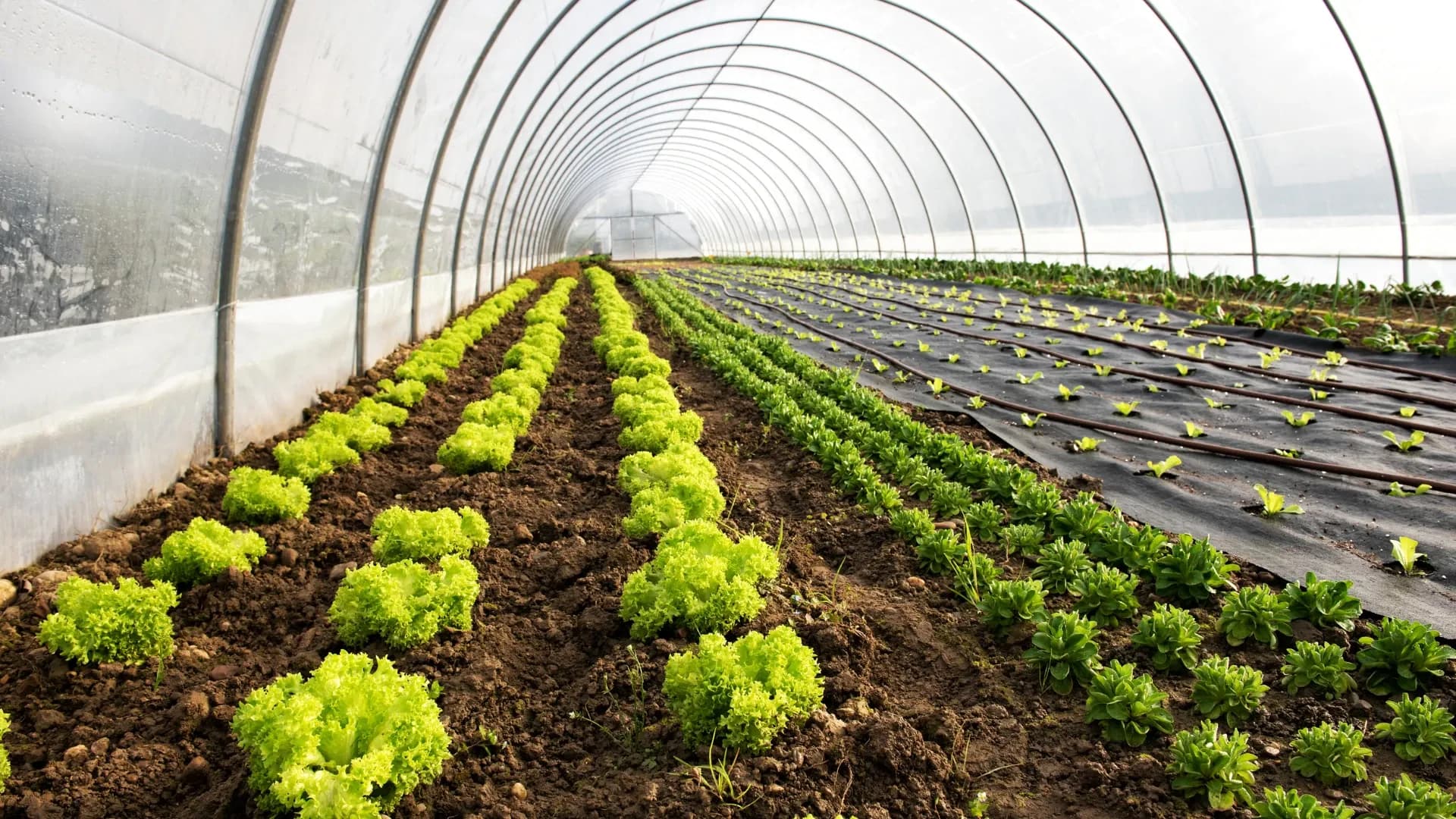

Recent public and private investments have accelerated commercial greenhouse farming, hydroponics, vertical agriculture, AI-powered irrigation systems and precision climate control technologies designed specifically for arid environments.
For decades, the Gulf Cooperation Council (GCC) built its economic strength on hydrocarbons, transforming desert landscapes into some of the world’s fastest-growing economies. Today, however, a different transformation is unfolding. Across Saudi Arabia, the United Arab Emirates, Oman and other Gulf states, investors are increasingly directing capital towards two interconnected sectors that promise long-term economic resilience: desert agriculture technology and industrial decarbonisation through carbon capture. Rather than existing as separate industries, these sectors are beginning to form an integrated business ecosystem capable of strengthening food security, reducing emissions and creating entirely new investment opportunities.
The GCC’s unique climate has long posed significant agricultural challenges. Limited freshwater supplies, extreme temperatures and poor soil quality have traditionally forced the region to depend heavily on imported food. Growing geopolitical uncertainty, supply chain disruptions and population growth have made food security a national priority. Consequently, governments are investing aggressively in technologies capable of producing high-value crops under some of the world’s harshest environmental conditions. Recent public and private investments have accelerated commercial greenhouse farming, hydroponics, vertical agriculture, AI-powered irrigation systems and precision climate control technologies designed specifically for arid environments. These developments are turning desert agriculture from a government-backed necessity into a commercially attractive investment sector.
Unlike conventional farming, modern desert agriculture relies on sophisticated engineering rather than fertile land. Artificial intelligence monitors plant health in real time, sensors optimise water consumption, robotics automate harvesting, and controlled-environment agriculture enables year-round production regardless of outdoor temperatures. Water-saving technologies have become particularly valuable, with advanced irrigation systems dramatically reducing freshwater consumption while maintaining consistent crop yields. Investors increasingly recognise that these innovations have commercial applications extending far beyond the Gulf, particularly as climate change affects agricultural productivity across southern Europe, Africa and Asia.
Saudi Arabia has emerged as one of the region’s most ambitious markets. Under Vision 2030, the Kingdom continues supporting agricultural innovation alongside broader sustainability initiatives designed to diversify the national economy. Meanwhile, the United Arab Emirates has expanded investment into agri-tech research, smart farming and food innovation hubs, attracting international technology companies seeking to commercialise next-generation farming solutions. Oman and Qatar have similarly introduced programmes encouraging sustainable agricultural production through partnerships between governments, research institutions and private investors. Together, these initiatives are establishing the GCC as a global testing ground for agriculture in extreme climates.
Equally significant is the rapid development of carbon capture and industrial decarbonisation. Heavy industries such as steel, cement, petrochemicals and refining remain central to Gulf economies, yet these sectors also generate substantial carbon emissions. Instead of viewing decarbonisation solely as an environmental obligation, Gulf governments increasingly regard it as a strategic industrial opportunity capable of preserving global competitiveness while creating entirely new commercial markets.
Carbon capture, utilisation and storage (CCUS) has therefore moved from pilot projects into large-scale industrial deployment. National energy companies are investing in infrastructure capable of capturing millions of tonnes of carbon dioxide annually from industrial facilities before permanently storing or commercially reusing the emissions. Captured carbon is finding growing applications in enhanced industrial processes, synthetic fuels, chemicals and advanced manufacturing, creating additional revenue streams alongside emissions reductions. This shift reflects a broader transition from traditional energy production towards integrated low-carbon industrial ecosystems.
The commercial significance extends well beyond environmental compliance. International markets, particularly Europe, continue introducing stricter carbon reporting requirements and border adjustment mechanisms that increasingly favour manufacturers with lower carbon footprints. For GCC exporters, industrial decarbonisation is becoming essential for maintaining access to premium global markets. Investments in carbon capture therefore represent not simply sustainability spending but strategic investments protecting export competitiveness and attracting environmentally focused international capital.
What makes the current investment landscape particularly compelling is the growing convergence between agriculture technology and industrial decarbonisation. Carbon dioxide captured from industrial facilities can be redirected into controlled-environment agriculture, where elevated carbon concentrations enhance crop productivity inside greenhouses. Similarly, renewable energy generated to support decarbonised industries can power energy-intensive indoor farming operations, creating circular business models that maximise resource efficiency.
Water management provides another important point of convergence. Advanced desalination facilities powered by renewable energy increasingly supply water to agricultural operations while simultaneously supporting industrial activities. Waste heat generated by industrial processes can also be repurposed within greenhouse systems, reducing operational costs while improving overall energy efficiency. Such industrial symbiosis demonstrates how separate sustainability investments can reinforce one another to improve commercial viability.
Private capital has responded accordingly. Venture capital firms, sovereign wealth funds and institutional investors are increasingly targeting businesses developing climate-resilient agriculture technologies, carbon management platforms, clean industrial processes and digital sustainability solutions. Rather than pursuing isolated investments, many investors now seek integrated platforms capable of serving multiple industries simultaneously. Artificial intelligence companies, environmental monitoring specialists, biotechnology firms and advanced engineering providers are becoming critical components of this expanding ecosystem.
The employment implications are equally significant. These emerging sectors require highly skilled engineers, software developers, agricultural scientists, environmental specialists and advanced manufacturing professionals. As universities across the Gulf expand research programmes focused on climate technology, biotechnology and sustainable engineering, local talent development is becoming closely aligned with future industrial demand. This knowledge-based workforce supports broader economic diversification while reducing dependence on imported expertise.
International collaboration continues strengthening the sector’s momentum. European technology providers, North American research institutions and Asian engineering firms increasingly partner with Gulf governments and private companies to accelerate commercial deployment. These partnerships combine global technological expertise with substantial regional investment capacity, allowing innovations to scale more rapidly than would otherwise be possible. The GCC is consequently evolving from a technology importer into an innovation exporter, with locally developed solutions finding applications in other water-stressed and carbon-intensive economies.
Financial institutions are also adapting. Green finance, sustainability-linked lending and climate investment funds have expanded significantly throughout the Gulf, providing dedicated capital for projects meeting increasingly rigorous environmental performance standards. Investors now evaluate agricultural technology and carbon capture projects not only through traditional financial metrics but also through measurable environmental impact, resource efficiency and long-term resilience. This evolution reflects broader changes in global capital markets, where sustainability has become an important driver of investment allocation rather than a peripheral consideration.
Challenges naturally remain. Carbon capture technologies continue requiring substantial capital expenditure, while large-scale desert agriculture must continually improve operational efficiency to remain commercially competitive. Regulatory frameworks, carbon pricing mechanisms and international sustainability standards continue evolving, requiring businesses to remain adaptable. Nevertheless, technological improvements, declining renewable energy costs and growing investor confidence are steadily improving commercial economics across both sectors.
The broader significance for the GCC extends beyond individual industries. Desert agriculture technology addresses food resilience while reducing import dependence. Carbon capture protects industrial competitiveness while supporting climate commitments. Together, they create interconnected value chains spanning energy, manufacturing, biotechnology, artificial intelligence, water management and advanced engineering. Rather than replacing the Gulf’s energy economy, these industries are complementing it by establishing entirely new sources of economic growth.