
Factory Activity Rises Across Asia Despite Middle East Tensions

Energy shocks stemming from the Middle East conflict will have intense ramifications across Asia in the next couple of months. But, at present, all research has been favourable towards Asian economies, suggesting that the global AI investment wave will bring many gains for the region.
The global demand for AI has powered Asia’s manufacturing sector in June, despite the economic slowdown caused by the Iran crisis. This is some much-needed relief for the region’s export-dependent economies. However, despite the expansion of manufacturing activity, prices remain high, owing to supply shortages and shipping delays.
Energy shocks stemming from the Middle East conflict will have intense ramifications across Asia in the next couple of months. But, at present, all research has been favourable towards Asian economies, suggesting that the global AI investment wave will bring many gains for the region. Increasing international demand for semiconductor chips, data centre equipment and technologies is a growth engine for these Asian countries and also protects them against geopolitical upheavals and supply chain disruptions.
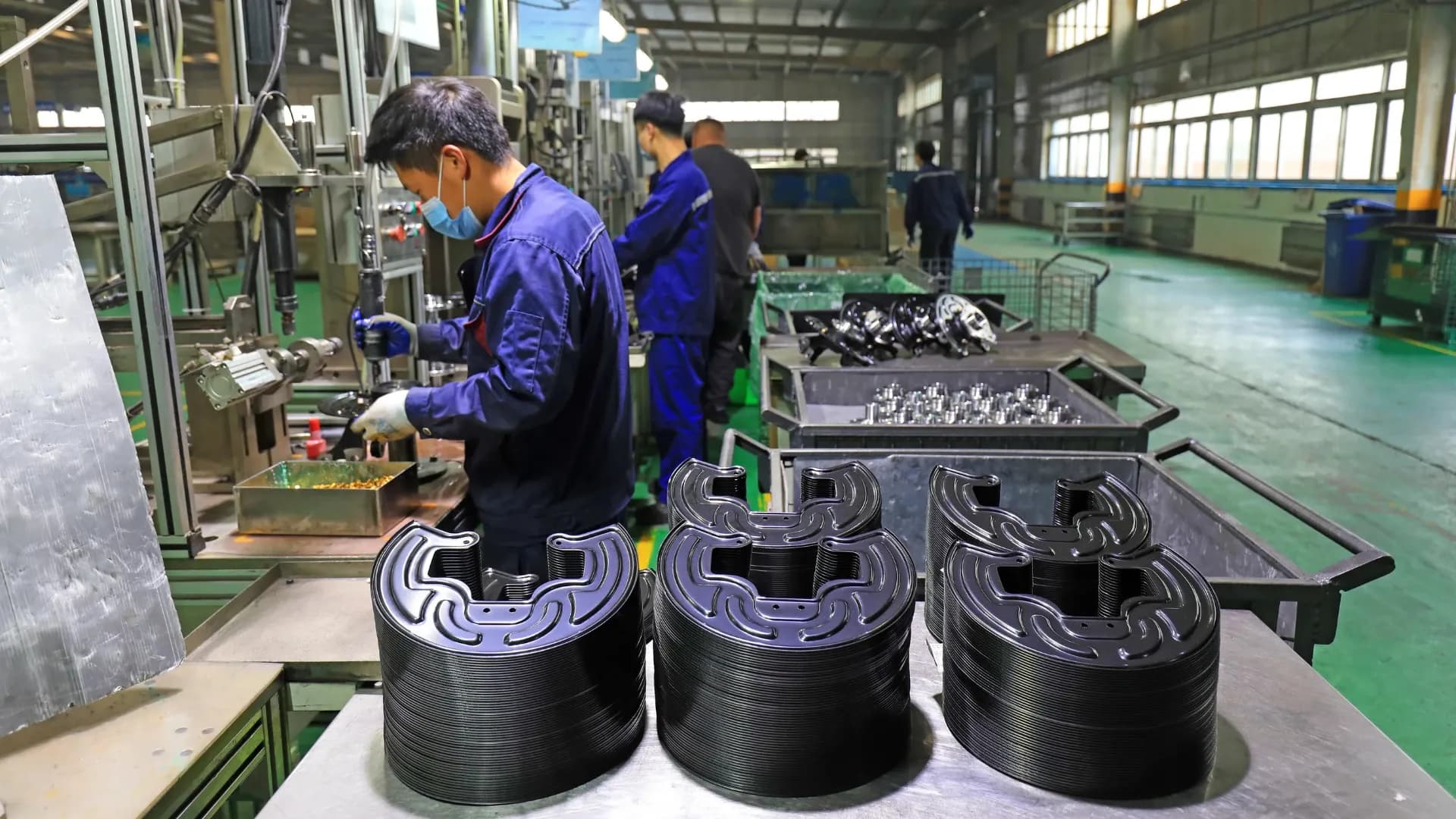
Three of the continent’s biggest economies- China, Japan and South Korea- all reported climbing factory activity in June due to surging demand for chips, computers and other AI-related products. This was coupled with companies stockpiling to protect themselves against shortages and price rises from the US-Israel and Iran conflict.
Purchasing Manager’s Index (PMI) hit 51.7 in China for June, a seventh consecutive month of expansion. The PMI contracted from 51.8 in May but exceeded analysts’ expectations of 51.6. Exports from the $20 trillion economy are likely to meet international AI products and chip demand. The government must also front-load to evade the US Section 301 tariffs, which will come into effect by the end of July.
Japan also reported an expansion of manufacturing activity, recording its best quarterly performance since early 2014, as new orders grew at its fastest pace in two years. According to S&P Global, Japan’s PMI rose to 54.8 in June from 54.5 in May, expanding for a sixth consecutive month. Along with output, intermediate and investment goods producers also witnessed increased activity, but consumer goods output fell for the first time in three months.
However, price pressures remained high across the country. Input cost inflation remained the same as its May figure and price inflation constricted only minutely from May’s multi-year high. Japanese manufacturers remain optimistic that output will increase over the next year, helped by AI demand and semiconductors and higher capital investment. However, they are exercising caution given the ongoing geopolitical tensions, rising costs, labour shortages and the weak yen.
Although South Korea reported a seventh consecutive month of manufacturing activity expansion, its PMI was 52.1 in June, a significant reduction from May’s 54.8 – the highest in over five years. There was a slower-than-usual growth in output and new orders, while new export orders fell for the second straight month, as a consequence of the Iran conflict.
Producers have identified rising raw material prices and disruptions in the global supply chain, resulting in difficulties in sourcing and receiving inputs due to delays and shortages, as factors contributing to slowing factory activity. Analysts are raising concerns about weakening business optimism, which has fallen to its lowest level since November 2025. This points to two crucial problems- the health of the domestic economy and the potential for raw material prices to remain higher for a considerable time period.
Factory activity in other Asian economies also followed a similar expansionist trend. In the Philippines, there was a slight increase to 50.9 in June from 50.8 in May, and in Malaysia, the figure went to 50.7 from 49.9 in the same time period. Taiwan and Vietnam also reported increased manufacturing activity. While India also experienced increased factory activity, the expansion was at its second-slowest pace in four years in June, as falling demand in Europe caused export orders to shrink.