
Navigating Oil Dynamics: Can Africa Bridge The Gap Between Potential And Reality?

A report released by S&P Global CERA in February revealed that the eight major oilfield development projects scheduled globally this year will increase crude oil production by over 450,000 barrels per day. Of this, Africa and South America have been identified as the primary drivers contributing to this increase, with limited increases from the US and the Middle East.
After the US sanctioned it for allegedly purchasing Iranian oil, China’s Hengli Petrochemical has bought around 2 million barrels of West African crude. Hengli, which has denied the allegations, is also considering a mainstream supply partnership with the oil supplier in an attempt to get off the US blacklist.
Operating a 400,000-barrels-per-day refinery, Hengli has sought to source non-Iranian oil, with West Africa as a viable alternative. It has already bought two million barrels of West African crude, which are likely to be delivered around late June or July.
A report released by S&P Global CERA in February revealed that the eight major oilfield development projects scheduled globally this year will increase crude oil production by over 450,000 barrels per day. Of this, Africa and South America have been identified as the primary drivers contributing to this increase, with limited increases from the US and the Middle East. Several projects have already been initiated on the continent and are expected to drive energy exports globally.
Uganda is being hailed as the ‘Largest New Oil Field’ and ‘Largest Market Supply Increase’ in 2026, due to the Tilenga and Kingfisher projects, scheduled for commissioning in October. With an initial output of over 149,000 barrels per day, TotalEnergies of France, which operates the Tilenga project, has the largest annual production growth. It is made up of six onshore oil fields with an estimated recoverable reserve of 836 million barrels.
CNOOC is in charge of the Kingfisher project, which will initially produce 27,000 barrels per day before reaching a peak of roughly 40,000 barrels by 2027. By November 2025, it was estimated to have over 214 million barrels of recoverable reserves with a 74% completion rate. With a combined peak daily output of 230,000 barrels and a predicted cumulative production of 1.4 billion barrels, both projects have a minimum production lifespan of 20 years.
The projects rely heavily on the 1,443-kilometre East African Crude Oil Pipeline through which crude is transported from Uganda to Tanzania for exports. This pipeline is 75% completed, but progress has been halted due to environmental concerns. However, operations were expected to begin in mid-2026, and the pipeline delay is the main constraint on the two projects’ capacity realisation.
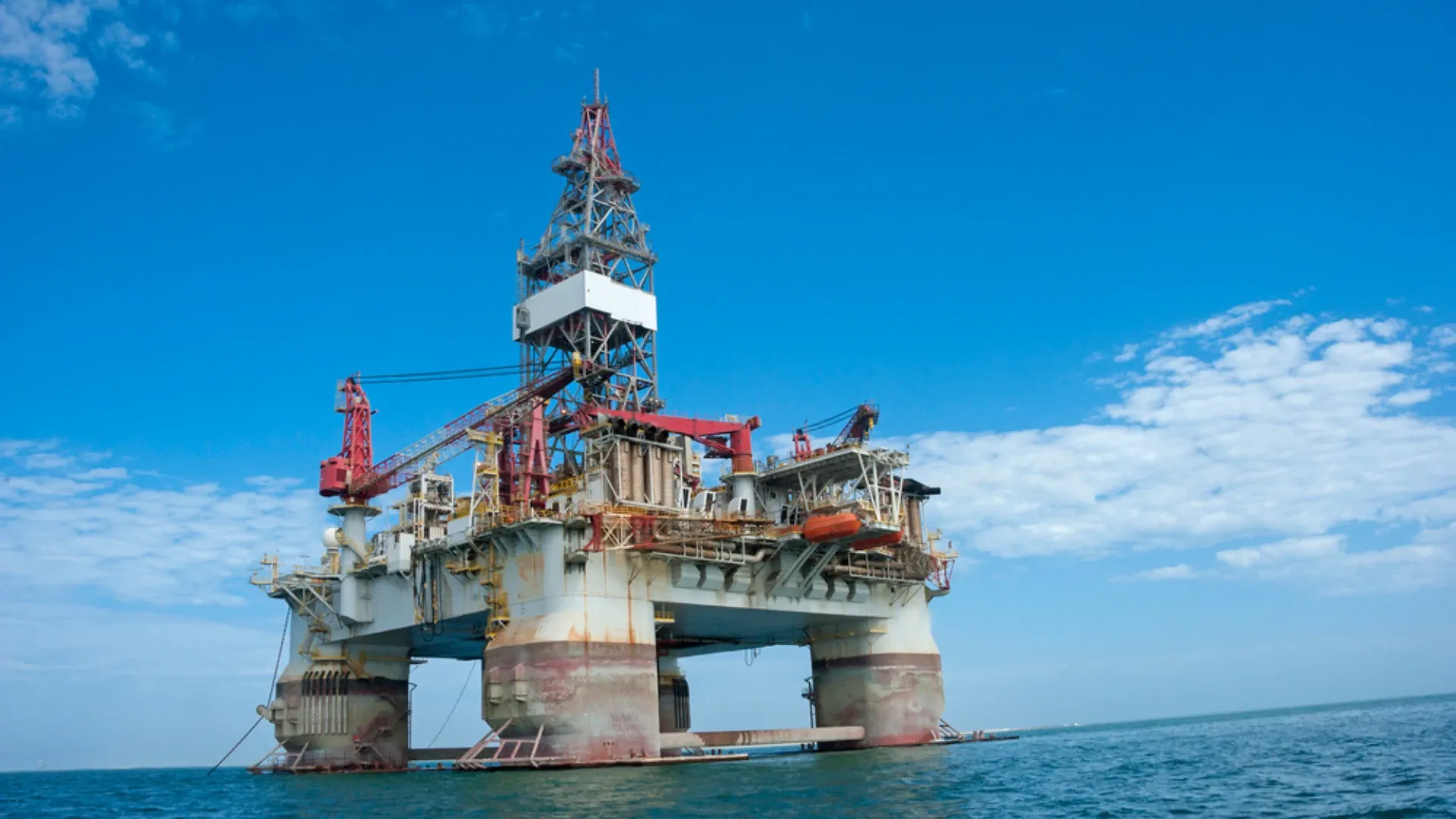
While Ugandan exports may be delayed, other African countries like Côte d’Ivoire have announced production plans. Houston-based Vaalco Energy has brought back online a field on the coast of Côte d’Ivoire after restoring the lifespan of a floating production, storage, and offloading (FPSO) vessel deployed in the country. The company’s efforts have led to the restart of production at the Baobab field after it was halted in January 2025, within the projected timeline.
Despite sitting on a massive volume of energy resources, many African countries rely on foreign oil and are facing energy scarcity in the wake of the Iran crisis and the subsequent closure of the Strait of Hormuz. This energy insecurity became even more apparent when TotalEnergies EP Congo announced in May that it had discovered hydrocarbons on the Moho permit, offshore of the Republic of Congo.
This find could amount to nearly 100 million barrels of recoverable resources, but it is unlikely that these resources will reach a majority of Congolese citizens, many of whom live below the poverty line. While energy companies are reporting record profits, the African people are suffering from supply shortages.
The Republic of Congo is the third-largest oil exporter in Africa, but homegrown oil companies often underreport and undervalue their exports to reduce their tax bills. The country’s national oil company, the National Petroleum Company of Congo, has only a 15% stake in the recent find, raising questions about whose oil it is. Does the recent discovery belong to international MNCs or the people of Congo who are unable to afford these resources available in their own backyard?
This highlights one of the biggest challenges to Africa’s development: resource exploitation. Most African countries are unable to utilise their resources to the optimal level. However, all hope is not lost, as things are turning a corner. Industry experts have pointed out that Angola, whose oil sector was declining, was able to transform into an industry capable of attracting billions of dollars in investment with the help of suitable reforms.
These reforms helped Angola stabilise production and attract investments, moving the country’s oil sector towards its most ambitious era so far. The reforms, which can be a blueprint for other oil-producing countries in Africa, include the establishment of an upstream regulator (ANPG) for better exploration and transparency and also restructuring the national oil company Sonangol.
The ANPG, which oversees the oil sector, focuses on improving certainty, procedural clarity and licensing processes. Sonangol, therefore, was able to simply focus on its role as an operator. As a result, the company has since expanded its portfolio, sought more international partnerships and is also working towards an IPO.
Africa is becoming a crucial hub for the world’s oil supply because of the changing dynamics of the global energy market. The enormous production potential of the continent is demonstrated by numerous projects lined up and the growing interest of international companies to invest in African oil.
The contradiction of local energy poverty in the face of resource exploitation spearheaded by global players remains a major obstacle. In order to convert enormous natural wealth into local prosperity, institutional transparency and strategic partnerships must be given top priority if Africa is to genuinely profit from this energy boom.