
GCC Tourism Defies Regional Uncertainty as Saudi Arabia’s Religious Travel Economy Powers a New Era of Growth

The GCC’s tourism momentum is particularly noteworthy given the wider regional backdrop. Political uncertainty, conflicts in neighbouring areas and fluctuations in global travel sentiment might ordinarily discourage visitor arrivals.
Despite persistent geopolitical tensions across the Middle East, the Gulf Cooperation Council (GCC) tourism industry continues to demonstrate remarkable resilience. While global investors and travel operators closely monitor regional security developments, countries such as Saudi Arabia, the United Arab Emirates, Qatar and Oman are steadily expanding their tourism economies, attracting millions of international visitors and reinforcing the sector’s role as a key pillar of economic diversification.
At the centre of this transformation stands Saudi Arabia, where religious tourism linked to Hajj and Umrah is evolving into one of the world’s most sophisticated travel ecosystems. Supported by large-scale infrastructure investment, digital innovation, healthcare modernisation and smart logistics, the Kingdom is turning pilgrimage travel into a powerful economic engine while improving the experience for millions of visitors each year.
The GCC’s tourism momentum is particularly noteworthy given the wider regional backdrop. Political uncertainty, conflicts in neighbouring areas and fluctuations in global travel sentiment might ordinarily discourage visitor arrivals. Instead, Gulf governments have accelerated efforts to position their countries as safe, technologically advanced and globally connected destinations.
The UAE remains a leading international tourism hub through Dubai and Abu Dhabi, benefiting from world-class aviation connectivity, luxury hospitality and a thriving events industry. Qatar has continued to build on the international profile it gained through the FIFA World Cup, while Oman is attracting visitors seeking cultural heritage, eco-tourism and nature-based experiences. Across the region, governments are investing heavily in airports, hotels, entertainment districts and digital tourism services to ensure that visitor growth remains strong despite external challenges.
Saudi Arabia has emerged as the most ambitious player in this transformation. Once known primarily as a destination for religious pilgrims, the Kingdom is now pursuing a broader tourism strategy under Vision 2030. Tourism has become one of the central pillars of the country’s economic diversification agenda, with authorities targeting 150 million annual visitors by the end of the decade. Religious tourism, however, remains the foundation upon which much of this expansion is being built.
Hajj and Umrah occupy a unique position in the global travel industry. Unlike traditional tourism segments that are highly sensitive to economic cycles, religious pilgrimage benefits from consistent demand rooted in faith. This gives Saudi Arabia a relatively stable and predictable tourism base that few destinations can match.
Recent figures indicate that Saudi Arabia has already exceeded several interim religious tourism targets. The Kingdom recorded approximately 16.9 million Umrah pilgrims in 2024, significantly surpassing earlier expectations and placing the country ahead of schedule in its objective of welcoming 30 million annual Umrah pilgrims by 2030. The sector generates substantial revenues across hospitality, transportation, retail, telecommunications, food services and healthcare, creating powerful multiplier effects throughout the economy.
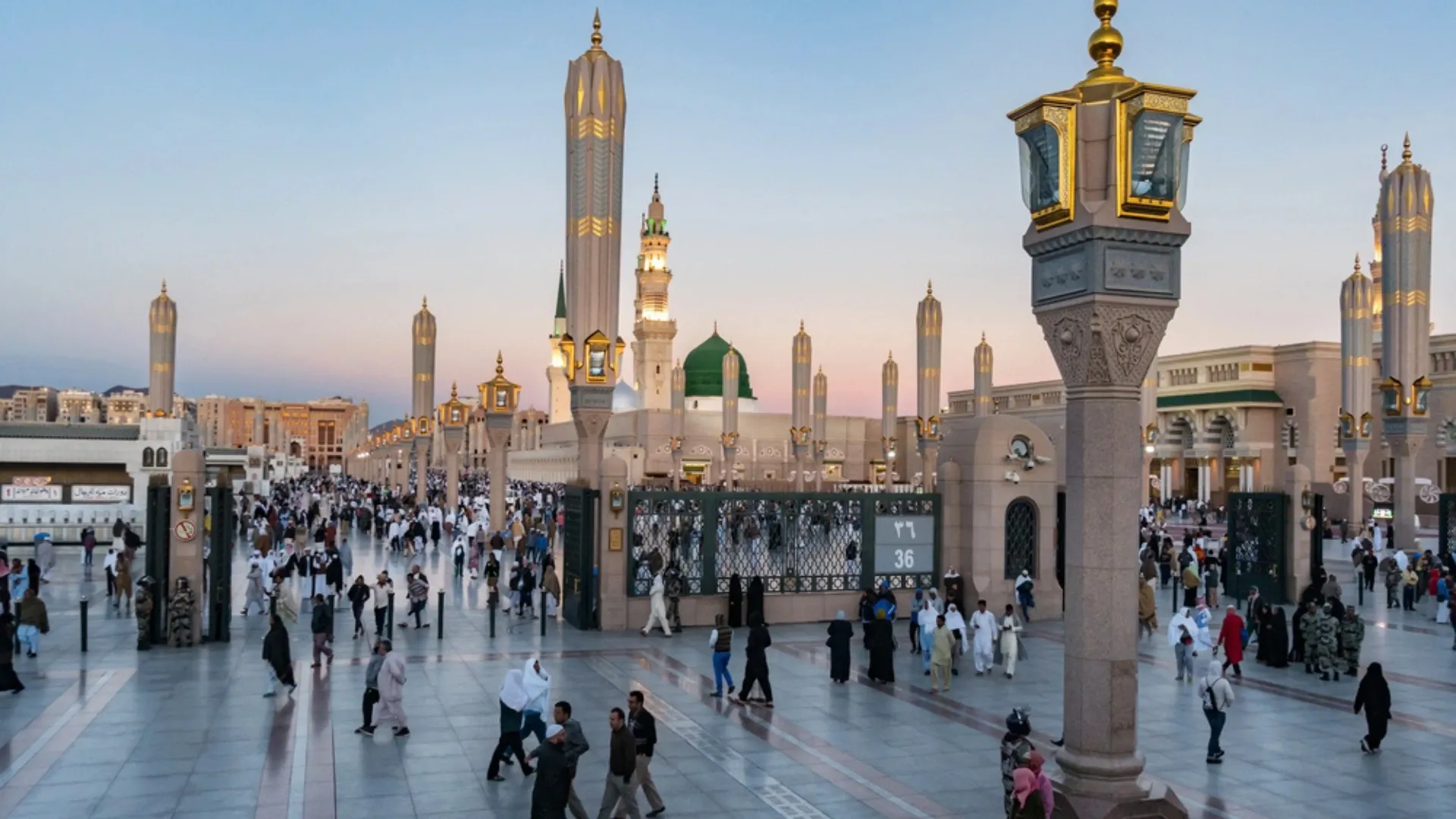
The scale of investment supporting this growth is unprecedented. Major expansions at the holy sites in Makkah and Madinah have increased capacity and improved operational efficiency. The Grand Mosque has undergone extensive development to accommodate larger crowds, while transport networks connecting airports, rail services and pilgrimage sites continue to be enhanced. These projects are designed not only to accommodate rising visitor numbers but also to improve safety, comfort and sustainability.
Technology is becoming an increasingly important component of Saudi Arabia’s pilgrimage strategy. The Kingdom has embraced digital transformation to manage one of the largest recurring human gatherings on Earth. Central to these efforts is the Nusuk platform, which integrates visa processing, travel arrangements, accommodation bookings, transportation services, permits and real-time guidance into a single digital ecosystem.
The platform has experienced rapid growth, reportedly serving tens of millions of users from more than 190 countries. By streamlining administrative processes and reducing friction throughout the pilgrimage journey, Saudi Arabia is demonstrating how digital infrastructure can significantly enhance both operational efficiency and visitor satisfaction.
Smart logistics have become equally critical. Managing the movement of millions of pilgrims within a limited geographical area requires sophisticated planning and real-time coordination. Advanced crowd-management systems, digital permits, biometric verification technologies and data-driven monitoring tools are increasingly being deployed to improve safety and reduce congestion.
The importance of these innovations has become even more evident in recent years as authorities work to address climate-related challenges. Following severe heat conditions that affected pilgrims during previous Hajj seasons, Saudi Arabia expanded cooling systems, shaded walkways and environmental management initiatives throughout key pilgrimage zones. Massive cooling infrastructure and expanded shaded areas are now helping to reduce health risks associated with extreme temperatures.
Healthcare technology is another area receiving significant attention. The Kingdom has invested heavily in medical infrastructure designed specifically to support large-scale religious gatherings. Enhanced emergency response systems, digital health monitoring, specialised medical facilities and expanded health insurance coverage for international pilgrims are all contributing to a more resilient pilgrimage ecosystem.
A recently introduced health insurance framework for overseas pilgrims reflects Saudi Arabia’s broader commitment to visitor welfare. The initiative strengthens healthcare access while providing greater confidence to international travellers and pilgrimage operators alike.
The integration of healthcare and technology also aligns with wider GCC ambitions to become global leaders in smart-city development and digital public services. Across the Gulf, governments are increasingly leveraging artificial intelligence, data analytics and automation to improve tourism experiences, strengthen infrastructure management and support economic diversification strategies.
Importantly, the continued growth of religious tourism is creating opportunities that extend far beyond pilgrimage activities themselves. Hotels, airlines, retail operators, technology providers, healthcare companies and infrastructure developers are all benefiting from rising visitor numbers. The result is a more diversified economic ecosystem capable of generating employment, attracting foreign investment and reducing reliance on hydrocarbons.
The GCC’s tourism success therefore represents more than a recovery story. It reflects a structural shift in how Gulf economies are positioning themselves within the global marketplace. While geopolitical uncertainty remains a reality, the region’s leading tourism destinations are proving that long-term investment, strategic planning and technological innovation can outweigh short-term disruptions.
For Saudi Arabia in particular, the expansion of the religious tourism economy illustrates how traditional strengths can be modernised to support future growth. By combining centuries-old pilgrimage traditions with cutting-edge logistics, digital platforms and advanced healthcare systems, the Kingdom is creating a model that could redefine large-scale religious tourism worldwide.
As regional competition intensifies and global travel patterns continue to evolve, the GCC’s ability to sustain tourism growth amid uncertainty may become one of the region’s most significant economic achievements. The continued expansion of Saudi Arabia’s Hajj and Umrah ecosystem suggests that faith-driven travel, supported by modern infrastructure and technology, will remain a powerful force shaping the Gulf’s economic future for years to come.