
New Green Loans Plan By Bank Could Attract Billions In Climate Finance
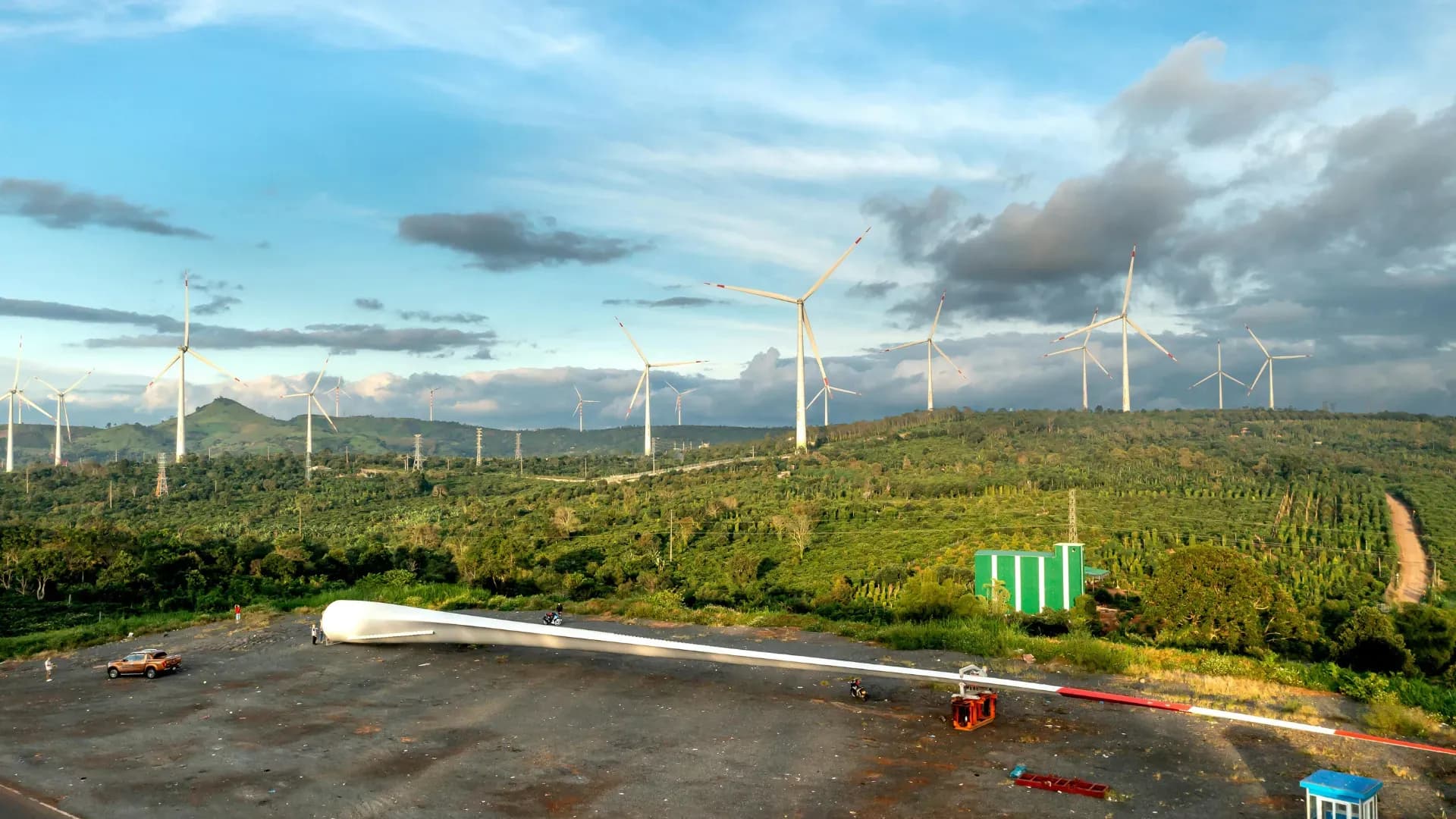

This proposal is a ‘transformation’ and an ‘engine for green growth’, believing that it could raise the trillions needed for climate financing in the future.
The need of the hour is climate action. But climate action requires climate financing, and sourcing this funding has been a Herculean task for countries. At every climate and non-climate-related international conference, governments, international financial institutions, and private sector entities have repeatedly discussed strategies to attract investments for climate finance.
However, the development gap, the lack of enforcement, and the unwillingness of leading countries and international institutions are putting the Global South in a vulnerable position, unable to cope with the fast-approaching climate emergencies.
Avinash Persaud, a special adviser on climate change to the President of the Inter-American Development Bank (IADB), has devised a plan to support renewable energy loans across developing countries by mobilising funds from the private sector.
The proposal could garner billions in new investments in the currently underdeveloped green economy in poorer countries over the next few years. Persaud believes that these investments could make up the bulk of the $1.3 trillion in annual climate finance that the developing world has estimated it requires by 2035.
In an interview with The Guardian, Persaud described this proposal as a ‘transformation’ and as ‘an engine for green growth’, believing that it could raise the trillions needed for climate financing in the future. His proposals will be laid before a UN meeting in Germany this week and can bolster the COP30 negotiations set to take place in Brazil this November.
Most countries have missed the UN deadline by which they had to outline their plans for greenhouse gas emissions. The UN is, however, not particular about upholding the last date, as the organisation believes that countries require sufficient time to come up with a foolproof plan to deal with their emissions.
While previous COP summits had committed to transitioning away from fossil fuels, recent research conducted by Oil Change International suggests that developed countries are abandoning their clean energy plans in exchange for oil and gas resources. Most developed countries are also planning to expand their fossil fuel extraction.
The campaign group analysis found that 70% of projected new oil and gas expansion in 2025-35 would be a result of fuel and natural gas extraction by the US, Canada, Norway and Australia. With US President Donald Trump’s re-election, Washington is not only resolved to increase its crude oil production, but the Trump administration has also strong-armed Europe to replace Russian oil supplies with that of the US.
Spearheaded by IADB, Persaud proposes to buy up loans to renewable energy projects, allowing billions of dollars to flow into the sector through private financing. If taxpayer-funded development banks buy up existing loans to green projects in poor countries, it makes room for private sector lenders, thereby giving global climate finance a much-needed boost.
Since these loans are in developing nations with credit ratings lower than those of wealthy states, their stringent creditworthiness requirements frequently prohibit mainstream private sector investors, like pension funds, from dealing with them, although they are already performing and therefore pose a relatively low risk. However, the ‘repackaged’ loan funding can satisfy private sector norms if those loans are instead backed by development banks, which can guarantee default and have perfect credit ratings.
The basic premise is that when development banks buy the loans, they pay a small premium to the current private sector creditors who own the loans, and the developers of renewable energy projects have to agree to use the money they get for new projects. This creates a ‘virtuous circle’ whereby developers, who are already adept at creating successful renewable energy schemes, search for new opportunities following the purchase of the loans, which in turn spurs further investment.
The Global South has repeatedly maintained that it bears the brunt of the blunders of the developed world, and therefore, it is the responsibility of the richer countries to help them develop and build the necessary infrastructure to prevent climate adversities. Therefore, the fortnight conference at Bonn will focus heavily on climate financing, making it the perfect platform for Persaud to present his proposals and hopefully persuade world leaders to implement this plan at the earliest.