
Oman Takes Flight: Can Airport Cities Become the Sultanate’s Next Economic Powerhouse?
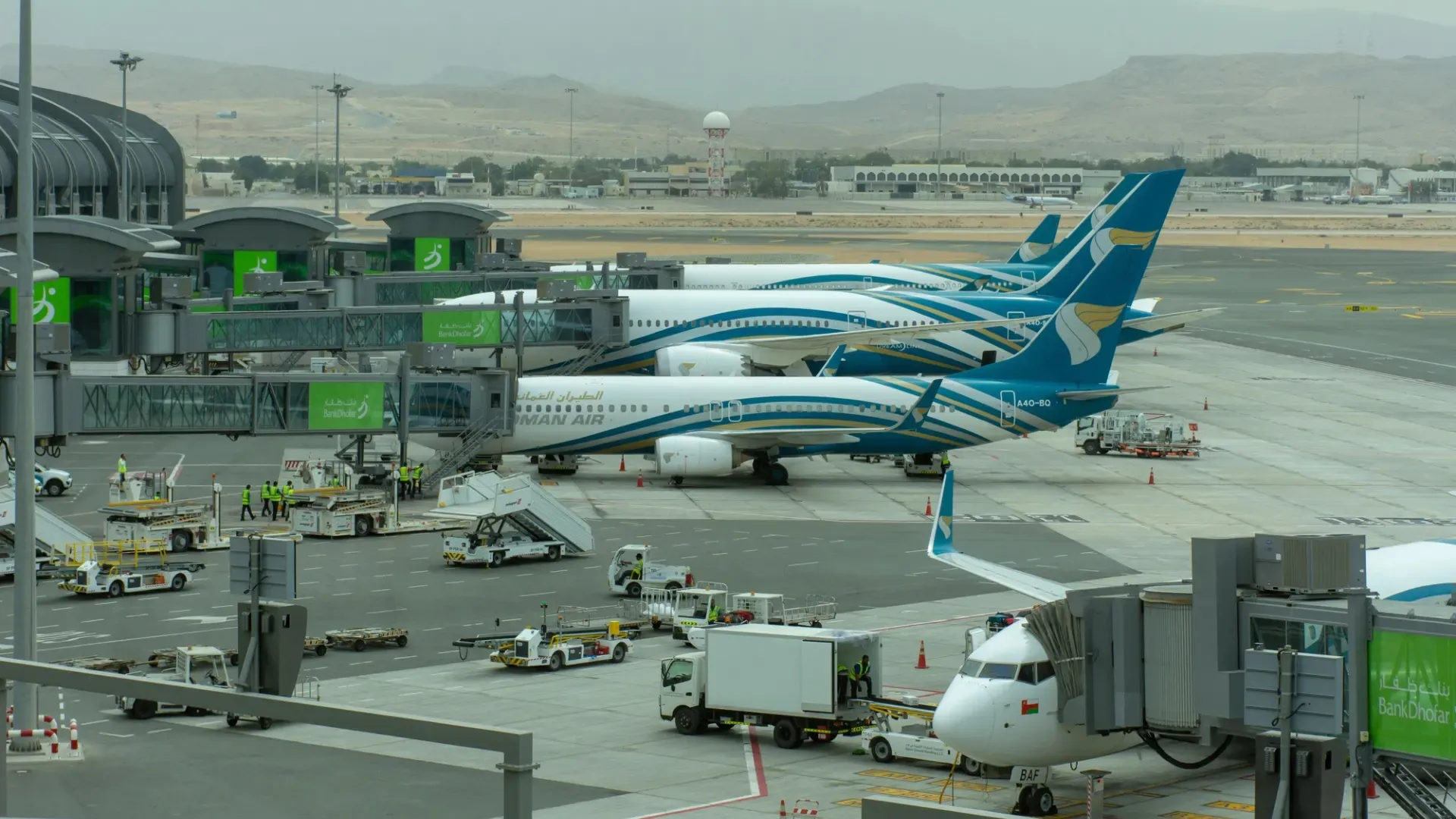

Oman is entering a new chapter in its aviation story. What was once viewed primarily as a means of connecting Muscat, Salalah and other regional centres with the outside world is increasingly being positioned as a platform for investment, logistics, tourism and commercial development. The shift became particularly clear on 5 October 2026, when Oman’s Civil Aviation Authority held its Aviation Investment Forum and placed airport cities, free zones, logistics and private-sector investment at the centre of the country’s aviation ambitions.
The timing is significant. Oman’s National Aviation Strategy 2040 is moving from long-term planning towards implementation, with the first phase focused on establishing the regulatory, institutional and investment foundations required for future expansion. The strategy contains 39 initiatives and seeks to make aviation a stronger contributor to economic diversification under Oman Vision 2040. Most importantly for investors, the Civil Aviation Authority is targeting cumulative private-sector investment of OMR 1.7 billion by 2040. The central idea behind Oman’s airport-city ambition is simple but potentially transformative: an airport should not end at the terminal gates. Its surrounding land can become a commercial ecosystem containing offices, hotels, retail, logistics facilities, warehousing, maintenance operations, technology businesses and other services that generate economic activity throughout the day.
Oman’s latest investment push explicitly identifies land development and commercial and logistics activities around Muscat, Salalah and Sohar airports as opportunities for investors. The objective is to transform these locations into integrated economic hubs rather than treating them solely as aviation infrastructure. This approach could give Oman an important advantage. Its geographical position between major Asian, African and Middle Eastern markets provides a natural foundation for logistics and trade. By connecting airports with free zones, ports, road networks and commercial districts, the Sultanate can potentially capture more value from every passenger, aircraft movement and shipment that enters its economy.
Muscat International Airport is likely to remain the centrepiece of this strategy. The airport already has substantial passenger-handling capacity, while the wider Muscat Airport Free Zone is being developed to attract companies seeking direct access to aviation and integrated logistics infrastructure. The Muscat Airport Free Zone was declared operationally ready in 2026, with Phase One infrastructure covering 400,000 square metres. Asyad Group also signed its first usufruct agreement with Nama Real Estate Company for a 25,000-square-metre business complex, marking the beginning of investment activity within the zone. The free zone offers direct airport access, integrated logistics connectivity, investor incentives and a simplified business set-up process. Its integration with Asyad’s wider logistics ecosystem is particularly important because it connects air freight with Oman’s ports, maritime networks and land transportation infrastructure.
This creates the foundations for a much broader commercial proposition. A business operating close to Muscat airport could potentially use the location not only for passenger connectivity but also for imports, exports, warehousing, distribution and regional headquarters operations. The latest concession agreement adds another layer of confidence to Oman’s plans. On 5 October 2026, the Civil Aviation Authority and Oman Airports signed a 35-year concession agreement covering the operation, management and development of Muscat International Airport, Salalah Airport and Sohar Airport.
The agreement is designed to improve operational and investment efficiency while supporting future airport expansion, passenger services and commercial development. It also specifically seeks to transform the airports into integrated logistics and commercial hubs aligned with Oman Vision 2040. For investors, the long concession period could provide a clearer framework for infrastructure planning and commercial partnerships. Airport-city development typically requires long-term capital because hotels, offices, logistics parks and specialised aviation facilities cannot be built around short investment cycles.
The agreement therefore represents more than an operational arrangement. It provides a potentially important platform for turning Oman’s airports into long-term economic assets. If Muscat represents Oman’s international business gateway, Salalah demonstrates how aviation can amplify tourism-led economic growth. The 2026 Khareef season provided a particularly strong illustration. Between June and August, Salalah Airport handled 686,808 arriving and departing passengers across 5,148 flights. Passenger numbers increased sharply through the season, reaching 357,985 in August alone.
SalamAir separately reported that it carried more than 180,000 passengers to and from Salalah during the same three-month period, representing 20% growth from the previous year. These figures demonstrate why an airport city around Salalah could have a different economic model from Muscat. Hospitality, tourism experiences, retail, food and beverage, entertainment, business services and seasonal accommodation could all be integrated with aviation demand.
In other words, Salalah’s airport does not simply bring visitors to Dhofar. With the right surrounding development, those visitors can stimulate a wider commercial ecosystem. Sohar presents another possibility. Its strategic relationship with industrial and logistics activity gives the airport-city concept a more trade-oriented character. Oman’s aviation strategy is already placing greater emphasis on air cargo, connectivity and integration with the national logistics ecosystem. The National Aviation Strategy 2040 identifies private-sector participation and infrastructure development as important mechanisms for improving Oman’s competitiveness as a regional aviation hub.
This is particularly relevant as supply chains become more focused on speed, resilience and geographical diversification. Air cargo cannot compete with maritime transport on cost for every product, but it can be highly valuable for time-sensitive goods, high-value components, pharmaceuticals, electronics and specialised industrial requirements. An airport-city model around Sohar could therefore complement the wider industrial and port economy rather than compete with it.
Oman’s opportunity should not be confused with guaranteed growth. Passenger traffic has faced short-term pressure. By the end of July 2026, Oman’s airports recorded 7.69 million passengers, down 8.1% year on year. Muscat International Airport handled 6.86 million passengers during the period, while Salalah recorded around 798,000. Regional aviation has also faced geopolitical and economic headwinds. IATA data reported a significant contraction in Middle Eastern airline passenger demand during August 2026, while Muscat experienced an annual decline in passenger traffic during the month. That makes the airport-city strategy even more important. If airports depend solely on passenger growth, their commercial performance can be vulnerable to airline capacity changes, geopolitical disruption and seasonal demand. A diversified airport ecosystem can create additional revenue streams through property, logistics, maintenance, retail, hospitality and business services.