
Australia’s Space Economy Is Building Its Launchpad for a New Investment Era

Queensland is emerging as one of the most important pieces of Australia’s commercial space strategy.
Australia’s space industry is moving into a more commercially ambitious phase, and the next opportunity may not simply be in rockets or satellites. It could be in the infrastructure that makes the entire ecosystem possible.
From Queensland’s emerging launch capabilities to South Australia’s expanding re-entry and range infrastructure, Australia is gradually positioning itself as a regional space hub for the Indo-Pacific. The investment case is becoming broader: launch facilities, testing ranges, ground stations, satellite manufacturing, space communications, re-entry services and specialised supply chains could all benefit as demand for access to orbit increases.
The timing is particularly significant. In July 2026, the Australian Government released a new Statement on Space designed to strengthen domestic industrial capability, move Australian companies further up the value chain and expand their access to global markets. The government also identified space as important to both economic resilience and national security. That policy shift matters because commercial space is no longer a niche technology story. It is increasingly becoming an infrastructure story.
One of Australia’s strongest advantages is geography. Its enormous landmass, relatively low population density in key regions and long coastlines create opportunities for launch and testing infrastructure that are difficult to replicate in densely populated markets. Queensland is particularly well placed. The state has direct access to equatorial orbital trajectories from its eastern coastline, while its open waters and geographic position can support a wide range of launch activities. Queensland’s government describes the global launch services market as already worth billions of US dollars and sees opportunities across launch, testing, manufacturing and supply chains.
This geographical advantage could become increasingly valuable as satellite operators seek greater flexibility in launch schedules. The global space economy is becoming more dependent on frequent access to low Earth orbit, particularly as satellite communications, Earth observation, defence applications and space-based data services expand. Australia therefore does not necessarily need to compete directly with the world’s largest launch markets. It can build a specialised role within the wider Indo-Pacific ecosystem.
Queensland is emerging as one of the most important pieces of Australia’s commercial space strategy. The state’s aerospace sector is already generating around A$1.26 billion and growing at approximately 7 per cent a year, according to Trade and Investment Queensland. Its capabilities span launch activities, ground systems, Earth observation and specialist manufacturing.
The significance goes beyond the headline figures. Launch infrastructure can create demand for an entire network of businesses. Rocket developers require component suppliers, engineering firms, testing facilities, software specialists, logistics providers and highly skilled technicians. Satellite companies need ground communications, mission control, data processing and integration services.
That makes a launch site potentially more valuable than the physical pad itself. Queensland’s experience also demonstrates why regional space infrastructure can become an industrial development strategy. The state has previously estimated that its space economy could contribute between A$3.5 billion and A$6 billion to the Queensland economy by 2036, while supporting thousands of high-value jobs. For investors, this creates an important distinction. The opportunity is not simply to finance a rocket company. It is to participate in the infrastructure and industrial ecosystem surrounding commercial space.
South Australia offers another model. In June 2026, the National Reconstruction Fund Corporation committed A$10 million to Southern Launch as part of a A$25 million capital raise. The funding is intended to expand launch, re-entry and range services and help establish a future space manufacturing hub and associated supply chain in South Australia. That development is particularly important because the future space economy will not be limited to launches.
Southern Launch has already demonstrated the commercial potential of re-entry infrastructure. Australia’s Koonibba Test Range hosted the world’s first commercial spacecraft re-entry in February 2025, followed by further missions, including a return in May 2026. The Australian Space Agency also records recent authorisations for further Varda spacecraft returns.
This could create an entirely new business segment. As more companies manufacture spacecraft, conduct microgravity experiments and operate satellites, demand will grow for facilities capable of testing, tracking, recovering and processing space hardware. Australia could therefore capture value before and after the launch itself.
Queensland-based Gilmour Space Technologies is another important part of Australia’s emerging launch story. Its Eris vehicle is designed as a sovereign Australian orbital launch vehicle for small satellite and government missions. The company has been developing its Bowen Orbital Spaceport as a commercial launch base and is continuing its programme following the first Eris test flight in 2025. The significance of companies such as Gilmour goes beyond whether an individual rocket succeeds on a particular flight.
A sovereign launch capability can support domestic satellite operators, defence requirements and research programmes while potentially attracting overseas customers. It can also encourage the development of Australian suppliers capable of serving international aerospace companies. This is where government policy and private capital increasingly intersect. A functioning launch industry requires patient investment because infrastructure, certification, testing and regulatory approvals can take years before they produce predictable commercial returns.
Australia’s next space investment cycle could therefore resemble the development of other major infrastructure industries. Launch facilities may become the anchor, but surrounding businesses could generate much of the long-term economic value. Ground stations, mission control centres, satellite assembly facilities, advanced materials, propulsion systems, electronics, robotics, artificial intelligence and space traffic management can all become part of the ecosystem. The Australian Space Agency already highlights infrastructure ranging from spacecraft communications facilities to autonomous robotics and space operations centres.
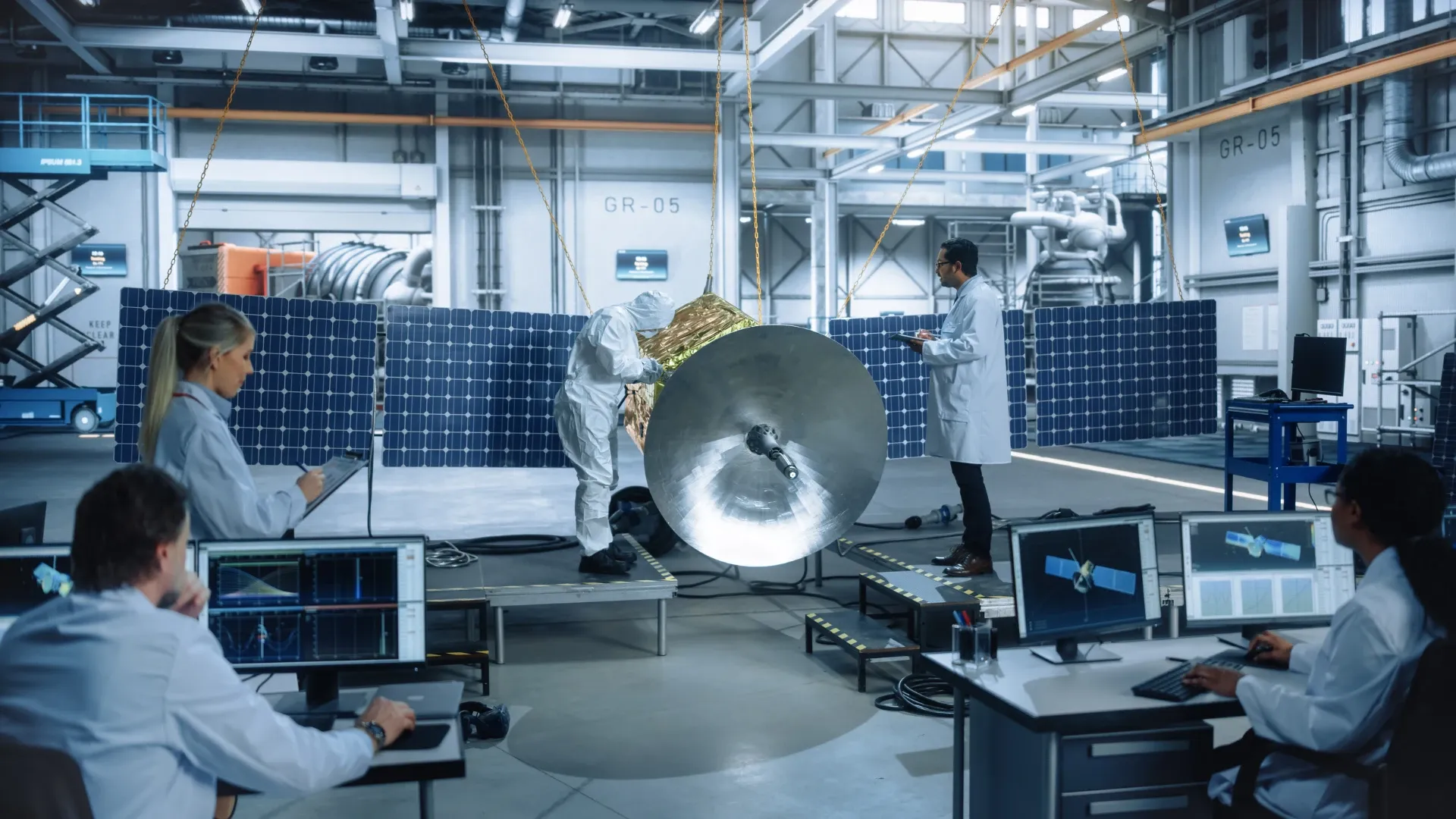
Satellite manufacturing is also developing. A consortium led by Optus is planning an Australian-built low Earth orbit satellite for launch by 2028, while other Australian organisations are expanding spacecraft manufacturing capabilities. This creates an attractive investment proposition because space infrastructure can serve multiple markets simultaneously. A ground station, for example, can support commercial satellites, scientific missions and defence-related applications. A testing facility can serve domestic start-ups as well as international aerospace companies. Such diversification could make infrastructure businesses more resilient than companies dependent upon a single spacecraft or launch vehicle.
Australia’s challenge now is turning promising projects into a connected national industry. The Australian Space Agency has recently emphasised the importance of developing a strong regulatory environment while supporting infrastructure and entrepreneurship. The government’s July 2026 Statement on Space also seeks to increase local industrial capability and Australia’s participation in global markets.
Regulation will be especially important. Launch infrastructure involves safety, environmental assessment, airspace management, insurance, liability and international obligations. The Australian Space Agency continues to publish decisions relating to launch permits, launch facility licences and return authorisations, demonstrating how closely commercial growth is linked to regulatory capacity. For international investors, regulatory certainty may ultimately be as important as geography.
The larger opportunity is regional. Australia sits close to some of the world’s fastest-growing economies while maintaining strong relationships with the United States, Japan, India and other Indo-Pacific partners. The 19th Australian Space Forum in July 2026 specifically highlighted regional partnerships and Australia’s growing space capabilities. That gives Australia an opportunity to position itself as a trusted space-services base for the wider region.
The country does not need to dominate the global launch market to create a substantial industry. Capturing a specialised share of launch services, spacecraft returns, satellite manufacturing, mission operations and space-enabled data could generate significant economic value. The real investment story, therefore, may be hiding in plain sight. Australia is not simply trying to put more rockets into orbit. It is gradually constructing the physical and commercial foundations of a space economy.
If government support, private capital and regional partnerships continue to converge, launch infrastructure could become the anchor for a much larger industrial ecosystem. Queensland, South Australia and other emerging space regions are already laying pieces of that foundation. The next Australian resource boom may not come from beneath the ground. It could begin above it. For investors willing to take a long-term view, Australia’s space infrastructure race could offer an unusually early entry point into one of the Indo-Pacific’s most strategically important emerging industries.