
America’s Geothermal Gold Rush: The 24/7 Power Revolution Beneath the Surface
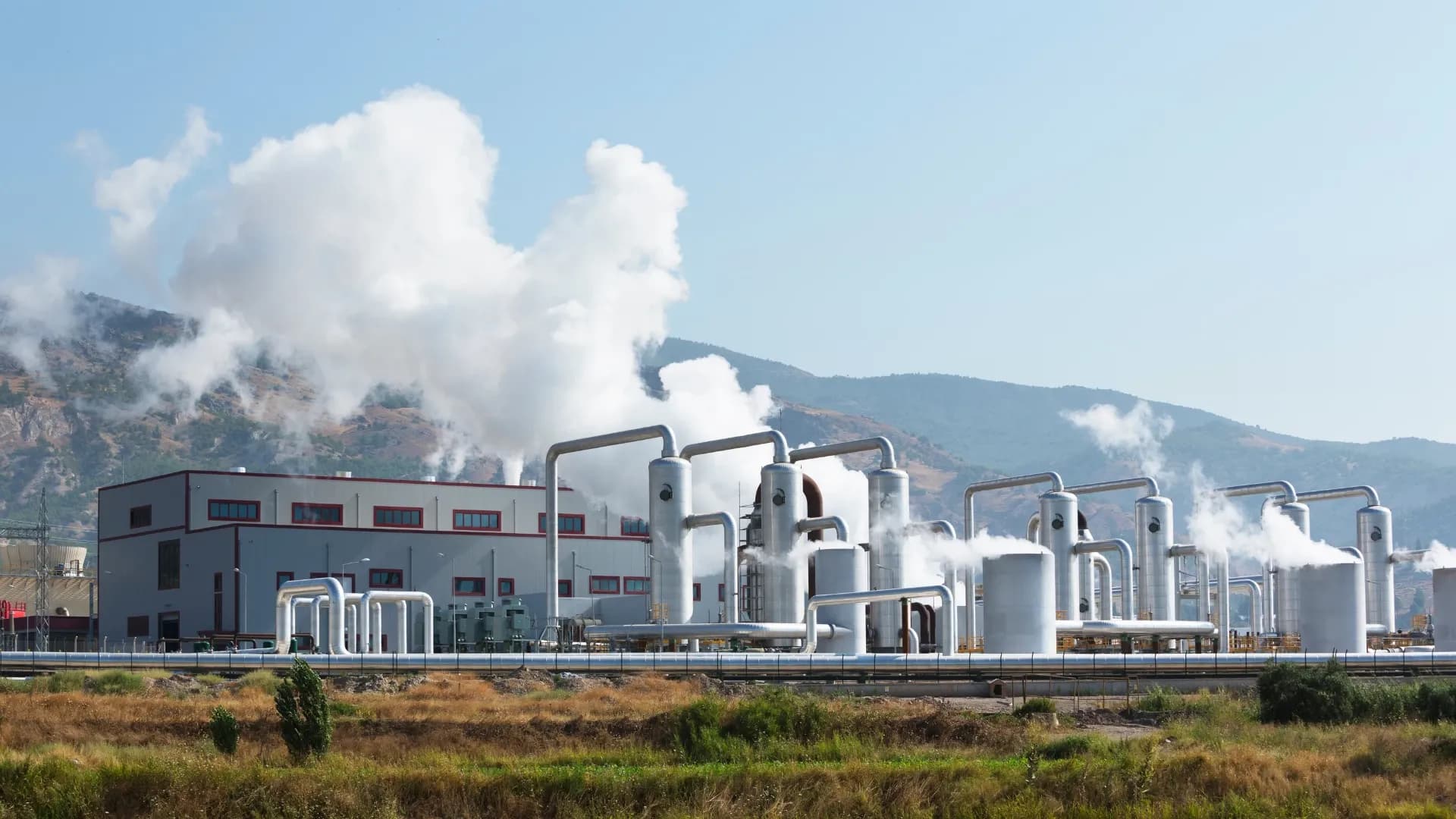

The United States already has roughly 4GW of installed geothermal generating capacity, according to the Department of Energy’s 2026 strategic plan.
America’s next major power investment boom may not be visible from the ground. It could be happening thousands of metres beneath it. Enhanced geothermal systems (EGS) are emerging as one of the most closely watched technologies in America’s race to secure reliable, low-carbon electricity. Unlike conventional geothermal projects, which depend on naturally occurring underground reservoirs containing sufficient heat, water and permeability, EGS attempts to engineer the missing pieces. Operators drill deep into hot rock and create or reopen fractures, allowing fluid to circulate and carry heat back to the surface.
The commercial attraction is straightforward: geothermal can generate electricity continuously, regardless of whether the sun is shining or the wind is blowing. That characteristic is becoming increasingly valuable as America faces rapidly rising electricity demand from artificial intelligence, data centres, advanced manufacturing and electrification.
The United States already has roughly 4GW of installed geothermal generating capacity, according to the Department of Energy’s 2026 strategic plan. More importantly, DOE estimates that geothermal could eventually support as much as 300GW of electricity-generating capacity by 2050. The scale of that potential explains why geothermal is increasingly being treated not simply as a niche renewable technology, but as a potential pillar of America’s future power system.
The most important change in the geothermal business is arguably not the heat beneath America’s western states, but the arrival of technologies and expertise developed by the oil and gas industry. Deep drilling, horizontal wells, hydraulic stimulation, reservoir modelling and sophisticated subsurface monitoring are all relevant to EGS. That creates an unusual opportunity: an industry with decades of experience drilling into difficult geological formations could help build an entirely new energy market.
The Department of Energy is actively encouraging this crossover. In April 2026, it selected a $14 million demonstration project in Pennsylvania that will convert a horizontal Utica Shale gas well into an EGS test facility. The project is designed to examine whether existing oil and gas infrastructure and techniques can be adapted to produce geothermal electricity in the eastern United States.
If successful, the implications could stretch well beyond Pennsylvania. One of geothermal’s historic limitations has been geography: conventional resources are concentrated in areas where naturally favourable geological conditions exist. EGS could potentially expand the addressable market by allowing developers to access heat in hot rock where natural permeability is insufficient. That transforms geothermal from a location-dependent resource into something closer to an engineered energy system.
The US government is also signalling that next-generation geothermal deserves a larger role in national energy strategy. In February 2026, the Department of Energy announced a funding opportunity worth up to $171.5 million for next-generation geothermal field tests and exploration, characterisation and confirmation drilling. The programme specifically includes field-scale EGS testing designed to address technological barriers and move the industry closer to commercial deployment.
The investment matters because drilling remains one of geothermal’s biggest economic challenges. DOE notes that drilling can account for more than half of a geothermal project’s total costs, making faster, cheaper and more predictable drilling essential to commercial scale. That is where the emerging geothermal business model becomes particularly interesting. Every improvement in drilling speed, well design, reservoir modelling or drilling success rates can potentially lower the cost of future projects across the industry.
In other words, the commercial opportunity is not limited to electricity generation. It extends into drilling technology, subsurface software, specialised equipment, engineering services, project finance and power-market infrastructure. Perhaps no company better illustrates the shift than Fervo Energy. The company’s Cape Station project in Utah has become a flagship for next-generation geothermal. Fervo reported in 2026 that construction of Phase II had begun, with the second phase expected to deliver approximately 400MW. Initial Phase II wells have already been drilled, while the wider project is being developed towards commercial operation.
Fervo’s earlier Project Red in Nevada was important for another reason: it demonstrated that engineered geothermal reservoirs could move beyond laboratory experiments and deliver electricity to the grid. Google, which partnered with Fervo, announced in 2023 that the project had become operational and was supplying carbon-free electricity to the local grid serving its Nevada data centres. The relationship between geothermal developers and technology companies is now becoming a defining feature of the market. In March 2026, Fervo signed a 3GW framework agreement with Google, according to Reuters, while the company also raised $1.9 billion through its IPO in May. The combination of a major corporate buyer and public-market capital represents a significant change for an industry that historically struggled to attract large-scale investment.
Fervo has also signed a 15-year agreement with Shell Energy for 31MW of 24/7 carbon-free geothermal electricity, demonstrating that demand is expanding beyond technology companies. America’s artificial intelligence boom is creating an unusual problem for the electricity industry: enormous quantities of power are needed continuously, often close to major data-centre clusters. Solar and wind can provide large volumes of low-carbon electricity, but their variable output means that storage, transmission or other firm generation is required to maintain supply around the clock. Geothermal offers a different proposition because its output is inherently firm.
That makes it particularly attractive for data centres whose computing infrastructure operates continuously. The commercial logic is already visible in Google’s geothermal agreements. The company is not simply buying renewable electricity; it is seeking dependable clean power capable of matching the operating profile of its technology infrastructure. Fervo’s 2026 agreement with Google could therefore become a template for how hyperscalers secure firm clean electricity in the years ahead. This could create a new premium market for geothermal. Instead of competing solely against the cheapest megawatt-hour, geothermal developers can sell reliability, location and predictable output.
Calling the sector a gold rush should not obscure the risks. EGS remains technically demanding. Drilling several kilometres underground is expensive, while creating an engineered reservoir requires careful control of underground fractures and fluid movement. Developers must also manage induced seismicity, water requirements, permitting, transmission constraints and the possibility that a well or reservoir performs below expectations.
The economics are equally important. A technology can be technically successful without automatically becoming commercially competitive. That is why current projects and government-backed demonstrations matter so much. Every successful well can improve geological understanding and reduce uncertainty for the next project. The industry’s ultimate objective is to turn geothermal development from a high-risk exploration business into a repeatable infrastructure model.
The most compelling aspect of enhanced geothermal is that it sits at the intersection of several powerful trends: rising electricity demand, advanced drilling technology, artificial intelligence, energy security and the search for reliable clean power. DOE’s 2026 strategic plan explicitly aims to accelerate gigawatt-scale geothermal development and position the resource as a competitive source of reliable baseload electricity. It also points to more than 25 geothermal power purchase agreements signed since 2021 as evidence that commercial interest is strengthening.
If EGS developers can reduce drilling costs and consistently deliver large quantities of electricity, geothermal could move from a specialised renewable industry into a major American infrastructure business. The real prize is therefore not simply the heat beneath Utah, Nevada or Pennsylvania. It is the possibility of turning America’s enormous underground thermal resource into a dependable power platform for the digital economy.
For investors, utilities, technology companies and oilfield service providers, the geothermal opportunity may only be entering its opening chapter. The next American energy gold rush could be taking place far below the surface – and this time, the prize is not oil. It is 24/7 electricity.