

China’s Top 10 Humanoid Robot Companies Driving the Next AI Investment Boom
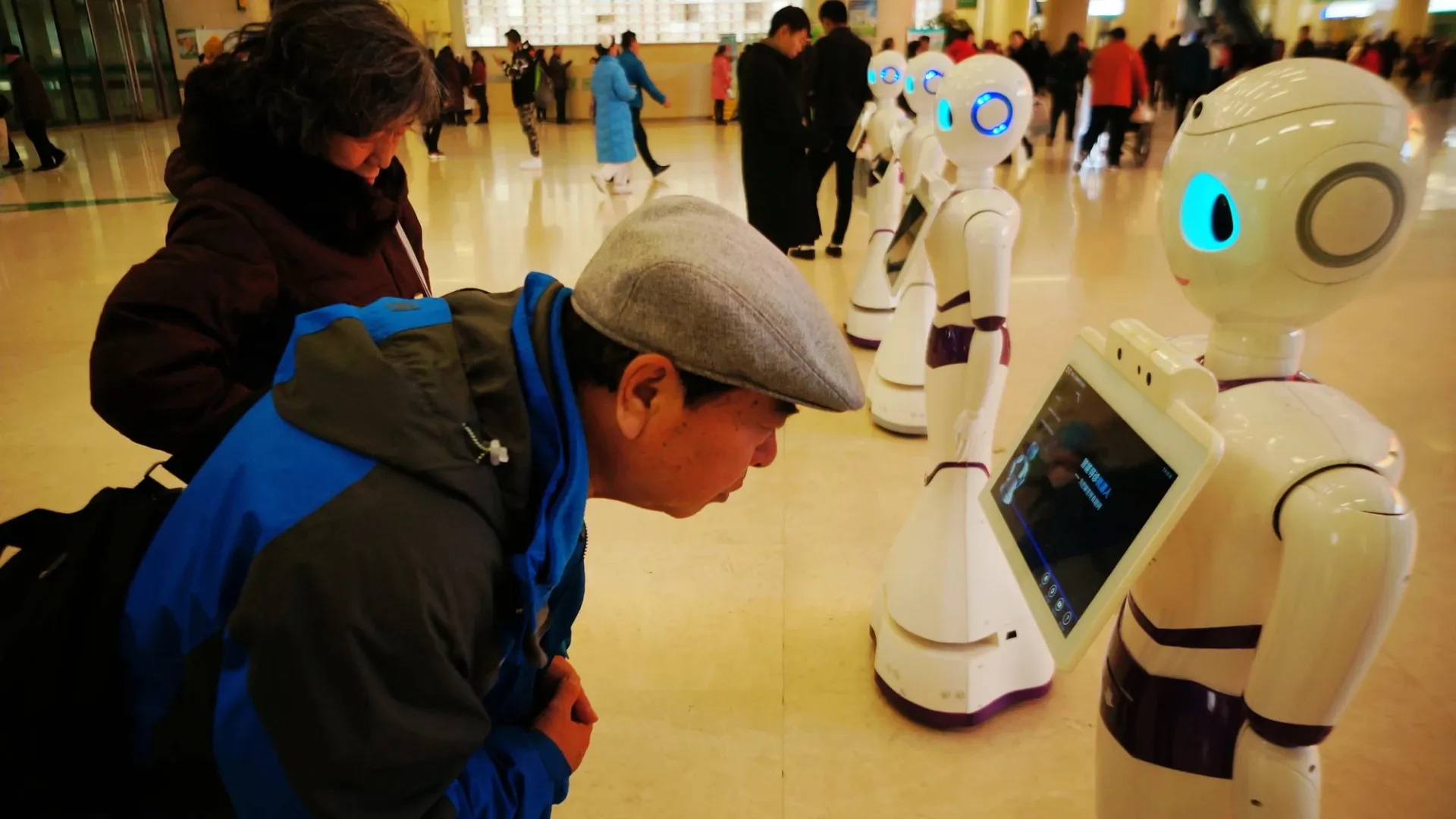

From factory automation to home assistance, Chinese robotics companies are racing to commercialise humanoid robots at an unprecedented pace.
China has rapidly become the global leader in humanoid robotics, backed by strong government support, private investment, and breakthroughs in embodied artificial intelligence. From factory automation to home assistance, Chinese robotics companies are racing to commercialise humanoid robots at an unprecedented pace. Below are the ten most influential Chinese humanoid robot companies, highlighting their latest investments and long-term ambitions.
1. Unitree Robotics
Hangzhou-based Unitree Robotics is one of China’s fastest-growing humanoid robot manufacturers, recognised globally for its affordable G1 and H1 humanoid platforms. The company recently secured regulatory approval for a Shanghai IPO expected to raise around $619 million, with proceeds earmarked for AI foundation models, new humanoid designs, and smart manufacturing facilities. Its long-term vision is to mass-produce low-cost humanoid robots for factories, education, logistics, and eventually household applications while expanding its international footprint.
2. AgiBot (Zhiyuan Robotics)
Founded by former Huawei engineers, AgiBot has become one of China’s most valuable humanoid robotics startups. The company has initiated preparations for a Hong Kong IPO following significant backing from major investors including Tencent. AgiBot plans to accelerate commercial deployment of its humanoid robots across manufacturing, logistics, and service industries. Its future goal is to create embodied AI systems capable of understanding, communicating, and performing complex physical tasks alongside humans.
3. UBTECH Robotics
Shenzhen-based UBTECH Robotics remains China’s leading publicly listed humanoid robotics company. The firm continues investing heavily in embodied intelligence, spending more than 507 million yuan on research and development during 2025 while expanding industrial deployments of its Walker humanoid robots. UBTECH’s strategy focuses on building AI-powered robots for automotive factories, electronics manufacturing, healthcare, and smart cities, aiming to become the world’s largest commercial humanoid robotics platform.
4. Fourier Intelligence
Shanghai-based Fourier Intelligence has evolved from medical rehabilitation robotics into advanced humanoid development through its GR-series robots. The company continues attracting strategic investment to strengthen AI software, dexterous manipulation, and healthcare robotics. Fourier’s long-term objective is to combine rehabilitation expertise with general-purpose humanoids capable of assisting hospitals, elderly care centres, and industrial workplaces, creating robots that work safely alongside people.
5. EngineAI
EngineAI, headquartered in Shenzhen, focuses on full-sized humanoid robots featuring highly natural human-like walking and movement. The company is reportedly preparing for public market fundraising while accelerating commercial deployments in security, hospitality, exhibitions, and public services. EngineAI aims to develop highly agile humanoids capable of operating independently across complex real-world environments using advanced embodied artificial intelligence.
6. RobotEra
Beijing-based RobotEra has gained attention for developing advanced humanoid robots designed for research, education, and industrial applications. The company continues expanding investment into motion control, embodied AI, and robot operating systems. Its long-term ambition is to build scalable humanoid platforms that can serve manufacturing, scientific research, and public services while supporting China’s rapidly growing intelligent robotics ecosystem.
7. LimX Dynamics
Shenzhen-based LimX Dynamics specialises in highly dynamic humanoid and multi-legged robots capable of navigating challenging terrain. The company continues attracting investor interest through breakthroughs in robotic mobility, perception, and AI decision-making. LimX’s future strategy centres on supplying humanoid robots for industrial inspection, emergency response, logistics, and hazardous environments where human workers face significant operational risks.
8. Leju Robotics
Leju Robotics has built a strong reputation in educational and service humanoid robotics while steadily expanding into industrial automation. Supported by China’s growing robotics ecosystem, the company continues investing in AI interaction, autonomous movement, and commercial deployment. Its long-term goal is to develop versatile humanoid robots that can support education, healthcare, customer service, and manufacturing with increasingly intelligent autonomous capabilities.
9. Kepler Robotics
Shanghai-based Kepler Robotics has entered the humanoid robotics race with its Forerunner K2 platform designed for industrial applications. The company is investing heavily in precision manipulation, warehouse automation, and factory robotics. Kepler aims to provide cost-effective humanoid workers capable of performing repetitive manufacturing and logistics tasks while integrating advanced AI for flexible industrial production.
10. XPeng Robotics (IRON)
Electric vehicle manufacturer XPeng has expanded aggressively into humanoid robotics through its IRON programme, leveraging expertise from autonomous driving and AI. Significant investment is being directed towards integrating large AI models, advanced sensors, and intelligent mobility into humanoid robots. XPeng’s long-term vision is to deploy intelligent robots across manufacturing, retail, public services, and eventually domestic environments as part of its broader AI ecosystem.