
Middle East Shipping Risks Push Crude to a Six-Week High
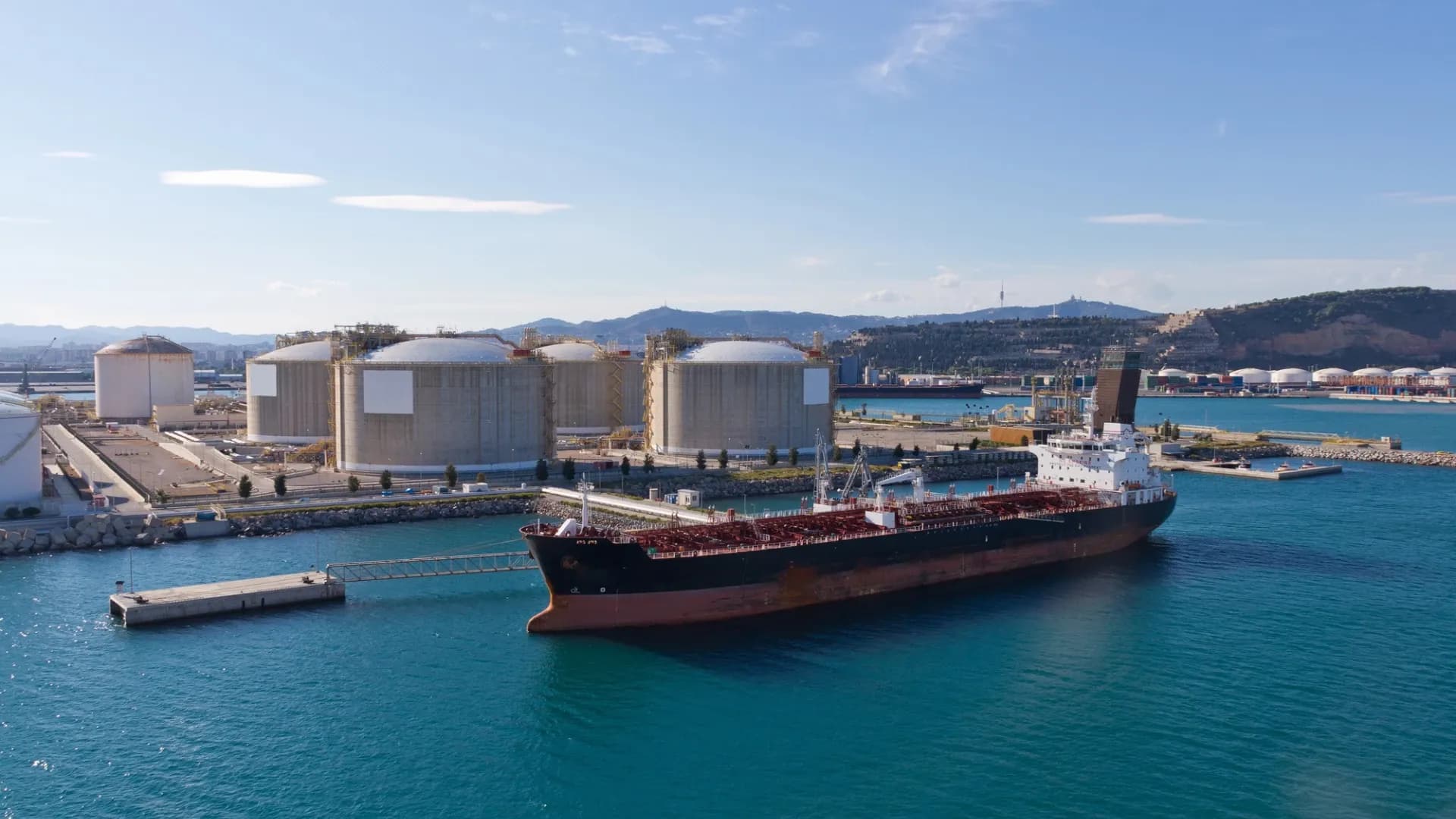

Import-dependent economies in Europe and Asia are particularly exposed, given their continued reliance on Middle Eastern crude and liquefied natural gas.
Global oil markets have returned to the centre of investor attention as crude prices climbed to their highest level in six weeks, reflecting mounting fears that escalating security threats across key Middle Eastern shipping routes could disrupt one of the world’s most vital energy supply chains. While physical oil supplies have not yet suffered widespread interruptions, the growing geopolitical uncertainty has prompted traders, refiners and shipping companies to price in a significant risk premium, underlining how vulnerable global energy markets remain to regional instability.
Brent crude, the international benchmark, has advanced sharply over recent trading sessions, while US West Texas Intermediate (WTI) has also recorded notable gains. The latest rally follows renewed attacks on commercial vessels in strategic maritime corridors, including the Red Sea and the Bab el-Mandeb Strait, alongside heightened tensions involving Iran and the United States. These developments have reignited concerns that shipping disruptions could spread beyond isolated incidents and threaten broader energy exports from the Gulf region.
The importance of these waterways cannot be overstated. The Strait of Hormuz remains the world’s most critical oil transit route, carrying a substantial share of globally traded crude, while the Bab el-Mandeb Strait serves as a vital gateway linking the Red Sea with the Gulf of Aden and the Suez Canal. Any sustained disruption across these routes would increase shipping times, elevate insurance premiums and raise freight costs, all of which ultimately feed into higher energy prices for businesses and consumers alike.
Financial markets are responding less to actual supply shortages than to the growing probability that the situation could deteriorate rapidly. Energy analysts note that commodity traders typically price geopolitical risks well before physical shortages emerge. As a result, crude futures have risen despite no major collapse in production across the Middle East. The market’s behaviour reflects caution rather than panic, with investors attempting to anticipate potential disruptions before they materialise.
Shipping companies are also facing increasing operational challenges. The threat of attacks on oil tankers has encouraged several operators to reassess sailing routes, while insurers continue to adjust war-risk premiums for vessels transiting the region. Higher insurance costs inevitably increase transportation expenses, adding another layer of inflationary pressure across global supply chains. Import-dependent economies in Europe and Asia are particularly exposed, given their continued reliance on Middle Eastern crude and liquefied natural gas.
Beyond the immediate impact on oil markets, the latest developments carry wider macroeconomic implications. Rising crude prices could complicate the inflation outlook for central banks that have recently made progress in stabilising consumer prices. Energy remains a key driver of inflation, influencing transportation, manufacturing and household utility costs. Should crude prices remain elevated for an extended period, policymakers may find themselves balancing inflation control against weakening economic growth, potentially delaying interest-rate adjustments in several major economies.
Corporate strategy across the energy sector is also likely to evolve if geopolitical tensions persist. Oil producers outside the Middle East, including companies operating in North America, the North Sea and parts of Latin America, may benefit from stronger prices and increased investment interest. Conversely, industries heavily dependent on fuel-including aviation, logistics, chemicals and manufacturing-could face renewed cost pressures that squeeze profit margins and influence pricing strategies throughout the remainder of the year.
Market participants are closely monitoring diplomatic developments alongside military activity. Any indication of de-escalation could quickly reduce the geopolitical premium currently embedded in crude prices. However, further attacks on commercial shipping or evidence of wider disruptions to maritime trade could accelerate the upward momentum, with several analysts suggesting Brent crude could approach the psychological US$100 per barrel threshold if risks continue to intensify.
For global businesses, the latest surge in oil prices serves as another reminder that geopolitical stability remains fundamental to economic resilience. Energy markets have repeatedly demonstrated their sensitivity to disruptions in strategically important regions, and the Middle East continues to occupy a central position in global commodity flows. While current price movements are driven primarily by precaution rather than confirmed shortages, the situation highlights the importance of supply-chain diversification, energy security investments and risk management in an increasingly unpredictable global environment.
As governments, shipping operators and energy companies navigate this period of heightened uncertainty, financial markets will remain focused on every development across the region. Whether oil prices stabilise or continue their ascent will depend largely on the evolution of security conditions in the Middle East. Until greater clarity emerges, geopolitical risk is likely to remain one of the defining forces shaping global energy markets and the broader business landscape in the months ahead.