
The Return of Industrial America: Inside the U.S. Manufacturing Revival

Massive public and private investment is pouring into domestic chip production as the U.S. attempts to reduce dependence on Asia for advanced semiconductors.
For much of the past three decades, the story of American manufacturing was defined by factory closures, offshore production and shrinking industrial towns. Today, however, a new industrial narrative is emerging across the United States. From semiconductor mega-plants in Arizona and Texas to AI-powered smart factories in the Midwest, America is witnessing a manufacturing revival that is reshaping investment flows, labour markets and geopolitical strategy.
This resurgence is not simply about rebuilding old assembly lines. It represents a structural transformation driven by reshoring, automation, advanced manufacturing and aggressive industrial policy. The modern American factory is becoming increasingly digital, data-driven and strategically vital in a world where supply-chain resilience matters as much as cost efficiency.
The shift accelerated after the pandemic exposed the fragility of global supply networks. Dependence on overseas suppliers for semiconductors, medical equipment and industrial components triggered alarm across Washington and corporate boardrooms alike. The result has been a broad push to bring critical manufacturing capacity back onto American soil.
The semiconductor industry stands at the centre of this revival. Massive public and private investment is pouring into domestic chip production as the United States attempts to reduce dependence on Asia for advanced semiconductors. Recent agreements between the United States and Taiwan have further strengthened this strategy, with commitments worth hundreds of billions of dollars aimed at expanding semiconductor and AI manufacturing ecosystems across America.
New fabrication facilities are now rising in states such as Arizona, Ohio, Texas and New York. These projects are not small industrial expansions; they are enormous economic ecosystems involving construction firms, energy infrastructure, logistics providers and specialised equipment manufacturers. According to industry estimates, the CHIPS and Science Act has already catalysed more than $630 billion in announced semiconductor investments across 140 projects nationwide.
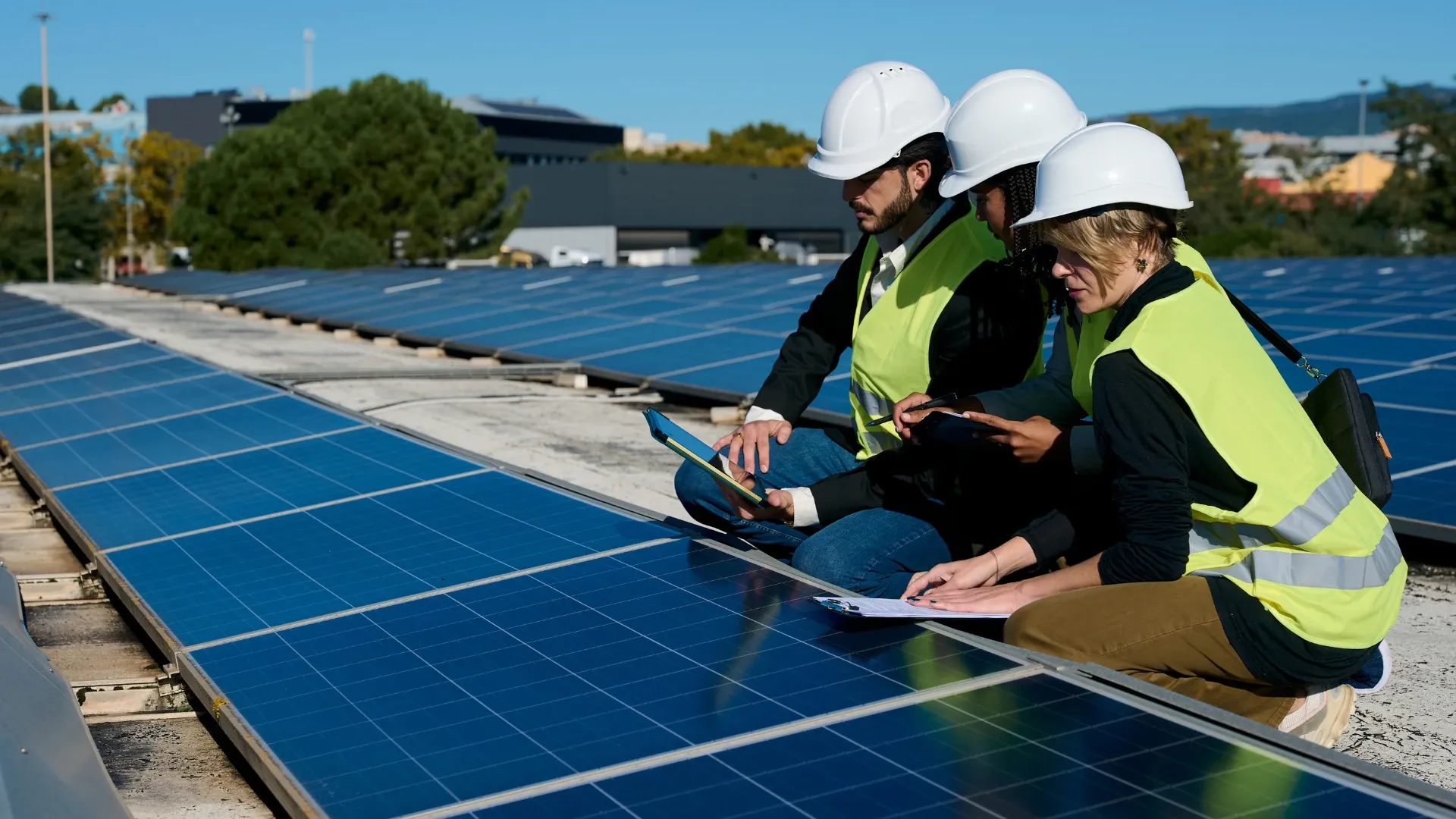
The resurgence extends well beyond semiconductors. Manufacturing construction spending in the United States has surged sharply over the past two years, supported by clean-energy incentives, tariff protection and corporate reshoring strategies. Industrial developers are increasingly targeting battery plants, electric vehicle facilities, robotics production centres and advanced materials factories.
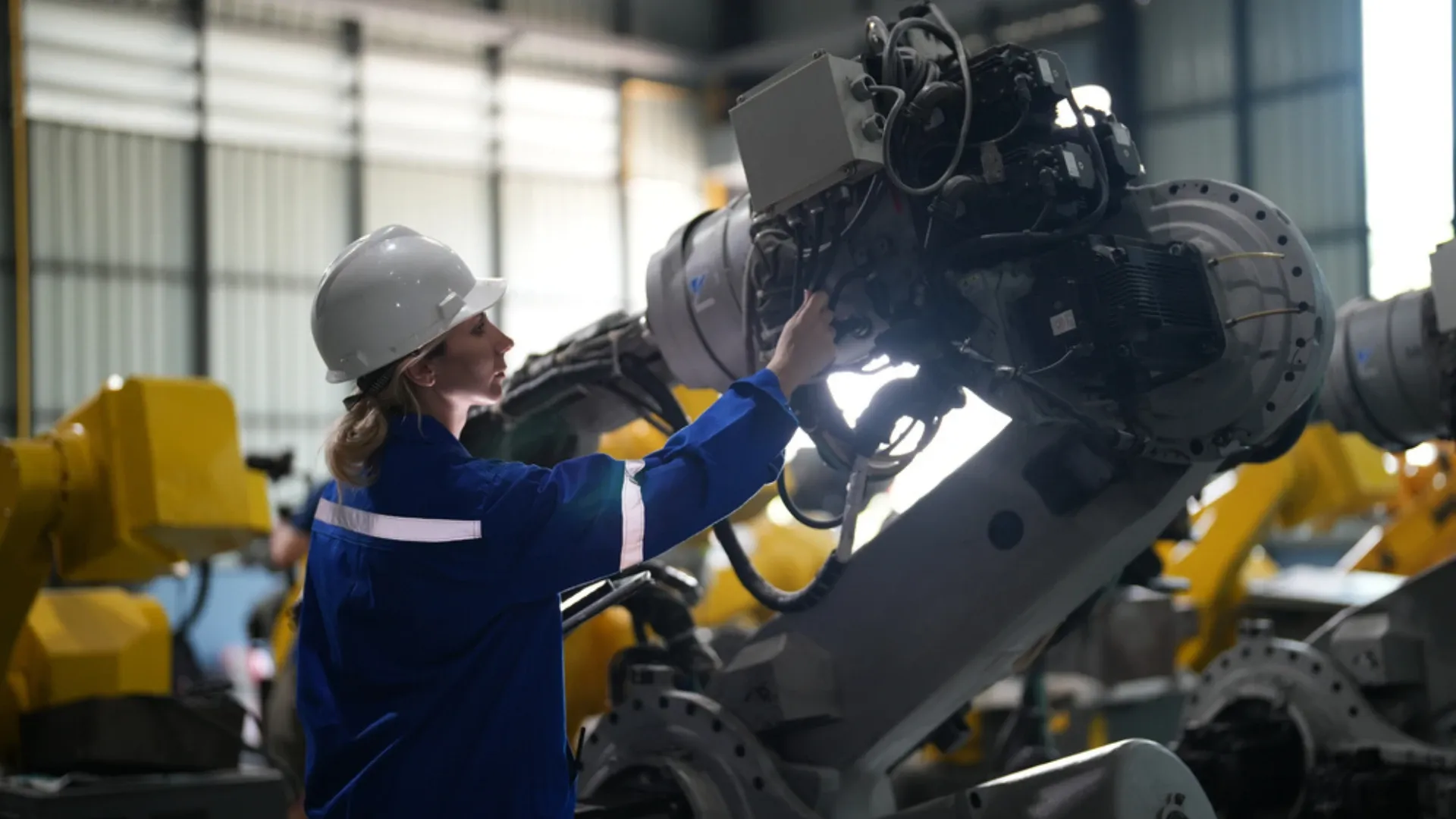
Artificial intelligence is rapidly becoming the defining force behind this industrial transformation. Modern factories are no longer dependent on labour-intensive production models alone. Instead, AI systems now optimise supply chains, predict equipment failures, automate quality control and improve productivity at unprecedented levels.
Industry research suggests that a significant majority of manufacturers are increasing investment in smart manufacturing technologies, including robotics, cloud analytics and autonomous industrial systems. The integration of AI into production is also altering the economics of reshoring. For years, cheaper labour overseas made offshore manufacturing difficult to challenge. Automation is now narrowing that gap.
Technology executives increasingly argue that AI-led production can make domestic manufacturing globally competitive again. This is particularly important in sectors linked to national security, defence systems and critical infrastructure. The emerging industrial model is therefore not merely “Made in America” in the traditional sense; it is “Automated in America”.
Government policy has played a decisive role in accelerating this transition. Industrial incentives introduced through semiconductor legislation, clean-energy programmes and tax reforms have created a favourable environment for domestic capital expenditure. Corporate tax stability, accelerated equipment depreciation and direct manufacturing subsidies are encouraging companies to expand operations domestically rather than abroad.
Trade policy has also become increasingly aligned with industrial strategy. Tariffs, national security reviews and semiconductor import restrictions are being used to encourage local production and reduce strategic dependence on foreign supply chains. While critics argue that such measures could increase production costs, supporters believe the long-term benefits of industrial resilience outweigh short-term inefficiencies.
Financial markets are responding enthusiastically to this industrial reset. Investors are pouring capital into industrial automation firms, semiconductor suppliers, infrastructure contractors and energy-transition manufacturers. The combination of government backing, AI-driven productivity gains and geopolitical urgency has created one of the strongest industrial investment cycles in decades.
This momentum is also fuelling a powerful wave of mergers and acquisitions across North America’s industrial economy. Private equity firms, sovereign funds and strategic corporate buyers are aggressively pursuing manufacturing assets tied to automation, clean energy, semiconductor equipment and industrial software.
The appeal is straightforward. Industrial businesses once viewed as cyclical and slow-moving are now seen as strategic growth platforms. AI-enabled production systems, smart logistics networks and advanced robotics firms are attracting premium valuations as investors seek exposure to the next generation of industrial infrastructure.
Clean-energy manufacturing has become a particularly active segment for industrial dealmaking. Battery facilities, grid technology providers, hydrogen infrastructure companies and renewable component manufacturers are now central targets in North America’s M&A landscape. Investors increasingly view industrial decarbonisation not as a niche sustainability trend but as a long-term economic transformation.
Semiconductor-related acquisitions are also intensifying. As demand for AI infrastructure expands, companies involved in chip packaging, photonics, industrial software and advanced materials are becoming strategically valuable. Global forecasts suggest the semiconductor market could exceed $1.5 trillion by 2030 as AI investment accelerates.
Yet despite the optimism, challenges remain substantial. Labour shortages continue to affect advanced manufacturing operations, particularly in engineering, robotics maintenance and semiconductor fabrication. Industry leaders increasingly warn that America’s greatest manufacturing bottleneck may not be capital, but talent availability.
Supply-chain vulnerability also remains a concern. While reshoring reduces dependence on overseas manufacturing, critical minerals, rare-earth materials and specialised industrial inputs are still heavily concentrated in global markets. Rising geopolitical tensions and shipping disruptions continue to create uncertainty for manufacturers.
Nevertheless, the broader trajectory appears increasingly clear. America is entering a new industrial era shaped by strategic production, intelligent automation and state-backed investment. This is not a temporary rebound driven solely by economic recovery. It reflects a deeper reorganisation of global manufacturing priorities in response to geopolitical competition, technological disruption and economic resilience.
For investors, the implications are profound. The next decade of industrial growth may not be defined by low-cost offshore production, but by high-value domestic ecosystems powered by AI, semiconductors and automation. North America’s industrial economy is no longer being viewed as yesterday’s infrastructure story. It is increasingly becoming one of the defining investment themes of the modern global economy.