
Australia’s Construction Supercycle: Infrastructure Projects Driving a New Economic Expansion
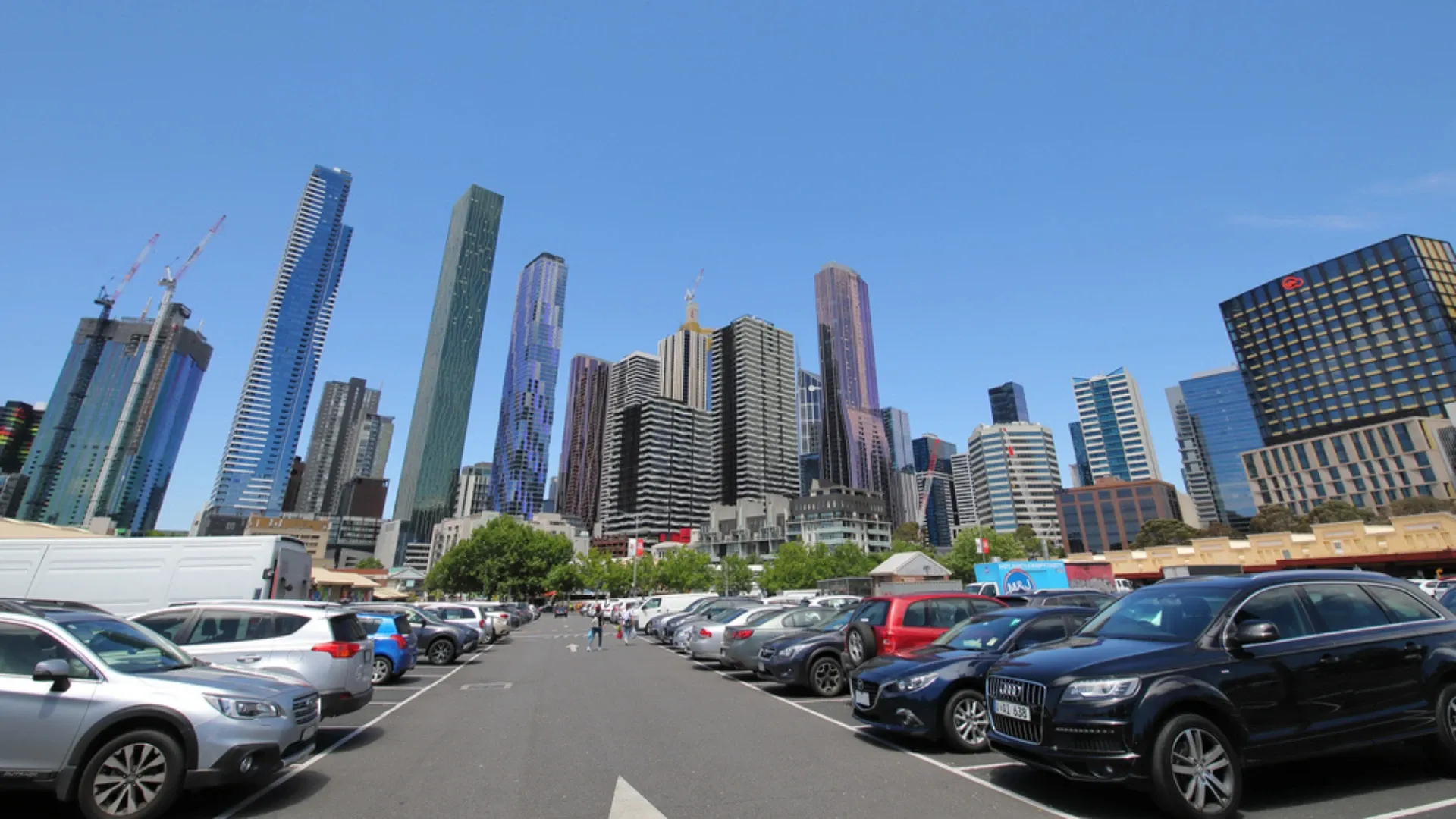

According to Infrastructure Australia, public spending already represents a substantial portion of the nation’s A$1.14 trillion construction market, with transport infrastructure alone accounting for more than half of the major public infrastructure pipeline.
Australia is entering one of the most ambitious construction phases in its modern economic history. From high-capacity transport corridors and renewable energy zones to apartment towers and digital infrastructure, the nation is witnessing a construction supercycle that is reshaping cities, industries and long-term investment priorities. What began as a post-pandemic recovery strategy has evolved into a structural transformation of the Australian economy, powered by population growth, energy transition targets and the urgent need for housing and logistics upgrades.
Across the country, cranes have become symbols of a broader economic recalibration. Governments, institutional investors and private developers are simultaneously deploying capital into transport systems, clean energy infrastructure and urban residential projects at a scale rarely seen before. According to Infrastructure Australia, public spending already represents a substantial portion of the nation’s A$1.14 trillion construction market, with transport infrastructure alone accounting for more than half of the major public infrastructure pipeline.
At the centre of this expansion lies a fundamental reality: Australia’s population is growing faster than its infrastructure capacity. Sydney, Melbourne, Brisbane and Perth are facing mounting pressure on transport networks, housing supply and energy systems. Rather than responding with isolated projects, policymakers are pursuing interconnected infrastructure ecosystems designed to support productivity, decarbonisation and urban expansion simultaneously.
Transport infrastructure remains the backbone of this construction wave. Major rail and metro projects are redefining mobility across Australia’s largest cities. Investments into suburban rail loops, airport rail links, freight corridors and motorway expansions are intended not only to reduce congestion but also to unlock entirely new residential and commercial precincts. Infrastructure Australia has repeatedly identified “high-capacity transport for growing cities” as one of the country’s most urgent investment priorities, warning that rapid urbanisation requires faster delivery of integrated public transport systems.
The economic implications are substantial. Construction activity is supporting employment across engineering, manufacturing, logistics and professional services. Large-scale tunnelling, rail engineering and urban redevelopment projects are also attracting international contractors and institutional capital into Australia’s infrastructure sector. For global investors seeking politically stable, long-duration infrastructure opportunities, Australia increasingly resembles a premium destination market.
However, the country’s construction supercycle extends far beyond roads and railways. Renewable energy infrastructure has emerged as the defining investment theme of the decade. Australia’s commitment to achieving net-zero emissions by 2050 is triggering unprecedented investment into solar farms, wind projects, battery storage facilities and electricity transmission networks. The scale of this transformation is immense. Infrastructure Australia expects renewable energy to supply nearly 98 per cent of electricity within the National Electricity Market by 2050, requiring a rapid expansion of generation, storage and grid connectivity.
This transition is already reshaping regional economies. Renewable Energy Zones across New South Wales, Queensland and Victoria are attracting billions of dollars in investment, creating demand for roads, transmission corridors, worker accommodation and logistics facilities. Large battery projects and pumped hydro systems are also becoming critical national assets as Australia attempts to stabilise renewable-heavy electricity networks.
The Snowy 2.0 project remains one of the most symbolic examples of this transition. Despite cost overruns and construction delays, the federal government continues to inject billions into the pumped hydro development because of its long-term strategic significance for grid stability and energy security. Recent budget allocations further reinforced Canberra’s commitment to keeping the project operational as part of the nation’s renewable transition agenda.
Private-sector momentum is equally powerful. International infrastructure and energy firms are aggressively expanding into Australia’s renewable market. Earlier this year, renewable platform Anza Power entered Australia with a 1.4GW solar and 3.4GWh battery pipeline, backed by major institutional funding. Meanwhile, technology giants are becoming increasingly active participants in the infrastructure boom. Amazon recently secured agreements linked to multiple Australian renewable projects to support the energy demands of its expanding datacentre operations.
The housing sector forms the third pillar of this supercycle. Australia’s housing shortage has evolved into a major political and economic issue, particularly in Sydney and Melbourne where affordability pressures continue to intensify. In response, federal and state governments are accelerating apartment developments and housing-enabling infrastructure investments. The federal government’s new Local Infrastructure Fund aims to support the delivery of approximately 65,000 homes through investments in utilities, roads and local infrastructure connected to residential growth corridors.
Apartment construction is therefore no longer viewed solely as a property market issue; it has become a national economic priority. Transit-oriented developments surrounding metro stations and transport corridors are expected to drive higher-density urban expansion over the next decade. Developers are increasingly aligning residential projects with transport accessibility and renewable energy integration, creating mixed-use precincts designed for long-term urban sustainability.
The growing adoption of modular and prefabricated construction techniques also reflects how Australia’s property sector is evolving under pressure. Labour shortages, rising material costs and approval delays are encouraging developers to explore faster and more technology-driven construction methods. Recent pilot programmes involving AI-powered prefabricated housing illustrate how innovation is becoming central to solving Australia’s housing supply challenge.
Yet despite the optimism surrounding the construction supercycle, significant risks remain. Capacity constraints across labour, engineering and materials supply chains continue to challenge project delivery timelines. Infrastructure Australia has repeatedly warned that simultaneous mega-project development across transport, housing and renewable energy sectors could strain market capacity and inflate costs further.
Community resistance is emerging as another obstacle, particularly surrounding renewable infrastructure. Wind farms, transmission lines and large-scale solar projects have triggered opposition in some regional communities concerned about environmental impact, land use and regulatory inconsistency. Australia’s Energy Infrastructure Commissioner recently acknowledged that the renewable transition is proving “more complex” than originally anticipated due to planning bottlenecks and community tensions.
Inflationary pressure also remains a persistent concern. Construction costs have risen sharply in recent years, fuelled by global supply chain disruptions, labour shortages and higher financing expenses. These pressures are forcing governments and developers to reconsider procurement strategies and project sequencing to avoid widespread cost overruns.
Nevertheless, the broader economic trajectory remains firmly expansionary. Australia’s construction supercycle is not a short-term stimulus story; it represents a multi-decade rebuilding of the country’s economic infrastructure. Transport systems are being redesigned to accommodate larger cities, renewable energy projects are transforming industrial supply chains, and apartment developments are redefining urban density.