

• About us
  • Advertise
  • Contact
  • Nominate
  • Client’s Voice
  • Login
  • Register
📖 Magazine
The Global Economics
  • Home
  • Banking
  • Non Banking
  • Markets
  • Infrastructure
  • Lifestyle
  • FeatureNew
  • Awards
No Result
View All Result
  • Home
  • Banking
  • Non Banking
  • Markets
  • Infrastructure
  • Lifestyle
  • FeatureNew
  • Awards
No Result
View All Result
The Global Economics
No Result
View All Result
Home Feature Economy

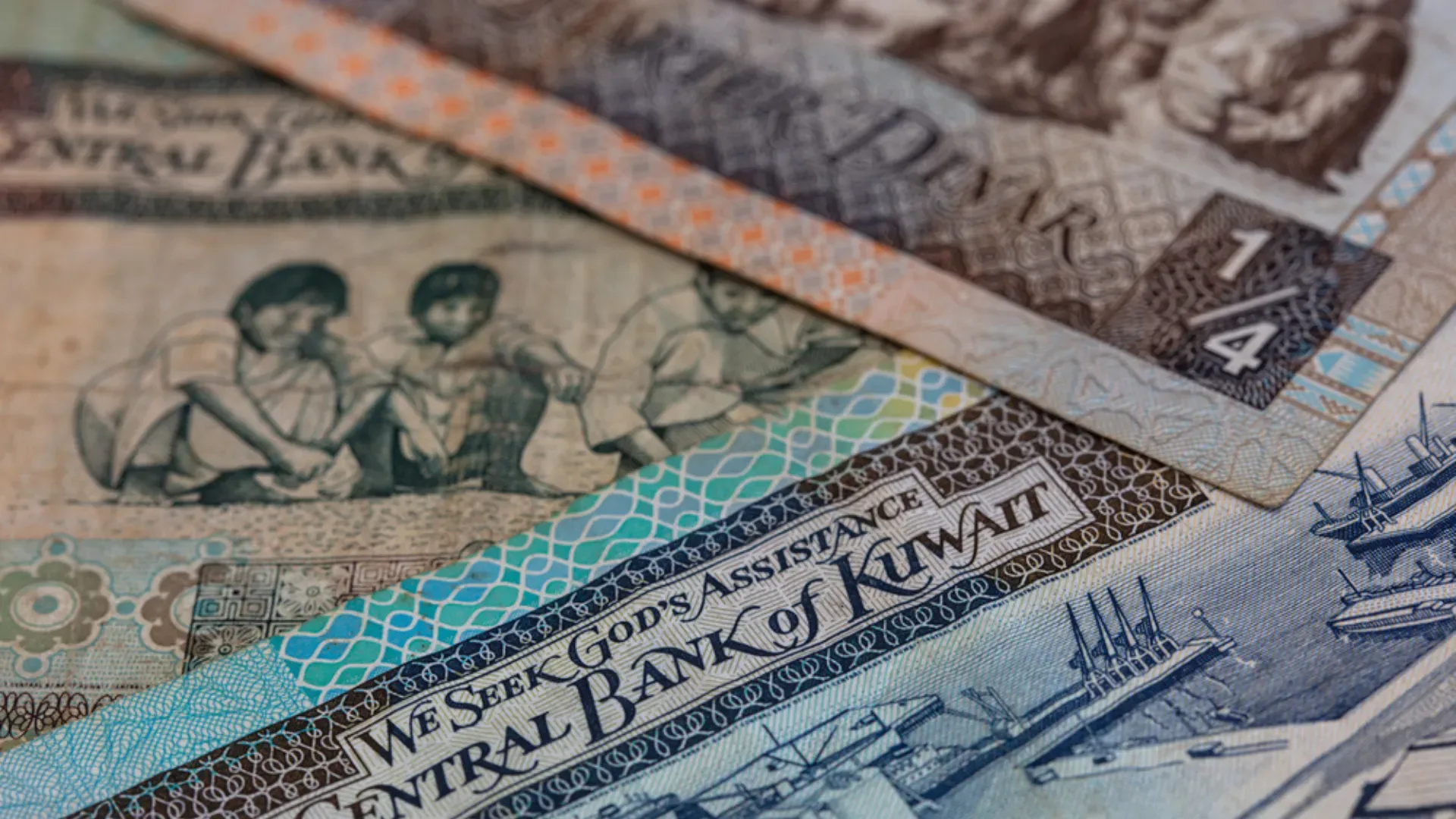
Kuwait Lifts 8-Year Debt Break with New Financing Law

The Global Economics by The Global Economics
March 28, 2025
in Economy, Funds, Non Banking
Reading Time: 4 mins read
0
Kuwait Lifts 8-Year Debt Break with New Financing Law

Kuwait Lifts 8-Year Debt Break with New Financing Law

52
SHARES
288
VIEWS
FacebookTwitterRedditWhatsAppLinkedInFacebook

This law offers Kuwait greater financial flexibility by enabling it to access domestic and global financial markets to increase its liquidity management.

Kuwait can now borrow funds from international markets after an eight-year break.

Kuwait will rejoin the global debt market after a long absence. They were able to join after a long-awaited public borrowing law was approved. It aims to finance infrastructure projects and mitigate fiscal challenges.

The Ministry of Finance claims that the law, the longest-term legal framework the country has ever established for managing public debt, allows the government to issue up to 30 billion Kuwaiti dinars ($98 billion), either in local or major foreign currencies, with maturities of up to 50 years.

The previous financing and liquidity law ended in 2017, and since then, the country has been unable to issue sovereign bonds.

Fitch Ratings stated earlier this month that enacting the financing and liquidity bill will increase budgetary flexibility. However, the rating agency claimed that the government can meet its financing demands even without a liquidity law since they have significant assets at its disposal.

Noura Suleiman Salem Al-Fassam, Minister of Finance and Minister of State for Economic Affairs and Investment stated that the law represents a strategic change that would help enhance Kuwait’s capacity to meet its financial commitments and support long-term growth.

This law offers Kuwait greater financial flexibility by enabling it to access domestic and global financial markets to increase its liquidity management.

She added that this law supports government projects that will enhance its financial stability and promote economic growth in line with Kuwait Vision 2035.

The law will help stabilize liquidity, improve Kuwait’s debt management plan, and lower borrowing rates.

Faisal Al-Muzaini, director of public debt at the Ministry of Finance, stated the law would permit public debt management and liquidity and allow debt issuance in different currencies.

He added that it would introduce multiple financial instruments, allowing the state to get funding via bonds, sukuk, or other market instruments.

According to Al-Muzaini, developing the local debt market improves Kuwait’s competitiveness as a regional financial hub and gives the government new financial instruments to handle public finances effectively.

The bill solves a long-standing problem regarding funding major infrastructure and economic projects. It will also help boost liquidity and promote increased private-sector participation in financial initiatives.

It will also help raise Kuwait’s sovereign rating, preserve sovereign liquidity reserves, and boost the economy.

The ministry stressed that the law helps balance debt sustainability and development financing. This legislative move shows Kuwait’s commitment to sustainable fiscal policy.

Abu Dhabi Commercial Bank’s chief economist, Monica Malik, claims that reforms are progressing.

Flitch Ratings stated that long-delayed financing and liquidity law approval would reduce the source of credit risks.

The government also anticipates the law will strengthen Kuwait’s sovereign credit profile and improve financial stability by ensuring liquidity under various economic circumstances.

Kuwait also approved its budget for the upcoming fiscal year 2025–2026 with a bigger deficit due to lower expected oil revenue.

According to the Arabic daily Al-Anba, non-oil revenue will increase by over 9% to about KD2.9 billion from roughly KD2.68 billion in 2024–2025.

Kuwait’s budget for the upcoming fiscal year, from April 1, 2025, to March 31, 2026, projects a $22.44 billion deficit with $59.10 billion in revenue and $79.54 billion in expenses.

According to Malik, the new debt law will allow the diversification of funds and will reduce pressure on the General Reserve Fund.

The debt will also support the investment programs, which is crucial for the banking industry and credit demands.

Malik continued that the next expected reform is the new mortgage law.

It aims to increase homeownership among its citizens. Currently, the Kuwait Credit Bank (KCB) offers property loans to citizens and businesses.

Tags: Abu Dhabi Commercial Bankdebt laweconomic growthkuwaitKuwait Credit Bank
The Global Economics

The Global Economics

The Global Economics Limited is a UK based financial publication and a bi-annual business magazine giving thoughful insights into the financial sectors on various industries across the world. Our highlight is the prestigious country specific Annual Global Economics awards program where the best performers in various financial sectors are identified worldwide and honoured.

Related Posts

Homecoming with a Twist: Can Chipotle Win Mexico’s Heart in the Birthplace of Its Flavours?
Economy

Homecoming with a Twist: Can Chipotle Win Mexico’s Heart in the Birthplace of Its Flavours? 

by The Global Economics
July 27, 2026
From World Cup Winners to Olympic Ambitions: North America’s Trillion-Dollar Tourism Opportunity
Economy

From World Cup Winners to Olympic Ambitions: North America’s Trillion-Dollar Tourism Opportunity 

by The Global Economics
July 20, 2026
How Latin America's Ports Are Transforming Regional and International Trade
Economy

How Latin America’s Ports Are Transforming Regional and International Trade

by The Global Economics
July 18, 2026
Airtel Money Ignites Africa's FinTech Boom
Crypto & Fintech

Airtel Money Ignites Africa’s FinTech Boom 

by The Global Economics
July 17, 2026
Beneath the Tide: Can New Zealand Build a Multi-Billion-Dollar Blue Carbon Economy?
Clean Energy

Beneath the Tide: Can New Zealand Build a Multi-Billion-Dollar Blue Carbon Economy? 

by The Global Economics
July 16, 2026
Twitter Youtube LinkedIn Soundcloud
the global economics logo

The Global Economics Limited is a UK based financial publication and a Bi-Monthly business magazine giving thoughtful insights into the financial sectors on various industries across the world. Our highlight is the prestigious country specific Annual Global Economics awards program where the best performers in various financial sectors are identified worldwide and honoured.

DMCA.com Protection Status

  • Privacy
  • Legal
  • Terms of Use
  • Client’s Voice
  • Server Status

norton verified - the global economics

Latest Posts

North America's Trade Corridors Drive the Next Infrastructure Boom

North America’s Trade Corridors Drive the Next Infrastructure Boom 

July 13, 2026
China-LatAm Ties: Supply Chains, Bilateral Trade and Energy Transition

China-LatAm Ties: Supply Chains, Bilateral Trade and Energy Transition

July 11, 2026
Finland Leads Europe’s New Venture Investment Wave into Quantum Technology

Finland Leads Europe’s New Venture Investment Wave into Quantum Technology 

July 10, 2026
Download The Global Economics PWA to your mobile or Desktop
PWA App Download
Download The Global Economics Android App to your mobile or Desktop
Android App
Download The Global Economics IOS App to your mobile or Desktop
IOS App

All Rights Reserved © 2020 | 🇬🇧 The Global Economics, Business Finance Publication - www.theglobaleconomics.uk 🌏

Welcome Back!

Sign In with Facebook
Sign In with Linked In
OR

Login to your account below

Forgotten Password? Sign Up

Create New Account!

Sign Up with Facebook
Sign Up with Linked In
OR

Fill the forms below to register

*By registering into our website, you agree to the Terms & Conditions and Privacy Policy.
All fields are required. Log In

Retrieve your password

Please enter your username or email address to reset your password.

Log In
No Result
View All Result
  • About us
  • Awards
  • Magazine
  • Client’s Voice
  • Exclusive Coverage
  • Nominate
  • Login
  • Sign Up

All Rights Reserved © 2020 | 🇬🇧 The Global Economics, Business Finance Publication - www.theglobaleconomics.uk 🌏

This website uses cookies. By continuing to use this website you are giving consent to cookies being used. Visit our Privacy and Cookie Policy.