

• About us
  • Advertise
  • Contact
  • Nominate
  • Client’s Voice
  • Login
  • Register
📖 Magazine
The Global Economics
  • Home
  • Banking
  • Non Banking
  • Markets
  • Infrastructure
  • Lifestyle
  • FeatureNew
  • Awards
No Result
View All Result
  • Home
  • Banking
  • Non Banking
  • Markets
  • Infrastructure
  • Lifestyle
  • FeatureNew
  • Awards
No Result
View All Result
The Global Economics
No Result
View All Result
Home Feature Economy

US House Passes Debt Ceiling Bill in First Step to Avert Default

The Global Economics by The Global Economics
June 1, 2023
in Economy, Top Stories
Reading Time: 4 mins read
0
US House Passes Debt Ceiling Bill in First Step to Avert Default

US House Passes Debt Ceiling Bill in First Step to Avert Default

36
SHARES
199
VIEWS
FacebookTwitterRedditWhatsAppLinkedInFacebook

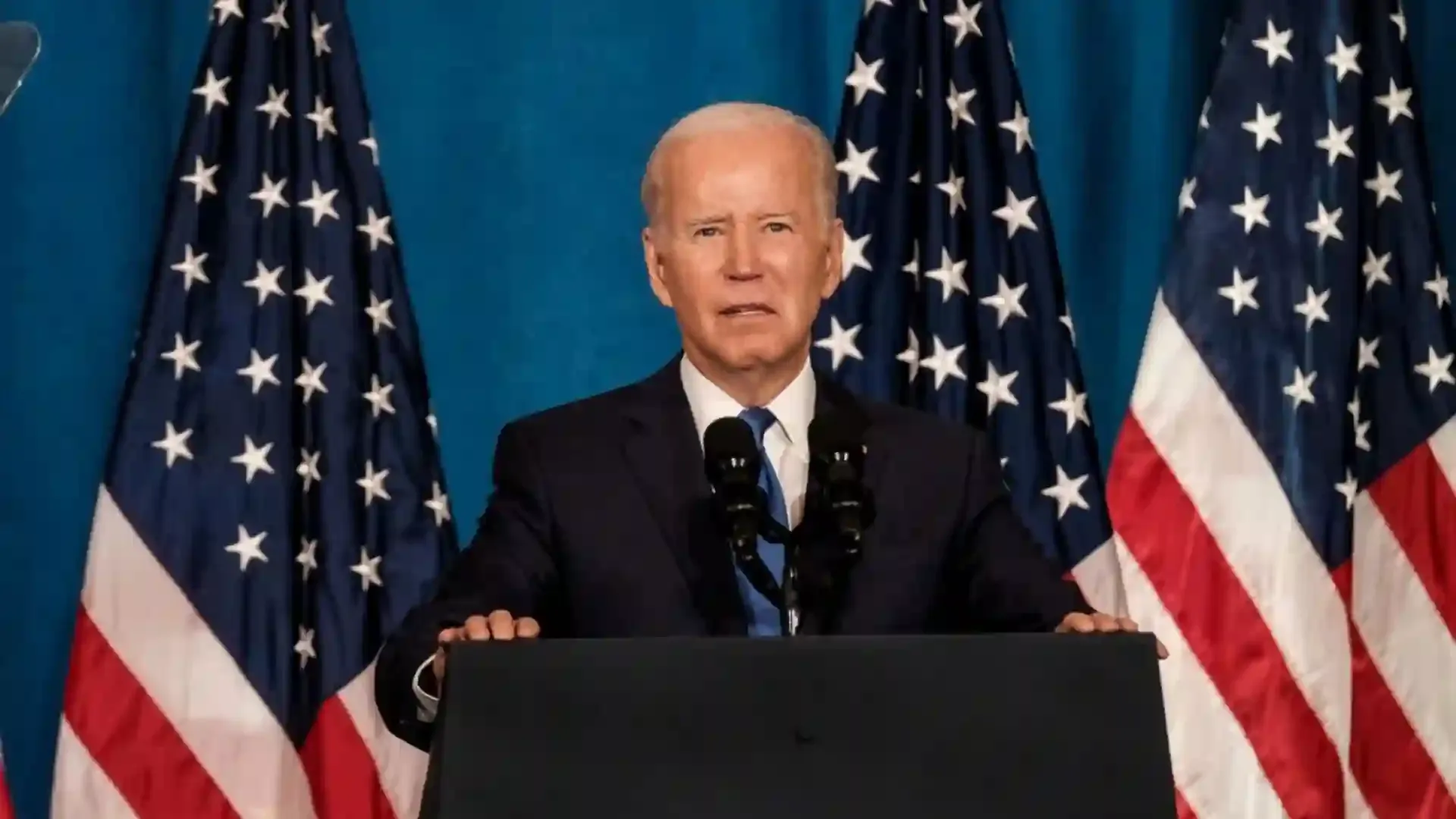
The US House of Representatives has finally passed a bill 314-117, raising the federal debt ceiling less than a week before the deadline. Representing a victory for moderate elements from both the Democrats and Republicans, the deal has been hailed by both President Joe Biden and House Speaker Kevin McCarthy as a ‘historical compromise’ in the face of sharp hardliner opposition. 

Passing just five days before the deadline for default, the bill, if approved by the Senate, will prevent a United States federal default, something which would have catastrophic consequences for the entire global economy. A default by the Federal Treasury would mean a global financial meltdown for financial institutions on every continent, a sharp spike in interest rates, and the loss of millions of jobs. Furthermore, the resulting plunge in stock market prices would erase trillions of dollars of wealth almost overnight. 

What’s in the deal

The revised agreement that cleared the House of Representatives is a consensus between moderate Democrat and Republican factions, with neither side getting all of their demands. The agreement suspends the United States budget debt ceiling till January 1, 2025, ensuring that the budget will not again become an issue before the upcoming presidential elections next year. 

Other clauses in the bill limit federal spending on certain programs over the next two years, fast-track energy projects, reallocate unused COVID-19 relief funds, and add certain work requirements to recipients of the food stamp program. One major win for the Republicans was the cutting of funding to the IRS (Internal Revenue Service), the United States tax authority. 

Meanwhile, President Joe Biden can also breathe a sigh of relief, with the deal leaving intact his flagship infrastructure and sustainability programs intact, despite being a redline to many Republicans and the overall changes being far less than what the Republicans demanded. Most of the savings would come from cuts to federal spending on housing, education, science and research, and other ‘discretionary’ programs. Meanwhile, military spending will increase over the coming years, raising questions about American priorities.

Overall, the deal is estimated to save over $1.5 trillion over the next decade. While this is less than a third of the $4.8 trillion that the Republicans were aiming for through reduced spending and half of the $3 trillion that President Biden’s proposal to raise taxes would have saved, it is still a first step towards a balanced budget. The road to eliminating the deficit will be long, though, with the total national debt at $31.4 trillion. 

The agreement has also sparked fierce opposition from hardliners

While the bill has passed the lower House with broad bipartisan support, with a vote of 314-117, it is being fiercely opposed by hardline elements from both the Democrat and Republican parties. While these fringe groups are unlikely to stop the passage of the bill in the Democrat-controlled Senate, they still vociferously represent a section of American society firmly against any compromise, an indication of the increasing polarisation of American society and a troubling sign for future legislation. 

While ultra-conservative Republicans wanted more pervasive concessions, such as larger spending cuts to various non-defence government programs, and radical fiscal reforms, they have gotten a watered-down version of their demands, which many are decrying as a loophole-ridden farce. They argue that it is imperative to cut the deficit before an ageing population pushes up health and pension costs, and interest payments eat up an ever-growing portion of the budget. 

Meanwhile, the progressive faction of the Democrats is not happy either, as they had strongly resisted any cuts to federal spending, especially the new work requirements for beneficiaries of the food aid program. They favour narrowing the deficit by raising taxes on the ultra-wealthy and corporations, something which is anathema to the conservatives. One prominent opponent of the bill is Senator Bernie Sanders, a progressive who ran for President in 2020 and had a strong influence over the burgeoning socialist movement in the United States.

The bill will go to the Senate next, where debate and the voting process are expected to extend into the weekend, taking the country dangerously close to its first-ever default. With an already struggling global economy hanging in the balance, it is imperative for cooler heads to prevail and for compromise and moderation to carry the day.


Source: short URL
Tags: COVID-19IRSRepublicansUnited States
The Global Economics

The Global Economics

The Global Economics Limited is a UK based financial publication and a bi-annual business magazine giving thoughful insights into the financial sectors on various industries across the world. Our highlight is the prestigious country specific Annual Global Economics awards program where the best performers in various financial sectors are identified worldwide and honoured.

Related Posts

From Oversupply to Opportunity: What China’s Property Slowdown Means for APAC Investors
Economy

From Oversupply to Opportunity: What China’s Property Slowdown Means for APAC Investors 

by The Global Economics
April 22, 2026
North America Trade Tensions 2026: Trump’s Tariff Strategy Reshaping Regional Business Dynamics
Economy

North America Trade Tensions 2026: Trump’s Tariff Strategy Reshaping Regional Business Dynamics

by The Global Economics
April 20, 2026
Africa’s Intra-Regional Trade In 2026: Is AfCFTA Delivering Real Economic Integration?
Economy

Africa’s Intra-Regional Trade In 2026: Is AfCFTA Delivering Real Economic Integration? 

by The Global Economics
April 19, 2026
The Green Economy Surge: How Climate Tech is Powering the Next Industrial Revolution 
Clean Energy

Europe’s Green Economy Surge: How Climate Tech is Powering the Next Industrial Revolution 

by The Global Economics
April 17, 2026
Payments Innovation & the Cashless Economy: Strategic Transformation Across Australia and Oceania
Banking

Payments Innovation & the Cashless Economy: Strategic Transformation Across Australia and Oceania

by The Global Economics
April 16, 2026
Twitter Youtube LinkedIn Soundcloud
the global economics logo

The Global Economics Limited is a UK based financial publication and a Bi-Monthly business magazine giving thoughtful insights into the financial sectors on various industries across the world. Our highlight is the prestigious country specific Annual Global Economics awards program where the best performers in various financial sectors are identified worldwide and honoured.

DMCA.com Protection Status

  • Privacy
  • Legal
  • Terms of Use
  • Client’s Voice
  • Server Status

norton verified - the global economics

Latest Posts

From Compliance to Competitive Advantage: ESG as Europe’s New Business Engine

From Compliance to Competitive Advantage: ESG as Europe’s New Business Engine 

April 24, 2026
Oceania’s Renewable Ascendancy: Powering the Future Through Solar, Hydrogen and Storage Innovation

Oceania’s Renewable Ascendancy: Powering the Future Through Solar, Hydrogen and Storage Innovation 

April 23, 2026
From Oversupply to Opportunity: What China’s Property Slowdown Means for APAC Investors

From Oversupply to Opportunity: What China’s Property Slowdown Means for APAC Investors 

April 22, 2026
Download The Global Economics PWA to your mobile or Desktop
PWA App Download
Download The Global Economics Android App to your mobile or Desktop
Android App
Download The Global Economics IOS App to your mobile or Desktop
IOS App

All Rights Reserved © 2020 | 🇬🇧 The Global Economics, Business Finance Publication - www.theglobaleconomics.uk 🌏

Welcome Back!

Sign In with Facebook
Sign In with Linked In
OR

Login to your account below

Forgotten Password? Sign Up

Create New Account!

Sign Up with Facebook
Sign Up with Linked In
OR

Fill the forms below to register

*By registering into our website, you agree to the Terms & Conditions and Privacy Policy.
All fields are required. Log In

Retrieve your password

Please enter your username or email address to reset your password.

Log In
No Result
View All Result
  • About us
  • Awards
  • Magazine
  • Client’s Voice
  • Exclusive Coverage
  • Nominate
  • Login
  • Sign Up

All Rights Reserved © 2020 | 🇬🇧 The Global Economics, Business Finance Publication - www.theglobaleconomics.uk 🌏

This website uses cookies. By continuing to use this website you are giving consent to cookies being used. Visit our Privacy and Cookie Policy.