
How Canada Could Build a New Stronghold in the Global LFP Battery Race
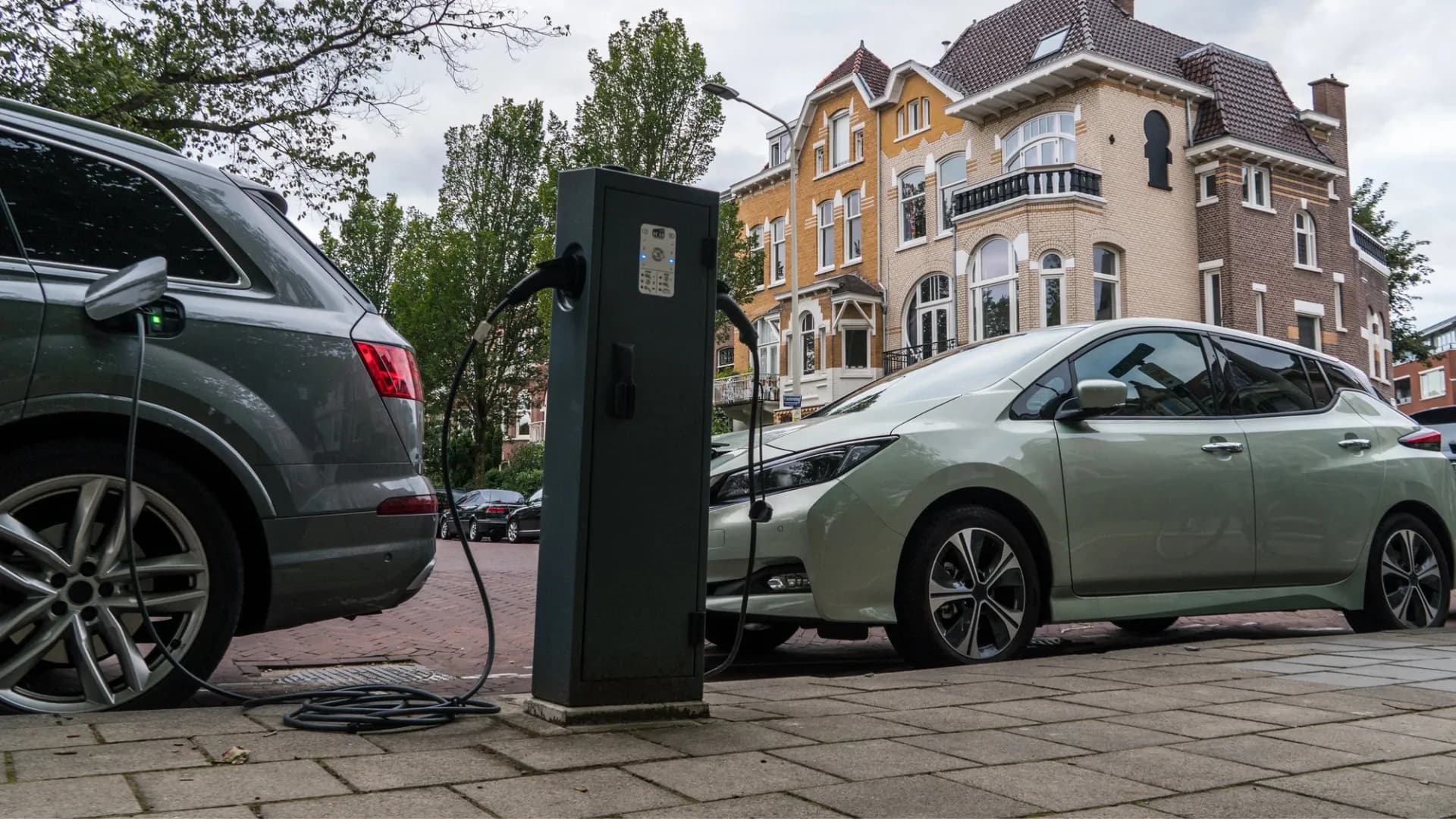

If the strategy succeeds, Quebec could give Canada something it has so far lacked in the LFP market: a domestic source of a key cathode ingredient that can potentially connect mining, chemical processing and battery manufacturing within North America.
Quebec is quietly positioning itself at an unusual but potentially important point in the global battery industry: not simply as a source of lithium, but as a supplier of phosphate for lithium iron phosphate (LFP) batteries. The opportunity is centered on the Saguenay–Lac-Saint-Jean region, where phosphate developer First Phosphate is advancing its Bégin-Lamarche project. The company’s plans have attracted growing federal support in 2026, while Quebec is already building a broader battery ecosystem around processing, cathode materials and battery manufacturing.
If the strategy succeeds, Quebec could give Canada something it has so far lacked in the LFP market: a domestic source of a key cathode ingredient that can potentially connect mining, chemical processing and battery manufacturing within North America. The timing is significant. LFP batteries have moved from being a chemistry strongly associated with Chinese battery manufacturing to becoming increasingly important for electric vehicles and, perhaps more importantly, stationary energy storage. As North American demand for batteries rises, governments and manufacturers are looking for supply chains that are less exposed to geopolitical and trade risks. For Canada, phosphate could become an unexpected strategic asset.
LFP stands for lithium iron phosphate. Unlike nickel-rich battery chemistries, LFP does not rely on cobalt or nickel in its cathode. Its appeal comes from a combination of comparatively lower costs, long cycle life and strong thermal stability, making it particularly attractive for mass-market electric vehicles and large-scale energy storage. But producing LFP cathode material requires more than lithium and iron. Battery-grade purified phosphoric acid is also a crucial input. That creates an opportunity for jurisdictions capable of supplying suitable phosphate and processing it to the exceptionally high purity demanded by battery manufacturers.
Canada formally recognised this potential when phosphorus was added to its Critical Minerals List in 2024. The federal government specifically identified phosphorus as important not only for food security but also for LFP batteries. Benchmark Mineral Intelligence has subsequently highlighted a potential shortage of battery-suitable purified phosphoric acid, suggesting that the strategic importance of phosphate could grow as LFP production expands beyond China. That changes the commercial conversation around Quebec’s phosphate resources. The prize is not simply selling a mined mineral. It is moving further downstream into battery-grade chemical production.
The most closely watched project is First Phosphate’s Bégin-Lamarche phosphate deposit in Saguenay–Lac-Saint-Jean. An updated mineral resource estimate released in May 2026 significantly increased the project’s scale. First Phosphate reported 6.2 million tonnes of measured resources grading 7.70% P₂O₅, 198.5 million tonnes of indicated resources grading 6.00%, and a further 89.5 million tonnes of inferred resources grading 6.16%. The company said the indicated resource represented a 378% increase from its initial 2024 estimate. More important for the battery proposition is the quality of the material.
Metallurgical testing reported an anticipated apatite concentrate grade of 40.4% P₂O₅ with an 88% process recovery rate. The company also said the resulting material had very low levels of potentially problematic elements and had been qualified for producing battery-grade phosphoric acid for LFP applications. The project’s geography adds another advantage. The deposit is approximately 70 kilometres by road from the deep-sea Port of Saguenay and is located near existing road and hydroelectric infrastructure. For a future industrial supply chain, those details matter. Mining economics are not determined solely underground. Roads, electricity, ports, railways, processing capacity and access to customers can ultimately decide whether a mineral deposit becomes a commercially meaningful project.
The Canadian government has increasingly treated the project as part of a broader critical-minerals security strategy. In March 2026, Natural Resources Canada agreed to provide First Phosphate with up to C$16.7 million in non-repayable funding through the Global Partnerships Initiative. The money is supporting demonstration and feasibility work designed to establish the technical parameters for producing phosphate concentrate suitable for the LFP battery market. The programme is also intended to develop domestic capacity to convert apatite into high-purity phosphoric acid. First Phosphate estimates that the project could support approximately 277 skilled jobs and potentially lead to a Canadian phosphoric acid facility.
Then came another important development in August. First Phosphate secured a further C$4.84 million in federal contributions through the First and Last Mile Fund. Around C$3.07 million is directed towards studying a 161-kilovolt transmission line and substations, while approximately C$1.77 million is supporting road infrastructure and access planning between the proposed mine and regional transport links, including the Port of Saguenay. Taken together, the federal support demonstrates that Ottawa increasingly sees the challenge as an infrastructure and processing problem, rather than simply a mining exercise. The phosphate opportunity does not exist in isolation. Quebec has spent years trying to establish a broader battery materials industry, supported by abundant low-carbon electricity, industrial infrastructure and research expertise. According to Investissement Quebec, as of March 2026, 13 major battery-sector projects were under development in the province, representing an estimated C$9.9 billion in announced investment.
Becancour has emerged as one of the key industrial centres. The province describes its industrial and port park as the heart of Quebec’s battery-sector development, with road, rail and deep-water port access across a 70-square-kilometre industrial area. There is also a growing technological layer. Nano One, for example, received C$18 million in Quebec government support for the conversion of its Candiac facilities into a pilot plant for cathode active materials, including LFP materials. The project is intended to validate the company’s industrial-scale “One-Pot” manufacturing process. This matters because Quebec’s phosphate strategy becomes far more valuable if phosphate can be transformed into battery-grade chemicals and eventually cathode material within a wider regional ecosystem. The commercial ambition is therefore not simply mine phosphate and export it. It is mine, refine, manufacture and supply.
There is another reason the timing could work in Quebec’s favour. The North American battery market is changing. Electric vehicles remain important, but stationary energy storage is becoming an increasingly powerful source of demand. The rapid expansion of data centres, particularly those supporting artificial intelligence, is increasing pressure on electricity grids and creating demand for large-scale storage systems. LFP’s safety, durability and cost characteristics make it particularly suited to this market.
Recent industry developments underline that shift. LG Energy Solution has been redirecting some North American battery capacity towards energy-storage applications, while South Korea’s SK On signed a major agreement in August 2026 to supply LFP cells for energy-storage systems in the United States. That potentially widens Quebec’s addressable market.A domestic phosphate supply chain could eventually serve electric vehicles, grid storage, data centres, robotics and other applications requiring large quantities of durable battery systems.