
Power Without Borders Meets Japan’s Age of Automation


At first glance, an ASEAN electricity supergrid and Japanese care robots appear unrelated. In reality, both represent the same structural shift. Asia is entering an era in which infrastructure must become more intelligent, flexible and interconnected.
Asia is entering a period in which two seemingly different business trends could become deeply connected: the movement of electricity across national borders and the rapid automation of economies facing shrinking workforces. Across Southeast Asia, governments are pushing towards a more interconnected electricity system through the ASEAN Power Grid, while elsewhere in Asia, Japan is confronting an ageing population that is forcing businesses to rethink how work is performed. Together, these developments point towards a wider investment theme: Asia is increasingly building infrastructure designed not simply to support economic growth, but to compensate for the pressures created by demographic and energy transformation.
The opportunity could be enormous. But it will depend on whether governments can turn ambitious regional plans into commercially viable infrastructure. Electricity has traditionally been produced and consumed largely within national borders. That model is beginning to look increasingly inefficient as renewable energy expands.
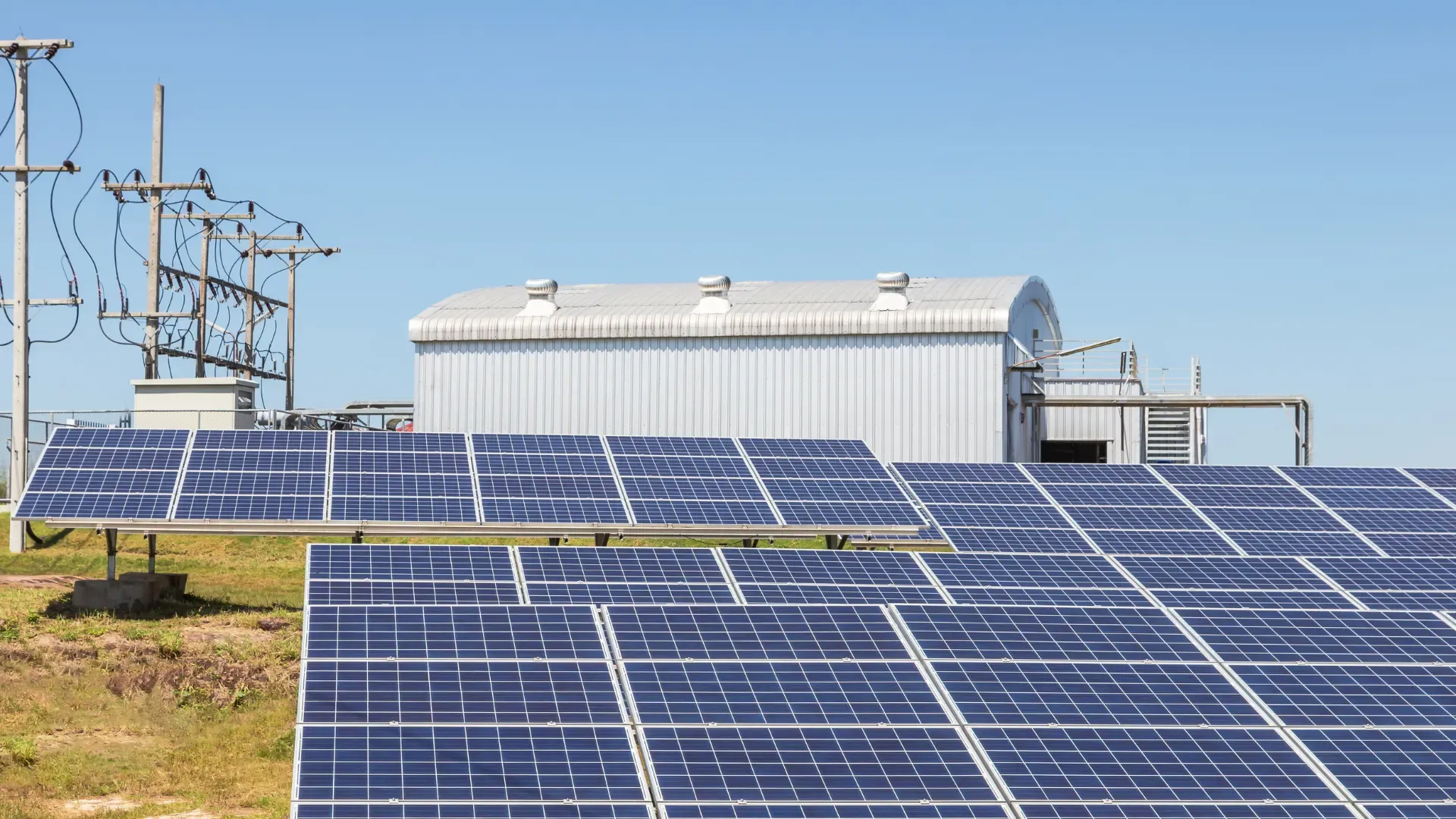
Solar power is abundant in some parts of Asia, hydropower resources are concentrated in others, while major industrial and urban centres may sit hundreds or thousands of kilometres away from the cheapest sources of generation. Connecting these markets could allow electricity to flow towards wherever demand is strongest.
The ASEAN Power Grid is one of the clearest examples. Launched as a regional initiative in 1999, it aims to connect Southeast Asia’s national electricity systems and create a framework for cross-border power trading. More than 38,000 GWh of electricity was exchanged across ASEAN borders between 2016 and 2022, demonstrating that regional electricity trading is no longer merely a policy concept.
The ambition is now moving towards a much larger scale. The International Energy Agency estimates that around $27 billion will be required by 2040 for planned cross-border interconnections under the ASEAN Power Grid. The wider requirement is substantially greater when domestic transmission, generation, storage and other infrastructure are included. An ASEAN Interconnection Masterplan Study has estimated $764 billion of investment in transmission and power generation capable of accommodating high levels of variable renewable energy.
That distinction matters. The idea of a “trillion-dollar opportunity” should not be interpreted as a single supergrid project carrying a trillion-dollar price tag. Rather, it describes the potential ecosystem surrounding Asia’s electrification: transmission lines, subsea cables, transformers, grid-management technology, storage, renewable generation, financing, software and power-market infrastructure.
The investment case is becoming stronger because electricity demand is rising rapidly. Southeast Asia is one of the fastest-growing electricity markets in the world, driven by industrialisation, urbanisation, rising incomes and electrification. The IEA says the region’s transmission and distribution networks will need to more than double in length by 2050, while annual investment in grids and storage needs to rise from about $13 billion today to $50 billion by 2050 under announced pledges.
This creates opportunities far beyond traditional utility companies. Companies manufacturing high-voltage equipment, subsea cables, transformers, grid sensors and power-management systems could become strategic beneficiaries. So too could developers capable of structuring cross-border infrastructure projects and financial institutions prepared to take on long-duration assets. The Asian Development Bank has also been increasing its involvement. In 2026, it announced plans to back $70 billion in new energy and digital infrastructure initiatives by 2035, including efforts to connect power grids and expand cross-border electricity trading.
Yet the biggest obstacle may not be engineering. It may be politics. Electricity markets require countries to agree on pricing, transmission charges, reliability standards, emergency procedures and rules governing imports and exports. National governments must also decide how much control they are willing to surrender over strategically important energy infrastructure.
The ASEAN model is therefore developing gradually, initially through bilateral and multilateral arrangements before any fully integrated regional electricity market emerges. The Lao PDR-Thailand-Malaysia-Singapore Power Integration Project has already demonstrated how electricity can move across several national systems, providing a practical foundation for deeper integration.
If these arrangements expand successfully, electricity could increasingly behave like a regional commodity rather than a purely national service. That would represent a profound change in Asian infrastructure. Japan offers a very different but complementary investment story. The country’s demographic challenge is well established, but its commercial implications are becoming increasingly difficult to ignore. Japan’s working-age population is projected to fall from roughly 75 million in 2020 to around 62 million by 2040. The Japanese government describes the resulting labour shortage as a long-term and persistent constraint on economic growth.
The pressure is particularly severe in healthcare, social care, logistics, construction and other sectors where replacing human workers is difficult. Japan’s care industry illustrates the scale of the challenge. Government estimates indicate that approximately 2.4 million care workers will be required in 2026, rising to around 2.72 million by 2040. This is creating a business environment in which automation is becoming less about futuristic technology and more about economic necessity.
Robotic systems can assist with lifting, transportation, cleaning and monitoring. AI can help with administrative workloads, scheduling and patient management. Autonomous machines can support warehouses and factories where companies struggle to recruit enough workers. Japan has been pursuing this direction for years. Its national robotics strategy has covered manufacturing, services, nursing and medical applications, infrastructure and agriculture, while government-backed research programmes have increasingly focused on robotics and AI capable of responding to population decline and ageing.
The opportunity is now moving beyond industrial robots. The next generation of growth could come from machines designed to work alongside people rather than replace them. In hospitals and care homes, that could mean robotic assistance with physically demanding tasks. In logistics, autonomous vehicles and warehouse robots could compensate for labour shortages. In factories, collaborative robots could allow older workers to remain productive for longer.
The International Federation of Robotics argues that demographic change is becoming an important driver of automation, particularly as ageing populations create labour shortages. Its latest research also stresses that robots generally automate tasks rather than entire occupations, meaning productivity gains can coexist with new roles and demand for new skills. That is an important distinction for investors. Japan may not simply become a larger market for robots. It could become a testing ground for an entirely different economic model in which technology is deliberately designed around demographic realities.
At first glance, an ASEAN electricity supergrid and Japanese care robots appear unrelated. In reality, both represent the same structural shift. Asia is entering an era in which infrastructure must become more intelligent, flexible and interconnected. Electricity networks need to compensate for the geographical mismatch between renewable generation and consumption. Businesses need automation to compensate for the mismatch between labour demand and available workers.
Both trends also create opportunities for private capital. The electricity story will favour companies building physical infrastructure and digital systems capable of moving power efficiently across borders. The demographic story will favour robotics manufacturers, AI developers, healthcare technology companies, automation specialists and businesses creating new productivity tools. Neither opportunity will develop overnight. Grid projects can take years to finance and construct, while robotics adoption in sensitive environments such as healthcare requires regulation, public acceptance and proven safety.
But that long time horizon may be precisely what makes the opportunities attractive. Asia’s next infrastructure cycle is unlikely to be defined by roads, ports and skyscrapers alone. It will increasingly be about the invisible systems that allow economies to function: electricity moving across borders, machines assisting workers, AI coordinating complex operations and technology helping societies adapt to demographic change.
The trillion-dollar question, therefore, is not whether Asia will need more infrastructure. It is whether investors can identify the companies building the systems behind the region’s next transformation. The ASEAN Power Grid and Japan’s automation economy suggest that some of the most valuable opportunities may already be emerging at that intersection of energy, technology and demographics.