

Middle East’s Aviation Boom: Can Riyadh Become the Next Global Air Hub?
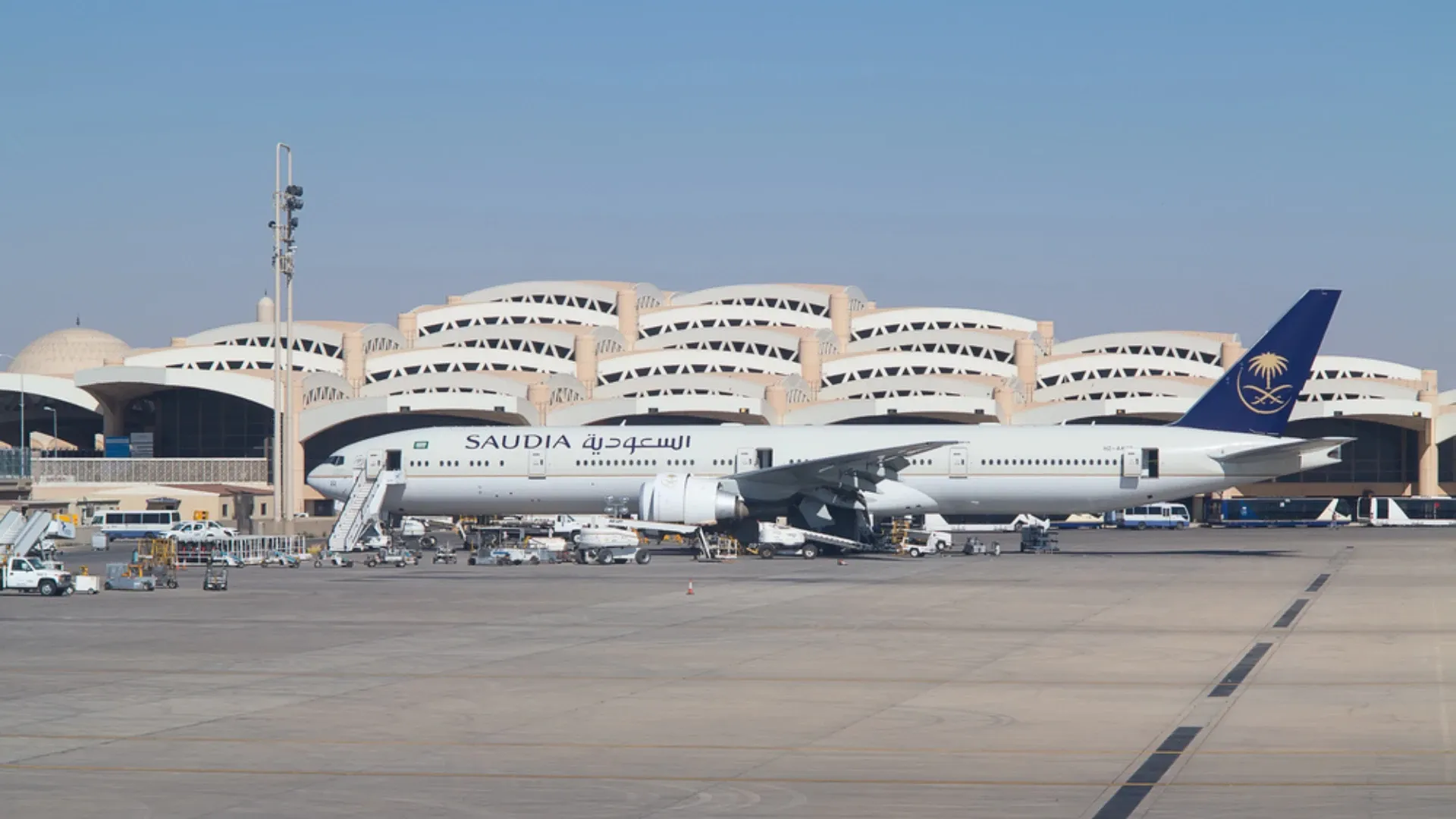

The Kingdom aims to handle 330 million passengers annually by 2030, connect to over 250 destinations, and position itself as a critical bridge between Asia, Europe, and Africa.
GCC is executing one of the most ambitious aviation transformations of the modern era. At the centre of this strategy sits a bold question: can Riyadh realistically rival established global aviation hubs such as Dubai, Doha, and Istanbul? The answer lies in the scale, integration, and intent behind the Kingdom’s Vision 2030 agenda, which positions aviation not merely as a transport function, but as a cornerstone of economic diversification and global connectivity.
Vision 2030, launched to reduce dependence on hydrocarbons, has placed aviation firmly within a wider logistics and tourism ecosystem. The Kingdom aims to handle 330 million passengers annually by 2030, connect to over 250 destinations, and position itself as a critical bridge between Asia, Europe, and Africa. This is not incremental growth; it is systemic transformation, designed to reshape regional aviation hierarchies.
At the heart of this ambition is the development of King Salman International Airport in Riyadh, a project whose scale alone signals intent. Covering approximately 57 square kilometres, with six parallel runways and multiple terminals, the airport is set to become one of the largest in the world. By 2030, it is expected to handle up to 120 million passengers annually, with long-term capacity reaching 185 million. Such figures would place Riyadh firmly in the league of the world’s busiest aviation hubs, surpassing many established gateways.
Yet the airport is not conceived as a standalone infrastructure asset. Rather, it is being designed as an “aerotropolis” – a fully integrated urban ecosystem combining aviation, logistics, retail, hospitality, and commercial real estate. This reflects a strategic understanding that modern hubs thrive not only on passenger throughput, but on their ability to generate economic activity beyond the terminal. The project is expected to contribute significantly to non-oil GDP and create tens of thousands of jobs, reinforcing its role as an economic engine rather than merely a transport node.
Complementing this infrastructure push is the emergence of Riyadh Air, the Kingdom’s new national carrier. Backed by the Public Investment Fund, the airline is positioned to become a key driver of connectivity and market competitiveness. Its ambitions are substantial, with plans to serve over 100 destinations by 2030 and operate a large fleet of wide-body aircraft. Beyond passenger travel, the airline is also expanding into cargo operations, aligning with Saudi Arabia’s broader logistics strategy and its aspiration to become a global trade hub.
The creation of a new airline alongside the expansion of the existing national carrier, Saudia, introduces a dual-brand strategy reminiscent of other successful aviation markets. It allows for segmentation between legacy operations and new-generation service models, while also increasing capacity and route diversity. Crucially, it signals a willingness to compete directly with established Gulf carriers, rather than merely complement them.
However, infrastructure and airlines alone do not create a global hub. The success of Riyadh’s aviation ambitions is intrinsically linked to the Kingdom’s rapidly expanding tourism sector. Vision 2030 has placed significant emphasis on attracting international visitors, with flagship projects such as the Red Sea developments, Diriyah, and Qiddiya forming part of a broader effort to reposition Saudi Arabia as a global leisure destination.
This integration of tourism and aviation is strategic. Increased visitor flows justify expanded air connectivity, while enhanced connectivity, in turn, supports tourism growth. The airport itself is being developed as a gateway not only to Riyadh, but to a portfolio of national mega-projects and global events, including Expo 2030. In this sense, aviation becomes both an enabler and a beneficiary of the Kingdom’s wider economic transformation.
Geography also plays in Saudi Arabia’s favour. Situated at the crossroads of three continents, Riyadh is well positioned to capture transit traffic between East and West. This has long been the foundation of success for hubs such as Dubai and Doha. By leveraging its central location, Saudi Arabia aims to replicate-and potentially exceed-the connectivity advantages that have defined Gulf aviation over the past two decades.
Nevertheless, the challenge should not be underestimated. The UAE, particularly Dubai, has spent decades building a sophisticated aviation ecosystem centred on operational efficiency, premium service, and global brand recognition. Qatar has similarly invested heavily in its aviation infrastructure and airline capabilities. These incumbents benefit from established networks, customer loyalty, and proven execution.
For Riyadh to compete effectively, it must not only match but differentiate. This may come through scale, digital innovation, and integration with broader economic sectors. Saudi Arabia has already signalled its commitment to advanced technologies, including smart airport systems, automation, and sustainability initiatives. The emphasis on creating a seamless, technology-driven passenger experience reflects an understanding that the future of aviation lies as much in efficiency and convenience as in capacity.
Another critical factor is regulatory and operational openness. Successful hubs typically combine strong national carriers with liberal aviation policies that encourage international airlines to operate freely. Saudi Arabia’s ability to strike this balance will influence its attractiveness as a transit point, particularly for long-haul routes.
Investment scale, however, remains one of the Kingdom’s strongest advantages. With substantial backing from sovereign wealth funds, Saudi Arabia has the financial capacity to execute large-scale projects at speed. This allows it to leapfrog traditional development cycles and adopt cutting-edge technologies from the outset. The construction of King Salman International Airport, alongside multiple aviation and logistics initiatives, demonstrates a coordinated, well-funded approach that few competitors can match.
The broader economic implications are significant. Aviation is not merely about moving passengers; it is a catalyst for trade, tourism, and investment. By enhancing connectivity, Saudi Arabia can attract multinational businesses, facilitate exports, and integrate more deeply into global value chains. The development of cargo capabilities, in particular, positions the Kingdom as a potential logistics hub linking regional and international markets.
Moreover, the aviation sector’s expansion is expected to generate substantial employment opportunities, from engineering and operations to hospitality and retail. This aligns with Vision 2030’s objective of creating jobs and developing human capital, particularly among the Kingdom’s young population.