
Indonesia Tightens Monitoring of “High Risks, High Return” China-Funded Projects

Indonesia must ensure China-funded investments are net positive for the country, as they are “high risk and high reward.”
Indonesia needs to tighten its monitoring of China-funded infrastructure projects to maximize their economic benefits while minimizing debt risk, environmental damage, and a lack of transparency.
The report titled “Balancing Risk and Reward” raises red flags about the scope and structure of Chinese financing, and it also pushes back against the narrative that depicts Beijing as a predator and Indonesia as a helpless victim.
Between 2000 and 2023, Chinese state-linked funding in Indonesia reached US$69.6 billion, and private Chinese companies spent an additional US$94.1 billion between 2010 and 2024. The research reports that 3% funding came through concessional loans and grants. The remaining came through debt.
Samantha Custer, the report’s lead author, stated that China wants to be paid back and prevent countries from defaulting on their payments because it is detrimental to its business interests and geopolitical standing.
To ensure they were sustainable, she advised that the government must take on debt at a manageable interest rate and have a viable plan to pay back without negatively impacting the economy.
Indonesia must ensure its investments are net positive for the country, as they are “high risk and high reward.”
Not all investments came from China. Some came from 439 businesses across 35 countries.
Between 2000 and 2025, China supported projects of 213 Chinese and Indonesian companies. Most of the projects were from Chinese state-owned companies, including 14 flagged for environmental, social, and governance (ESG) risks and/or sanctioned for suspicious business practices by the Asian Development Bank or the World Bank, either directly or through a parent company.
The report noted that Indonesia completed China-funded projects two years after the investment, which is slower than Chinese investment in ASEAN countries, including the Philippines.
Energy and transport projects are prone to delays, with delivery usually occurring more than 1,000 days after the original schedule. Such projects are more vulnerable to social and environmental hazards.
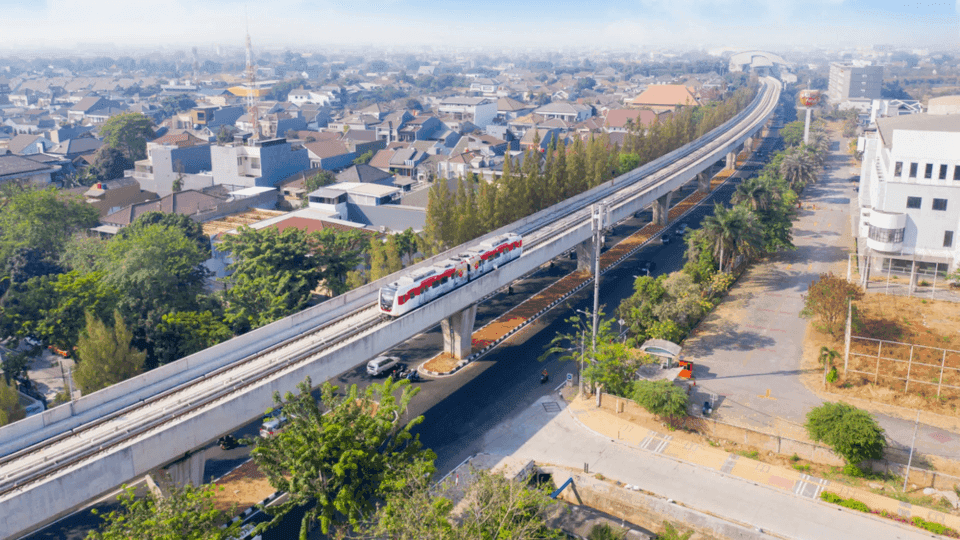
One of the best examples of the delay is the Whoosh, also called the Jakarta-Bandung High-Speed Rail. In October 2023, the US$7.3 billion train started operations, three and a half years later than the original schedule, with a US$1.2 billion cost overrun.
Pilar Sinergi BUMN Indonesia, an Indonesian state-owned company that owns most of the stakes in the Whoosh operator Kereta Cepat Indonesia-China (KCIC). The group reported losses of 4.19 trillion rupiah (US$257 million) last year, which is over estimated loss of 3.2 trillion rupiah for 2024.
The report stated that many Chinese investments have caused significant environmental costs. For example, mining operations have lowered fish stocks and green cover, contaminating the air and negatively impacting the health of residents.
Muhammad Zulfikar Rahmat, a researcher of China-Indonesia relations at the think tank Centre of Economic and Law Studies, located in Jakarta, stated that the implementers have not properly applied ESG principles in Chinese investments in the nickel industry.
Despite environmental hazards, the research emphasised some advantages of Chinese investments in Indonesia, such as improving access to basic services, reducing unemployment, increasing industrial and agricultural output, and enhancing connectivity through modernised roads, posts, and railways.
Indonesians might credit local politicians rather than Chinese investment for the infrastructure growth; therefore, the large infusion of funds did not increase the favorability of Beijing.
The report referred to the Gallup World Poll conducted last year, which revealed that, of 1,073 Indonesian respondents, only 29.2% wanted Chinese leadership, while the rest preferred Indonesian leadership.
According to Custer, the government can publicly disclose the terms, conditions, cost-benefit analysis, and outcomes of debt-financed development projects to ensure public accountability and reduce the risks.