

• About us
  • Advertise
  • Contact
  • Nominate
  • Client’s Voice
  • Login
  • Register
📖 Magazine
The Global Economics
  • Home
  • Banking
  • Non Banking
  • Markets
  • Infrastructure
  • Lifestyle
  • FeatureNew
  • Awards
No Result
View All Result
  • Home
  • Banking
  • Non Banking
  • Markets
  • Infrastructure
  • Lifestyle
  • FeatureNew
  • Awards
No Result
View All Result
The Global Economics
No Result
View All Result
Home Infrastructure Clean Energy

Biden’s Clean Energy Factory Jobs May Elude U.S. Union Workers

Anuj Singh by Anuj Singh
March 7, 2023
in Clean Energy, USA
Reading Time: 3 mins read
0
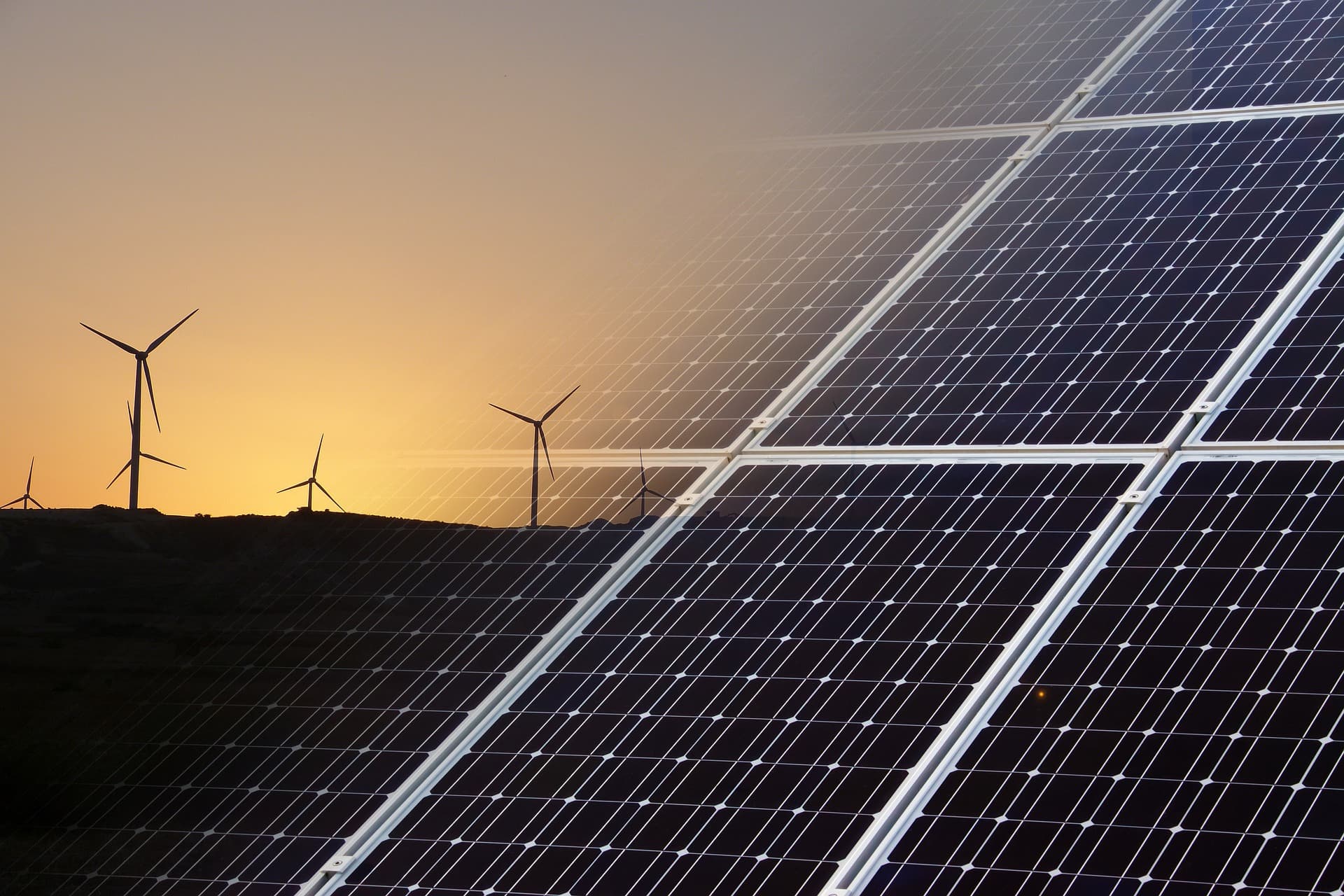
Biden's Clean Energy Factory Jobs May Elude U.S. Union Workers

Biden's Clean Energy Factory Jobs May Elude U.S. Union Workers | Image: Pixabay

37
SHARES
207
VIEWS
FacebookTwitterRedditWhatsAppLinkedInFacebook

President of the United States, Joe Biden, has guaranteed tens of thousands of middle-class employment will be generated with fair play to American citizens possessing a union card by tackling climate change.

However, the recent analysis by Reuters of corporate and state announcements highlighted a concerning trend in applying Biden‘s climate change law. Despite the law’s intentions of uplifting the indigenous manufacturing and clean energy transition, a major portion of the announced investments has gone to states having anti-union laws.

This allotment raises questions about the real impact of the investments on workers and the ability to negotiate for better wages and working conditions collectively. This also underlines the importance of considering the social and economic policies, apart from their environmental benefits.

The Biden administration’s Inflation Reduction Act (IRA) is taking significant steps toward producing clean energy in the United States. The Act offers tax credits to corporations that manufacture clean energy items indigenously. It also has provisions to offer higher credits to renewable project developers who use indigenous manufactured items.

Since August, when the Act was passed, more than 50 factories manufacturing E.V. components like batteries, solar panels, and other clean energy products have been announced, with 83 percent of them being located in the right-to-work states. 

These states prohibit companies from inducting union dues in their condition of payment. These factories make up $43.5 billion in investments or roughly 88 percent of the total investments announced by the companies.

As Biden’s administration confronts this test, they must ensure that the sermon they preach about a decarbonized America should include benefits for generating appropriate jobs in the clean energy space. It must not be the case of promising that these jobs will be at par with those lost in oil refineries and coal mines. They must ensure workers have quality jobs with unionized wages and benefits.

The right-to-work laws permit the workers to work in union-represented environments and be insured with the collective negotiation agreements without associating themselves with the union or paying dues. The U.S. has a total of 27 states that have laws. In the 2020 U.S. Presidential election, 20 states amongst these 27 voted for Donal Trump. 

According to a study by researchers at Georgia Tech, it was shown that the right-to-work laws are connected with lower unionized rates and wages. This study was conducted in 2020 after analyzing thousands of union negotiation agreements over 18 years in five states.

Win for Labour

The IRA is highly appreciated and welcomed by the labor unions because now the energy generating projects like wind and solar farms will have to pay proper wages to construction workers and on-board probationers to benefit from the tax credits provided to them by the laws.

Whereas, there is discrimination in subsidies being provided to U.S. companies that manufacture E.V. items like batteries, solar panels, etc., which are used further in the construction, eventually generating jobs and still providing employment opportunities after the construction.

South Korean E.V. maker Hyundai Motor Co, Japanese car maker Toyota, and solar panel manufacturer Hanwha Qcells abstained from considering the right-to-work laws. These companies alone account for investments worth $11 billion of the projects.

Unions push ahead

Labour unions have got a tough nut to crack. They are worried about where the investments are headed, Georgia and South Carolina, where union membership among wage and salaried workers is 4.4 percent and 1.7 percent.

Since the IRA has passed, major companies like Hyundai, Hanwha Qcells, and more, have invested $12 billion in Georgia under clean energy manufacturing investment plans. 

A few representatives from the labour unions have said that they are searching for employment opportunities in the emerging offshore wind industry.
Source: short URL
Tags: clean energyIRAJoe BidenUSA
Anuj Singh

Anuj Singh

Related Posts

From Compliance to Competitive Advantage: ESG as Europe’s New Business Engine
Clean Energy

From Compliance to Competitive Advantage: ESG as Europe’s New Business Engine 

by The Global Economics
April 24, 2026
Oceania’s Renewable Ascendancy: Powering the Future Through Solar, Hydrogen and Storage Innovation
Clean Energy

Oceania’s Renewable Ascendancy: Powering the Future Through Solar, Hydrogen and Storage Innovation 

by The Global Economics
April 23, 2026
North America Trade Tensions 2026: Trump’s Tariff Strategy Reshaping Regional Business Dynamics
Economy

North America Trade Tensions 2026: Trump’s Tariff Strategy Reshaping Regional Business Dynamics

by The Global Economics
April 20, 2026
The Green Economy Surge: How Climate Tech is Powering the Next Industrial Revolution 
Clean Energy

Europe’s Green Economy Surge: How Climate Tech is Powering the Next Industrial Revolution 

by The Global Economics
April 17, 2026
COP31: Australia Could Push High-Seas Causes As Pacific Takes Centre Stage
Clean Energy

COP31: Australia Could Push High-Seas Causes As Pacific Takes Centre Stage 

by The Global Economics
April 9, 2026
Twitter Youtube LinkedIn Soundcloud
the global economics logo

The Global Economics Limited is a UK based financial publication and a Bi-Monthly business magazine giving thoughtful insights into the financial sectors on various industries across the world. Our highlight is the prestigious country specific Annual Global Economics awards program where the best performers in various financial sectors are identified worldwide and honoured.

DMCA.com Protection Status

  • Privacy
  • Legal
  • Terms of Use
  • Client’s Voice
  • Server Status

norton verified - the global economics

Latest Posts

From Compliance to Competitive Advantage: ESG as Europe’s New Business Engine

From Compliance to Competitive Advantage: ESG as Europe’s New Business Engine 

April 24, 2026
Oceania’s Renewable Ascendancy: Powering the Future Through Solar, Hydrogen and Storage Innovation

Oceania’s Renewable Ascendancy: Powering the Future Through Solar, Hydrogen and Storage Innovation 

April 23, 2026
From Oversupply to Opportunity: What China’s Property Slowdown Means for APAC Investors

From Oversupply to Opportunity: What China’s Property Slowdown Means for APAC Investors 

April 22, 2026
Download The Global Economics PWA to your mobile or Desktop
PWA App Download
Download The Global Economics Android App to your mobile or Desktop
Android App
Download The Global Economics IOS App to your mobile or Desktop
IOS App

All Rights Reserved © 2020 | 🇬🇧 The Global Economics, Business Finance Publication - www.theglobaleconomics.uk 🌏

Welcome Back!

Sign In with Facebook
Sign In with Linked In
OR

Login to your account below

Forgotten Password? Sign Up

Create New Account!

Sign Up with Facebook
Sign Up with Linked In
OR

Fill the forms below to register

*By registering into our website, you agree to the Terms & Conditions and Privacy Policy.
All fields are required. Log In

Retrieve your password

Please enter your username or email address to reset your password.

Log In
No Result
View All Result
  • About us
  • Awards
  • Magazine
  • Client’s Voice
  • Exclusive Coverage
  • Nominate
  • Login
  • Sign Up

All Rights Reserved © 2020 | 🇬🇧 The Global Economics, Business Finance Publication - www.theglobaleconomics.uk 🌏

This website uses cookies. By continuing to use this website you are giving consent to cookies being used. Visit our Privacy and Cookie Policy.