
• About us
  • Advertise
  • Contact
  • Nominate
  • Client’s Voice
  • Login
  • Register
📖 Magazine
The Global Economics
  • Home
  • Banking
  • Non Banking
  • Markets
  • Infrastructure
  • Lifestyle
  • FeatureNew
  • Awards
No Result
View All Result
  • Home
  • Banking
  • Non Banking
  • Markets
  • Infrastructure
  • Lifestyle
  • FeatureNew
  • Awards
No Result
View All Result
The Global Economics
No Result
View All Result
Home Infrastructure Transportation

Qantas, Airbus to invest up to USD 200 million in new move to develop Australian SAF industry
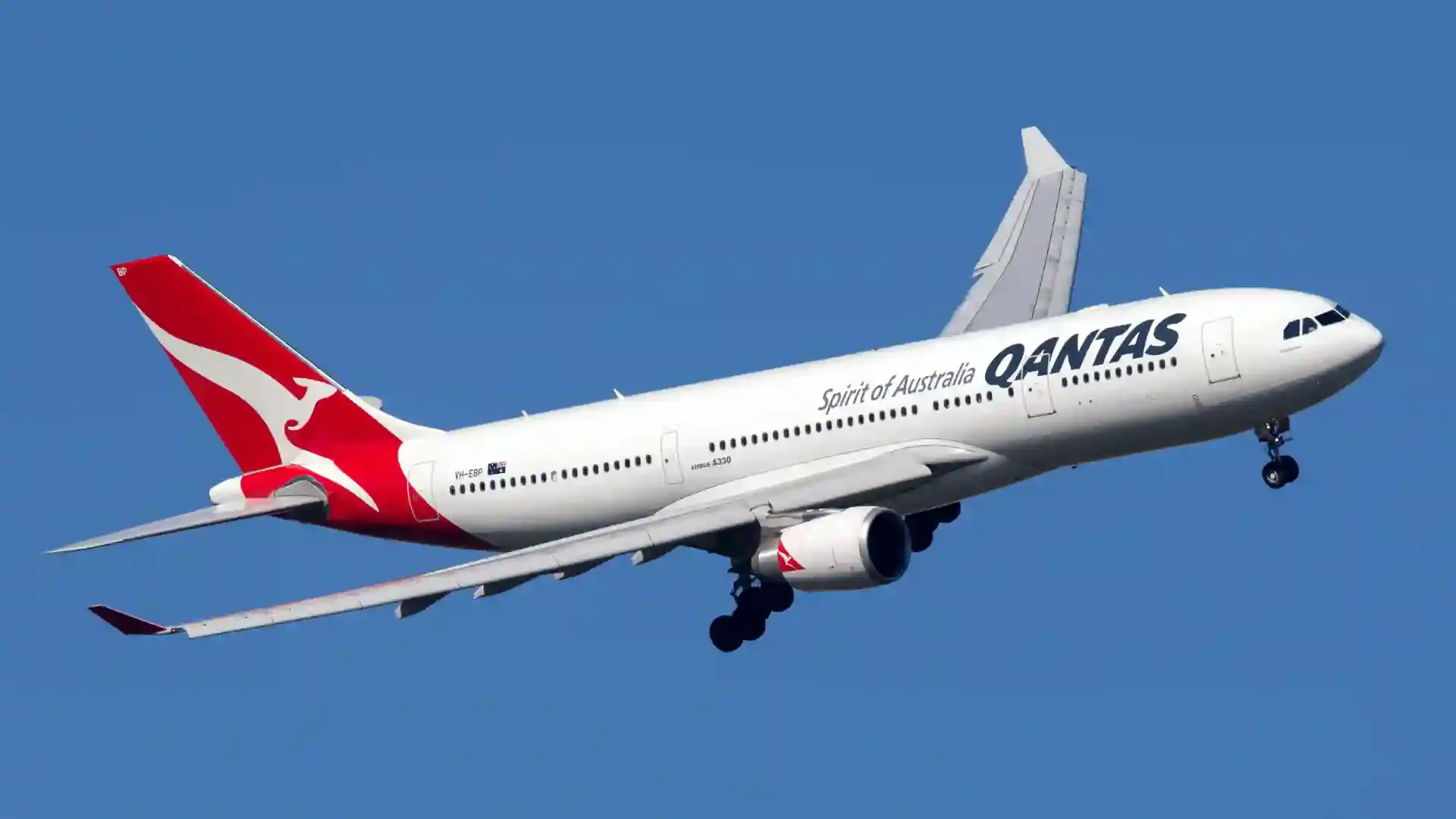
Incorporating SAF would not require modifications to existing engine systems

Ritu M R by Ritu M R
June 20, 2022
in Energy, The Global Economics, Top Stories, Transportation
Reading Time: 3 mins read
0
Qantas, Airbus to invest up to USD 200 million in new move to develop Australian SAF industry

Qantas, Airbus to invest up to USD 200 million in new move to develop Australian SAF industry

36
SHARES
200
VIEWS
FacebookTwitterRedditWhatsAppLinkedInFacebook

Qantas Airways Ltd and Airbus SE is all set to make a joint investment aimed at kick-starting Australia’s sustainable aviation fuel industry.

The plane maker and airline plan to invest up to USD200 million to accelerate the establishment of the sustainable aviation fuels (SAF) industry in Australia to help meet the airline’s goal of lowering carbon emissions.

The Australian Sustainable Aviation Fuel Partnership was signed in Doha today by Qantas Group CEO Alan Joyce and Airbus CEO Guillaume Faury ahead of the IATA’s annual general meeting in Doha.

Sourcing SAF from overseas sources, the company is committed to using at least 10 percent of SAF for its overall fuel combination. At the moment, 15 percent of the company’s fuel usage originates from London, and is projected to reach 20 million liters per annum for flights between Australia and the Los Angeles / San Francisco sector.

When compared with traditional aviation fuels, SAF is known to reduce greenhouse gas emissions by up to 80 percent. SAF is currently the most effective tool for airlines to reduce their negative impact on the environment. Most importantly, these fuels can be used in contemporary engines without the need for any special modifications.

As part of the airline’s recent announcements, Airbus and Qantas agreed to work together on the sustainability initiative. Some of these projects would include Project Sunrise, incorporating the A350-1000 on non-stop flights between Australia, New York and London. The company also announced that it would operate A220s and A321XLRs as part of its domestic fleet renewal named Project Winton. In addition, the company would utilise lower-emission aircraft for its subsidiary Jetstar.

The new fleet would consume considerably less fuel and reduce carbon emissions by up to 25 percent from the first day of operations. All the aircraft in the fleet have been certified for operation using at least 50 percent SAF.

Qantas contributes AUD50 million

The partnership has initially been signed for five years with options to extend the duration. Qantas’ financial contribution includes AUD50 million to the Australian Sustainable Aviation Fuel Partnership previously committed to research and development of SAF in Australia. Pratt and Whitney are also contributing to the venture, whose GTF engines were recently selected by Qantas for their new A220 and A320neo family aircraft. The company while continually advancing the efficiency of aircraft propulsion technology supports greater use of cleaner, alternative fuels including SAF.

CEO of Qantas, Alan Joyce, was quoted as saying that the investment would enhance the development and use of SAF in Australia, thereby creating value for shareholders and generating new jobs, while at the same time reducing the country’s dependence on fuel imports.

He added that it made a lot of sense to put equity into an industry that they would be the biggest customer of. The company intends to invite other businesses and producers of SAF to present their sustainable projects. The funding generated would be vital to the commencement of new projects.

Airbus CEO Guillaume Faury said that the aviation industry needs the right policy settings in place to ensure the cost of SAF comes down over time so that the cost of air travel wouldn’t have to rise. The company has had some encouraging discussions with the incoming Australian Government given their strong focus on emissions reduction and Faury said that the company looks forward to that progressing.

The increased use of sustainable aviation fuels will be a key factor to achieve net zero emissions by 2050. Achieving this target would require robust industrial systems to commercially produce new energy sources which are affordable, and easily accessible to important travel hubs globally.

Faury stated that the agreement that the company has signed with Qantas reflects on the new level of partnership between the two companies and their shared commitment to act as catalysts of change to ensure a bright future for the industry as a whole.
Via: short URL
Tags: AirbusqantasSAFsustainability
Ritu M R

Ritu M R

Ritu is a professional who aims at writing informative and engaging articles that appeal to the readers.

Related Posts

A New Oil Order: UAE’s OPEC Exit and the Future of Energy Power in the Gulf
Energy

A New Oil Order: UAE’s OPEC Exit and the Future of Energy Power in the Gulf

by The Global Economics
May 5, 2026
A Calculated Expansion: Shell’s $16.4 Billion Move Reshapes the Energy Landscape
Energy

A Calculated Expansion: Shell’s $16.4 Billion Move Reshapes the Energy Landscape 

by The Global Economics
May 4, 2026
Joining Hands: Regional Cooperation Moves Latin America’s Economy Forward
Economy

Joining Hands: Regional Cooperation Moves Latin America’s Economy Forward 

by The Global Economics
May 2, 2026
Top 10 Investments in EV Companies
Feature

Top 10 Investments in EV Companies 

by The Global Economics
April 29, 2026
Middle East’s Aviation Boom: Can Riyadh Become the Next Global Air Hub?
aerospace

Middle East’s Aviation Boom: Can Riyadh Become the Next Global Air Hub?

by The Global Economics
April 28, 2026
Twitter Youtube LinkedIn Soundcloud
the global economics logo

The Global Economics Limited is a UK based financial publication and a Bi-Monthly business magazine giving thoughtful insights into the financial sectors on various industries across the world. Our highlight is the prestigious country specific Annual Global Economics awards program where the best performers in various financial sectors are identified worldwide and honoured.

DMCA.com Protection Status

  • Privacy
  • Legal
  • Terms of Use
  • Client’s Voice
  • Server Status

norton verified - the global economics

Latest Posts

A New Oil Order: UAE’s OPEC Exit and the Future of Energy Power in the Gulf

A New Oil Order: UAE’s OPEC Exit and the Future of Energy Power in the Gulf

May 5, 2026
A Calculated Expansion: Shell’s $16.4 Billion Move Reshapes the Energy Landscape

A Calculated Expansion: Shell’s $16.4 Billion Move Reshapes the Energy Landscape 

May 4, 2026
Redesigned format of the convenience store, Othaim Express

Al Othaim Markets: Built on Trust, Shaped by Scale, Focused on Value

May 4, 2026
Download The Global Economics PWA to your mobile or Desktop
PWA App Download
Download The Global Economics Android App to your mobile or Desktop
Android App
Download The Global Economics IOS App to your mobile or Desktop
IOS App

All Rights Reserved © 2020 | 🇬🇧 The Global Economics, Business Finance Publication - www.theglobaleconomics.uk 🌏

Welcome Back!

Sign In with Facebook
Sign In with Linked In
OR

Login to your account below

Forgotten Password? Sign Up

Create New Account!

Sign Up with Facebook
Sign Up with Linked In
OR

Fill the forms below to register

*By registering into our website, you agree to the Terms & Conditions and Privacy Policy.
All fields are required. Log In

Retrieve your password

Please enter your username or email address to reset your password.

Log In
No Result
View All Result
  • About us
  • Awards
  • Magazine
  • Client’s Voice
  • Exclusive Coverage
  • Nominate
  • Login
  • Sign Up

All Rights Reserved © 2020 | 🇬🇧 The Global Economics, Business Finance Publication - www.theglobaleconomics.uk 🌏

This website uses cookies. By continuing to use this website you are giving consent to cookies being used. Visit our Privacy and Cookie Policy.