
New Zealand’s Economic Slowdown and the Rising Pressure on Household Spending
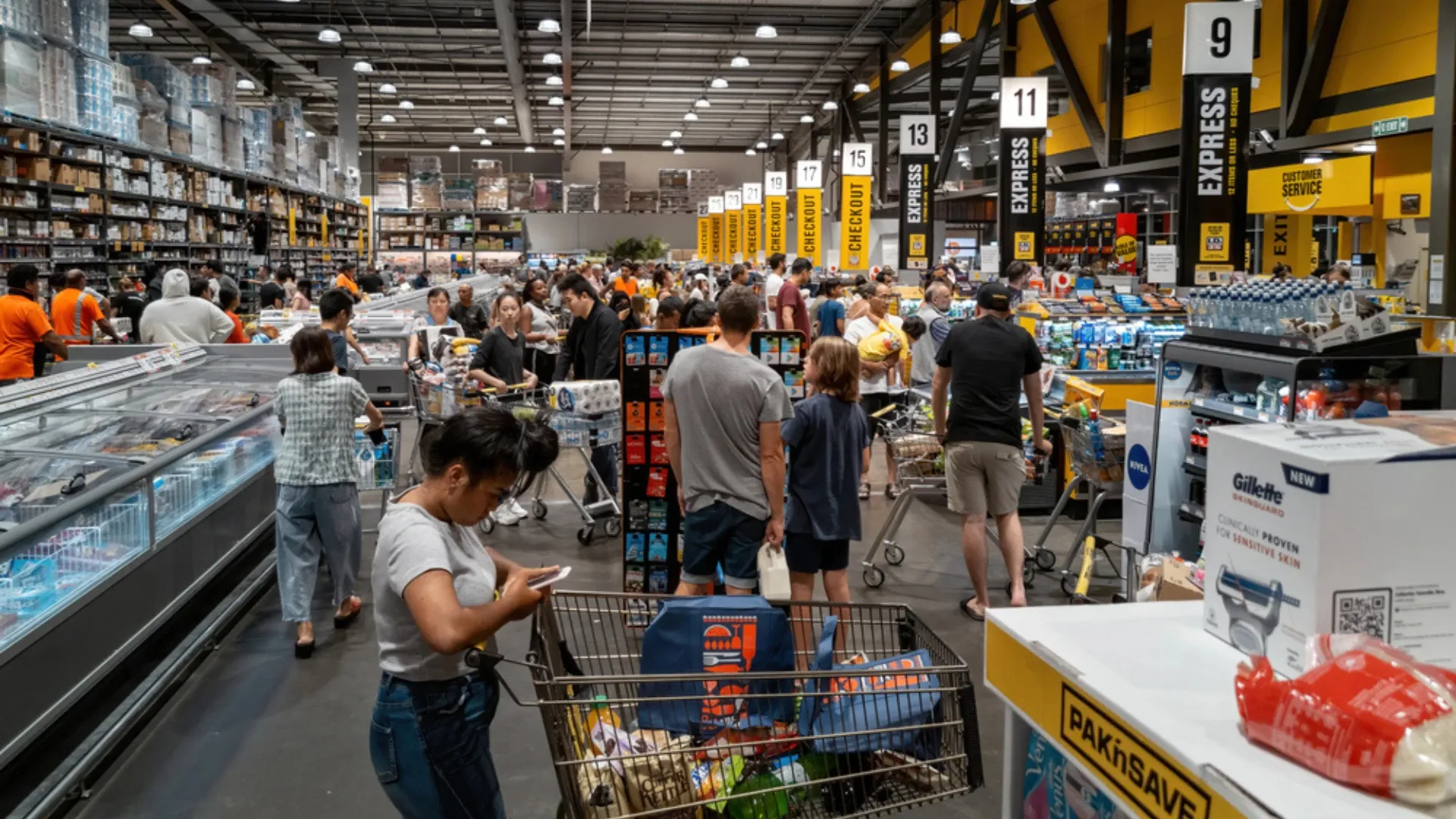

The Reserve Bank of New Zealand has acknowledged that households are still cautious in their spending decisions despite lower borrowing costs and signs of stabilisation across parts of the economy.
New Zealand’s economy entered 2026 carrying the weight of several difficult years, and while policymakers continue to describe the country as being in a recovery phase, many households are struggling to feel any meaningful improvement in daily life. Across major cities and regional towns alike, families are becoming increasingly cautious with their spending as inflationary pressures, weak wage growth, elevated living costs and fragile consumer confidence continue to squeeze household finances.
The country’s economic slowdown is no longer defined by a single issue. Instead, it reflects a combination of interconnected pressures that are reshaping how New Zealanders spend, save and invest. Although interest rates have eased from the aggressive tightening cycle seen between 2022 and 2024, the expected rebound in consumer activity has remained subdued. Retail businesses, hospitality operators and property developers are now confronting a market where households are prioritising essentials over discretionary purchases.
At the centre of the slowdown lies the growing strain on household budgets. Food prices, electricity bills, insurance premiums and local council rates have continued rising faster than many incomes. While inflation has moderated from its earlier peaks, the cost of essential living expenses remains stubbornly high. The Reserve Bank of New Zealand has acknowledged that households are still cautious in their spending decisions despite lower borrowing costs and signs of stabilisation across parts of the economy.
For many New Zealand households, mortgage servicing remains one of the largest financial burdens. Although mortgage rates have fallen considerably from their 2023 highs, many homeowners are still rolling off older fixed-rate loans onto higher repayment structures than they previously enjoyed during the ultra-low interest era. This adjustment has significantly reduced disposable income for middle-income families, particularly in Auckland, Wellington and Christchurch where housing costs remain elevated.
The weakness in the housing market has also created broader psychological effects across the economy. Historically, rising property values have supported consumer confidence in New Zealand, encouraging spending and investment. However, house prices remain well below their pandemic peaks, and this prolonged softness has dampened household wealth perceptions. Economists increasingly argue that New Zealand’s traditional dependence on housing-driven economic momentum is now becoming a structural vulnerability rather than a growth engine.
Retail spending patterns clearly illustrate this shift in behaviour. Consumers are increasingly directing their income towards unavoidable essentials such as groceries, fuel and utility bills, while reducing expenditure on travel, dining, entertainment and household goods. Retailers across the country are reporting slower foot traffic and weaker sales volumes, with smaller businesses facing particularly difficult trading conditions. Several economic forecasts now suggest that retail weakness may persist throughout much of 2026 before any meaningful improvement emerges.
The labour market has further complicated the situation. Unemployment has risen above five percent, its highest level in years, while wage growth has remained relatively modest compared with the rise in living costs. Although employment conditions are stabilising gradually, many workers remain uncertain about job security and future income prospects. That uncertainty is discouraging larger purchases and encouraging more conservative financial behaviour.
At the same time, New Zealand’s economy remains highly exposed to global developments. Rising geopolitical tensions and higher oil prices have added fresh risks to inflation and household spending power during 2026. The recent surge in energy costs has already begun flowing through transport expenses, food distribution and broader supply chains, placing additional pressure on consumers. Finance officials have warned that persistent oil price shocks could delay the country’s economic recovery and potentially reignite inflation concerns.
This creates a difficult balancing act for the Reserve Bank. On one hand, the economy still requires accommodative monetary policy to support growth and confidence. On the other, policymakers remain concerned that renewed inflationary pressures could become embedded if energy and living costs continue climbing. Markets are therefore increasingly uncertain about the future direction of interest rates, adding another layer of anxiety for households and businesses alike.
Another emerging concern is migration and demographic pressure. New Zealand has experienced elevated outward migration to Australia in recent years as workers seek higher wages and stronger economic opportunities abroad. This trend is reducing domestic demand in certain housing segments while simultaneously raising concerns about long-term productivity and labour shortages. The departure of skilled workers could weaken future growth potential if the country struggles to retain talent in a competitive global labour market.
Despite these challenges, there are still areas of resilience within the economy. The agricultural sector continues to benefit from relatively strong global commodity demand, particularly in dairy exports. Regional economies tied to farming and primary industries have generally performed better than urban consumer-driven sectors. Tourism activity has also shown signs of gradual recovery, contributing positively to employment and foreign earnings.
However, these strengths alone may not be enough to restore broad-based consumer confidence quickly. Many economists now believe New Zealand is entering a slower-growth era in which households will remain more financially cautious than they were during the previous decade. Consumers appear increasingly focused on debt reduction, emergency savings and financial stability rather than aggressive spending or speculative investment.
The political implications of this environment are becoming increasingly significant as well. Public frustration surrounding living costs, housing affordability and stagnant household finances is intensifying pressure on policymakers ahead of future elections. Governments may face growing demands for targeted tax relief, energy subsidies, infrastructure spending and housing reforms designed to stimulate productivity without worsening inflationary pressures.
Businesses operating within New Zealand are already adapting to this new economic reality. Retailers are reshaping inventory strategies, banks are tightening lending standards, and companies across multiple sectors are becoming more cautious about hiring and expansion. Corporate investment decisions are increasingly influenced by concerns over consumer weakness and uncertain economic momentum.
Ultimately, New Zealand’s current economic slowdown reflects more than just a temporary cyclical downturn. It highlights deeper structural questions about productivity, housing dependence, wage growth and household resilience in an economy vulnerable to both domestic and international shocks. While lower interest rates and improving global conditions may eventually support recovery, the immediate reality for many households remains one of financial pressure and restrained spending.