
Beyond Earth, Beyond War: The Business Behind America’s Space Shield

The US Space Force has already issued contracts worth up to $3.2 billion to multiple companies developing space-based interceptor technologies for Golden Dome, while broader estimates suggest the programme could eventually cost as much as $185 billion.
The United States is entering a new era of strategic competition in orbit, where missile defence, satellite security and commercial launch capabilities are increasingly intertwined. What once belonged to the realm of science fiction is rapidly becoming a major industrial battleground. At the centre of this transformation sits the “Golden Dome” initiative, a vast American missile-defence programme designed to create an integrated shield against hypersonic weapons and long-range missile threats. Alongside it, a fierce commercial contest is reshaping the economics of space launch, with smaller firms such as Rocket Lab attempting to challenge the overwhelming dominance of SpaceX.
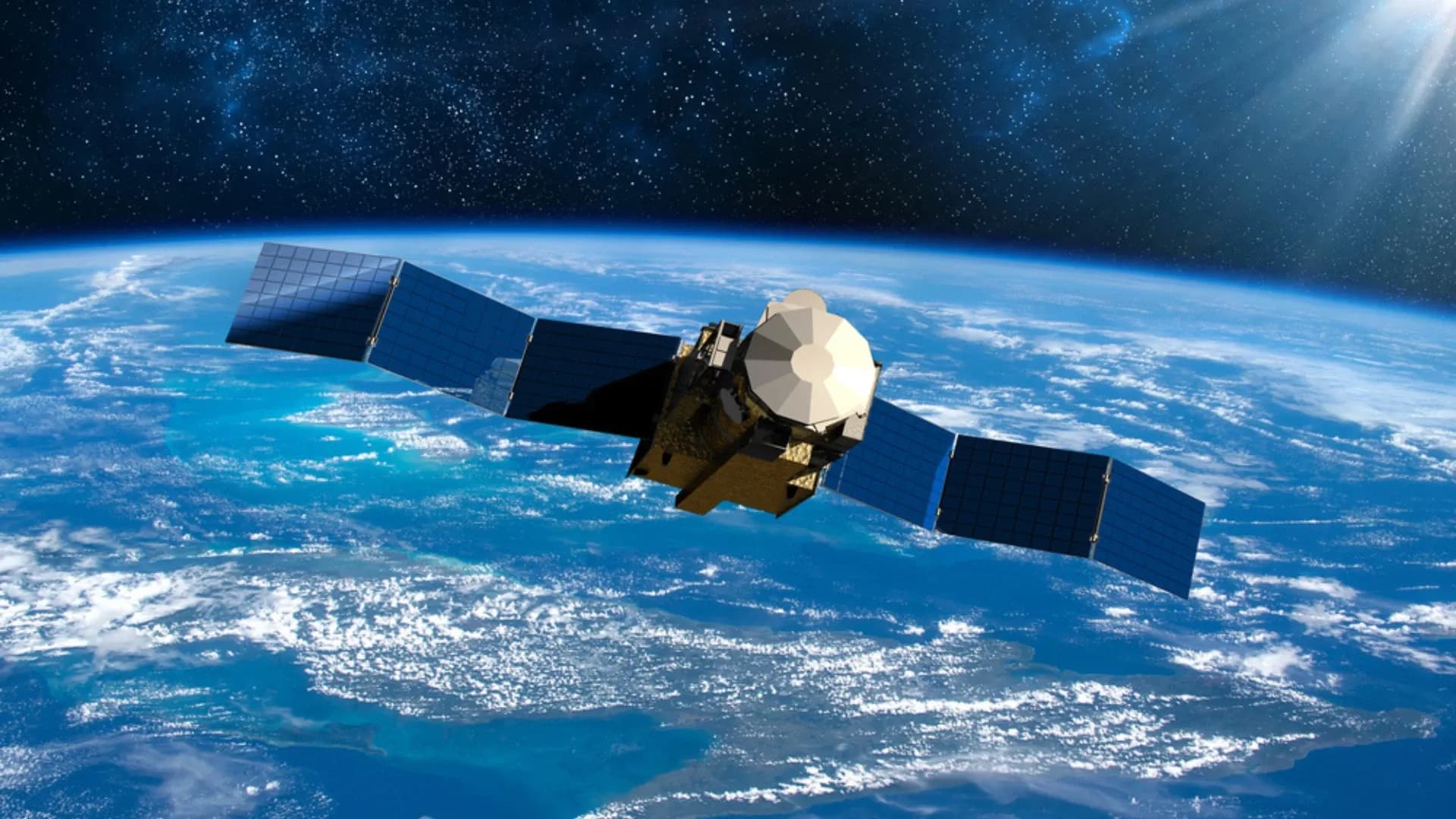
The scale of America’s new space-defence ambitions is extraordinary. The US Space Force has already issued contracts worth up to $3.2 billion to multiple companies developing space-based interceptor technologies for Golden Dome, while broader estimates suggest the programme could eventually cost as much as $185 billion. The concept moves beyond traditional ground-based missile defence systems by creating an orbital layer capable of detecting, tracking and potentially intercepting threats during the earliest stages of flight.
Unlike Cold War-era defence systems dominated by a handful of traditional contractors, this new programme is opening the door to a wider ecosystem of venture-backed technology firms and defence startups. Companies such as Anduril Industries, True Anomaly and Turion Space are now competing alongside legacy giants including Lockheed Martin, Northrop Grumman and RTX.
This shift reflects a broader transformation in Pentagon procurement strategy. Defence agencies increasingly want rapid innovation cycles, software-driven systems and cheaper deployment models rather than decade-long development programmes. Startups built around artificial intelligence, autonomous systems and agile manufacturing are therefore becoming highly attractive partners. Anduril’s consortium approach to Golden Dome illustrates this trend clearly, combining commercial launch expertise, AI capabilities and advanced satellite technologies into a flexible networked defence architecture.
The commercial opportunities emerging from defence-driven innovation are equally significant. Technologies developed for orbital missile defence can later be adapted for civilian satellite servicing, space logistics, secure communications and Earth observation. Investors increasingly view the defence sector not as separate from commercial space, but as the financial engine accelerating the entire industry. In many cases, military contracts now provide the predictable cash flow required for space startups to survive the notoriously difficult economics of launch and satellite development.
This environment is also intensifying the rivalry between Rocket Lab and SpaceX. Although the gap between the two companies remains enormous in scale, the competitive dynamics are becoming more serious. SpaceX continues to dominate the American launch market through its reusable Falcon 9 rockets, vertically integrated manufacturing and unmatched launch frequency. Its ability to recover and rapidly reuse boosters fundamentally changed launch economics, reducing costs while enabling massive satellite deployment for both commercial customers and government agencies.
Yet Rocket Lab is carving out an increasingly credible position within the industry. Initially known for its smaller Electron rocket, the company has gradually evolved into a broader space systems provider with growing defence exposure. Recent contract wins linked to hypersonic testing and Pentagon programmes demonstrate how the company is leveraging military demand to accelerate expansion. Rocket Lab recently secured a $190 million Department of Defense agreement tied to hypersonic test launches and has built a contract backlog exceeding $2.2 billion.
Crucially, Rocket Lab understands that survival in the modern launch market depends on scale and integration. The company is aggressively moving beyond launches into satellite manufacturing, propulsion systems and space robotics. Analysts increasingly describe Rocket Lab less as a launch startup and more as a vertically integrated aerospace contractor. This mirrors the strategy that helped SpaceX become dominant: controlling as much of the supply chain as possible while offering governments and commercial clients end-to-end services.
Reusable rocket technology remains central to this competition. SpaceX proved that reusability could dramatically lower launch costs, enabling more frequent missions and larger satellite constellations. Academic studies suggest reusable systems can significantly reduce manufacturing-related emissions and operational costs compared with fully expendable rockets. Rocket Lab’s forthcoming Neutron rocket represents its attempt to compete directly in this segment, targeting medium-lift missions traditionally controlled by Falcon 9. Investors increasingly see Neutron as Rocket Lab’s defining strategic test.
The Pentagon’s growing dependence on commercial launch providers is reshaping the competitive landscape further. Military planners no longer want to rely on a single launch supplier for critical national-security missions. Diversification has become a strategic priority, especially as geopolitical tensions with China and Russia intensify. This creates an opening for companies like Rocket Lab, which can position themselves as complementary alternatives to SpaceX rather than direct replacements.
Satellite deployment demand is also expanding at remarkable speed. Defence agencies increasingly require constellations capable of real-time missile tracking, encrypted communications and persistent surveillance. At the same time, commercial operators are launching thousands of satellites for broadband networks, Earth imaging and data services. The result is a launch market where demand growth may be strong enough to support multiple successful providers simultaneously.
Still, challenging SpaceX remains extraordinarily difficult. The company benefits from unmatched launch cadence, deep government relationships and the strategic advantage of Starlink, its global satellite internet network. Starlink not only generates enormous commercial value but also strengthens SpaceX’s importance to US national security infrastructure. Few competitors possess the financial resources or operational scale necessary to match that ecosystem.
Nevertheless, smaller firms possess advantages of their own. Companies such as Rocket Lab can move faster in niche markets, tailor services for specialised military missions and avoid some of the bureaucratic complexity associated with larger aerospace groups. Defence customers increasingly value flexibility, responsiveness and modular technology architectures, particularly for emerging threats such as hypersonic missiles and orbital warfare.
The broader implication is that America’s space economy is becoming inseparable from national security strategy. Government investment in missile defence, orbital surveillance and launch resilience is effectively underwriting the next generation of commercial space innovation. What began as a military race is now creating entirely new industrial opportunities across advanced manufacturing, artificial intelligence, robotics and telecommunications.
For investors, the message is increasingly clear. The future of the space sector will not be defined solely by exploration or tourism, but by defence-driven infrastructure and strategic competition in orbit. Golden Dome may ultimately become more than a missile shield. It could serve as the foundation for a permanently militarised commercial space economy in which private companies play an indispensable role in national defence.