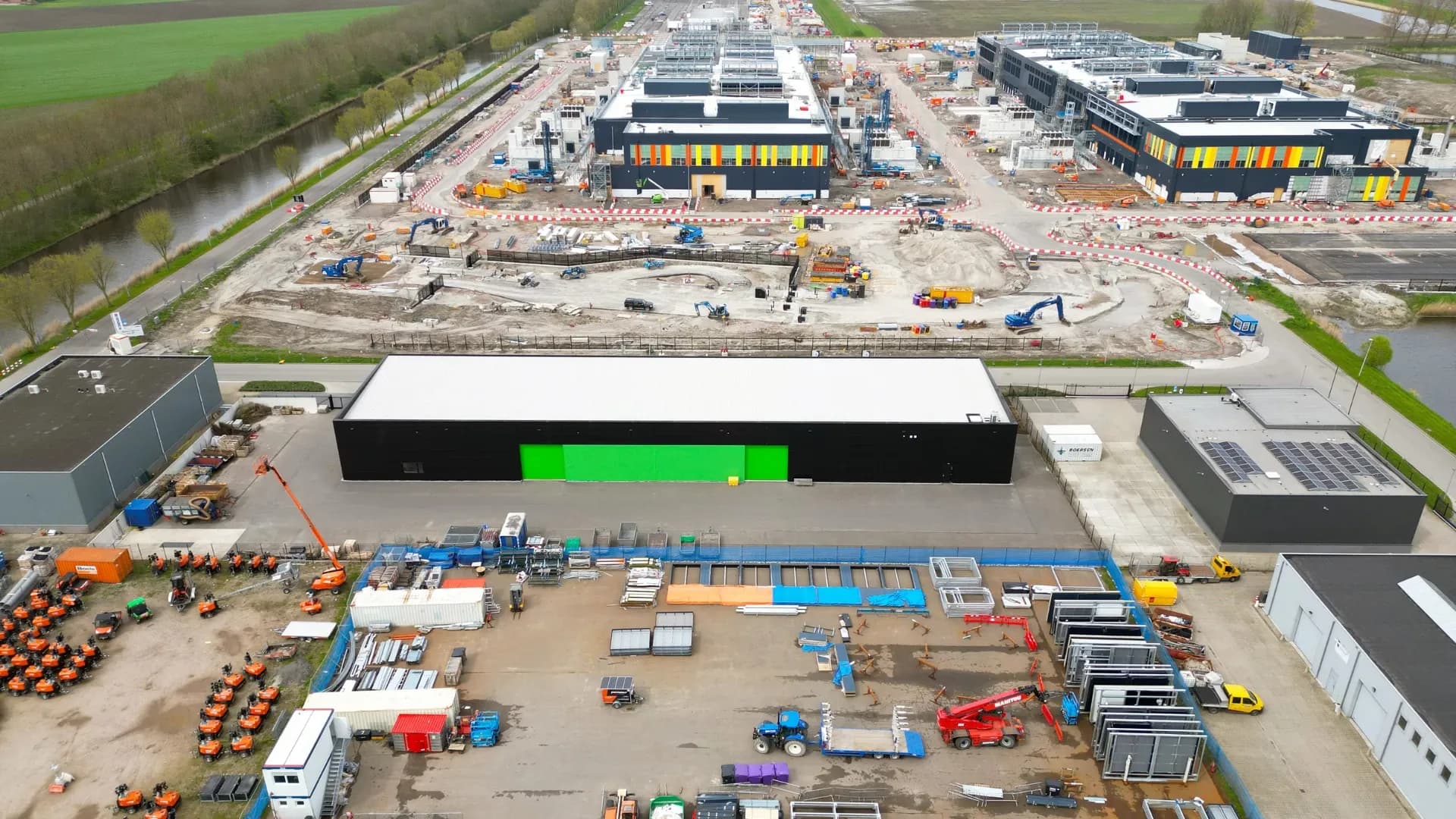

10 companies leading AI high-stakes investment wave


From advanced chips to massive data centres, a new race is underway not just to build smarter systems, but to control the very foundation of the future economy.
Artificial intelligence is no longer just innovation it is infrastructure. Across the globe, tech giants like Microsoft, Amazon, and NVIDIA are pouring billions into the digital backbone that powers the AI revolution. From advanced chips to massive data centres, a new race is underway not just to build smarter systems, but to control the very foundation of the future economy.
NVIDIA: Powering the Global AI Infrastructure Boom Through Data Centre Dominance
NVIDIA has emerged as the backbone of the global AI infrastructure boom, driven by its dominance in high-performance GPUs used across data centres. As artificial intelligence adoption accelerates, tech giants and startups alike rely heavily on NVIDIA’s advanced chips to train and deploy complex AI models. This surge in demand has significantly boosted the company’s data centre revenues, making it a central player in the AI ecosystem. With continuous innovation in hardware and software, NVIDIA is not only enabling AI growth but also shaping the future of computing, positioning itself as a critical force in the digital economy.
Microsoft’s Multi-Billion Dollar AI Bet: Scaling Azure Data Centres Through Its OpenAI Partnership
Microsoft is accelerating its dominance in artificial intelligence through a multi-billion-dollar investment strategy focused on expanding Microsoft Azure data centres. Central to this growth is its deep partnership with OpenAI, enabling advanced AI models to run at scale. By committing tens of billions annually to AI infrastructure, Microsoft is strengthening its cloud capabilities while meeting rising global demand for generative AI services. This strategic alignment not only enhances Azure’s competitiveness but also positions Microsoft at the forefront of the rapidly evolving AI economy, shaping the future of enterprise and consumer technology.
Alphabet Inc.’s $178B AI Infrastructure Bet: How Google Cloud and Custom TPUs Are Shaping the Future of Artificial Intelligence”
Alphabet Inc. is making a bold push into artificial intelligence with a projected $178 billion investment in AI infrastructure by 2026. At the centre of this strategy is Google Cloud, which is rapidly expanding its global data centre footprint to meet rising enterprise demand. A key differentiator lies in Alphabet’s custom-built Tensor Processing Units (TPUs), designed to optimise machine learning workloads with superior efficiency. By tightly integrating hardware and cloud services, Alphabet is positioning itself as a dominant force in next-generation AI, challenging rivals and redefining how scalable AI systems are built and deployed worldwide.
Amazon’s AI Infrastructure Power Play: How Amazon Web Services is Leading Global Cloud and Data Centre Investments
Amazon Web Services (AWS) is aggressively strengthening its position as the backbone of global AI infrastructure through massive investments in cloud computing and data centres. The company is committing tens of billions of dollars to expand high-performance computing capacity, including a $50 billion push into AI and supercomputing infrastructure
Driven by surging demand for generative AI, AWS is rapidly scaling global data centre networks across regions such as the US, India, and Australia. These facilities are designed to support advanced AI workloads using specialised chips and energy-efficient systems.
Meta Platforms’ Strategic Pivot: From Metaverse Ambitions to AI Superclusters and LLM Dominance
Meta Platforms is undergoing a decisive strategic shift, redirecting its focus from metaverse ambitions towards building powerful AI infrastructure. After years of heavy investment in virtual reality, the company is now prioritising AI superclusters, advanced data centres, and large language models (LLMs).
This transition reflects a broader industry trend where scalable AI capabilities are becoming the core driver of innovation and revenue. By reallocating capital expenditure towards AI-driven platforms, Meta aims to strengthen its competitive position against rivals and lead in next-generation digital ecosystems, signalling a new era defined less by virtual worlds and more by intelligent, data-powered systems.
Oracle’s AI Cloud Surge: Powering the Future with Strategic Partnerships and High-Performance Computing
Oracle is rapidly emerging as a key player in the global AI infrastructure race, driven by its expanding cloud capabilities and strategic partnerships. By collaborating with leading AI innovators and enterprises, the company is positioning its cloud platform as a reliable backbone for next-generation applications. Heavy investments in high-performance computing, including advanced GPUs and scalable data centres, are enabling faster model training and deployment.
This momentum reflects Oracle’s broader ambition to compete with established hyperscale’s while capturing growing demand for AI-powered solutions. As businesses accelerate digital transformation, Oracle’s AI cloud surge signals a strong and calculated push into the future of intelligent computing.
Alibaba’s AI Infrastructure Push in Asia: Challenging Amazon Web Services and Google Cloud in the Enterprise Cloud Race
Alibaba Group is rapidly expanding its AI infrastructure across Asia, positioning itself as a strong challenger to Amazon Web Services and Google Cloud in the enterprise cloud race. By investing heavily in advanced data centres, AI chips, and scalable cloud platforms, Alibaba aims to capture growing demand from businesses seeking intelligent, cost-effective solutions. Its deep integration of AI into cloud services is attracting enterprises across sectors. As digital transformation accelerates in Asia, Alibaba’s strategic push could reshape competitive dynamics in the regional and global cloud market.
Tencent’s AI Infrastructure Expansion: Powering the Future of Gaming, Fintech, and Cloud Computing
Tencent is rapidly strengthening its AI infrastructure to support the next generation of digital innovation. By investing heavily in advanced data centres and cloud capabilities, Tencent is enhancing performance across gaming, fintech, and cloud computing services. AI-driven systems are enabling smarter gameplay experiences, faster financial transactions, and more scalable enterprise solutions.
This strategic expansion reflects Tencent’s ambition to stay competitive in the global tech landscape while meeting rising demand for intelligent, high-speed digital ecosystems. As AI adoption accelerates, Tencent is positioning itself as a key driver of future-ready technology infrastructure across multiple industries.
Baidu’s AI Infrastructure Strategy: Advancing Cloud, Chips, and Autonomous Driving Ecosystems
Baidu is rapidly strengthening its position in the global AI race by investing heavily in integrated infrastructure across cloud computing, AI chips, and autonomous driving. Its AI cloud platform supports enterprises with scalable computing power and advanced models, while its in-house Kunlun chips enhance performance and reduce reliance on external suppliers.
At the same time, Baidu’s Apollo platform is accelerating the development of self-driving ecosystems, particularly in China’s smart cities. By aligning these three pillars, Baidu is building a vertically integrated AI ecosystem designed to drive efficiency, innovation, and long-term technological independence in an increasingly competitive landscape.
Vertiv: Powering the Backbone of the Global AI Data Centre Boom
Vertiv is emerging as a critical enabler of the global AI data centre boom, providing essential power, cooling, and infrastructure solutions. As demand for AI workloads surges, hyperscale’s and cloud providers are rapidly expanding data centre capacity, increasing the need for efficient energy and thermal management systems.
Vertiv’s advanced technologies help maintain performance, reduce downtime, and improve energy efficiency in high-density computing environments. With AI driving unprecedented infrastructure investments, Vertiv stands at the core of this transformation, quietly powering the backbone of next-generation digital ecosystems worldwide.