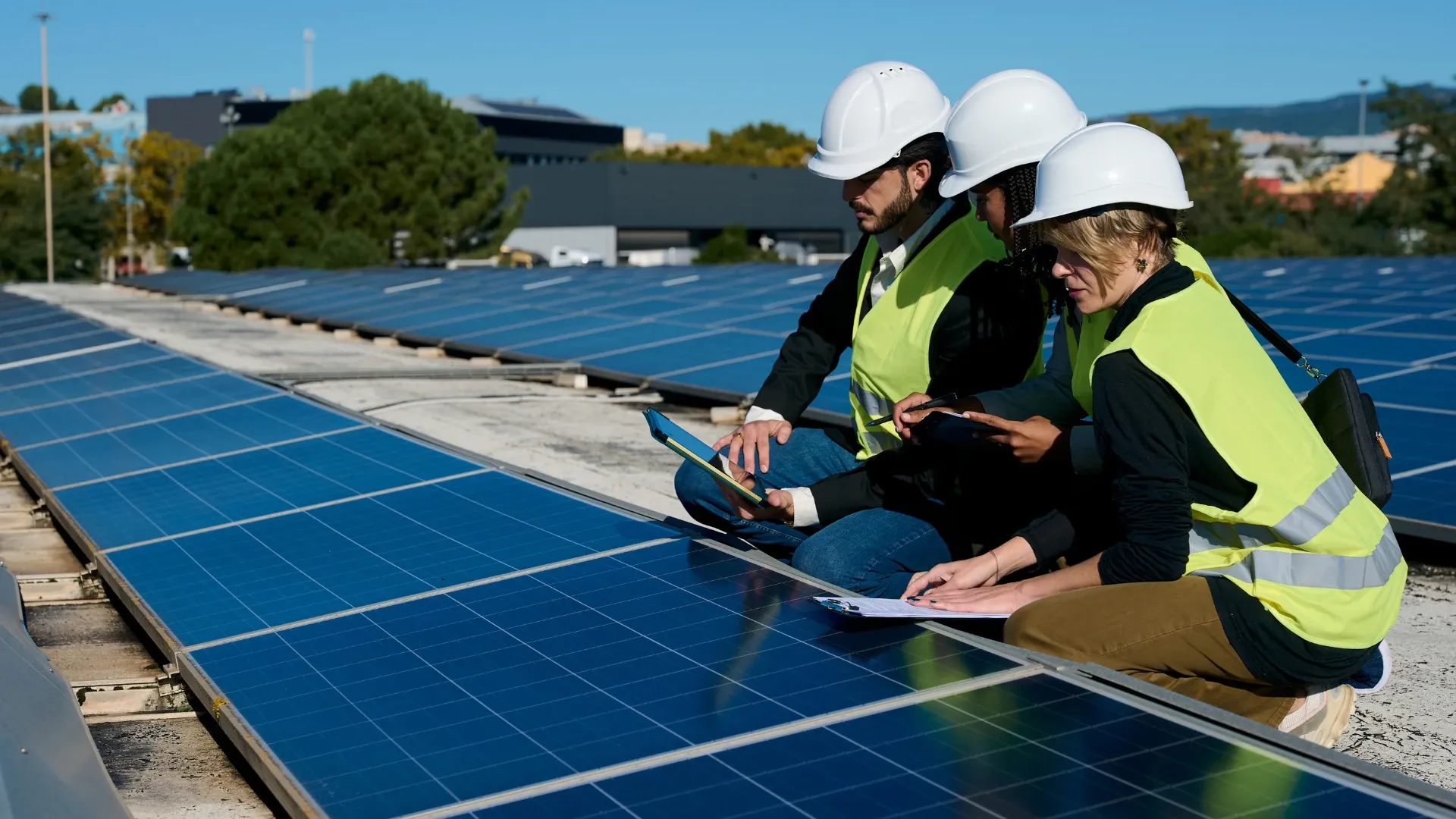

How the Netherlands’ Power Bottleneck Is Sparking an Energy-Tech Boom
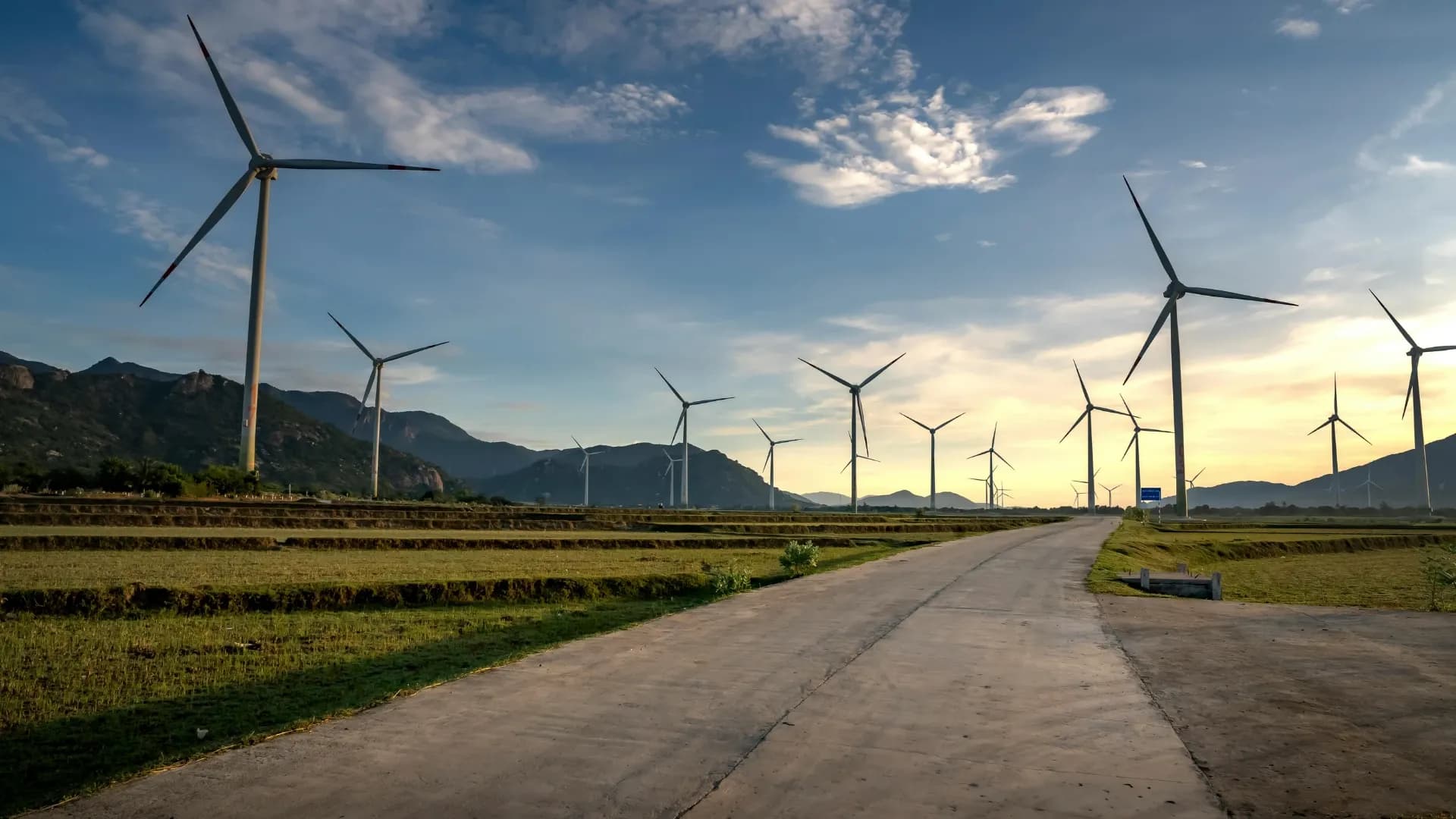

The Dutch government’s own business guidance now recognises that grid congestion is slowing economic growth, housing construction and corporate sustainability plans.
The Netherlands is confronting a paradox at the heart of Europe’s energy transition. The country is adding renewable generation, electrifying transport and industry, expanding data infrastructure and moving away from fossil fuels. Yet the electricity network required to support this transformation is struggling to keep pace.
Grid congestion, once viewed largely as a technical obstacle for network operators, is now becoming a significant business issue. Companies seeking to expand factories, build housing, install charging infrastructure or develop renewable projects can face long waits for new or larger grid connections. In many parts of the country, the constraint is no longer simply the availability of electricity. It is the ability to move that electricity through the network at the moment it is needed. The Dutch government’s own business guidance now recognises that grid congestion is slowing economic growth, housing construction and corporate sustainability plans. Network operators are continuing to invest heavily, but congestion and waiting lists are expected to remain a feature of the market for years.
For the energy-technology sector, however, this disruption is creating something else: a new and rapidly expanding market for technologies that make the existing grid work harder, smarter and more flexibly. The roots of the Dutch congestion crisis lie in the extraordinary speed of electrification. Electricity demand is rising as businesses replace gas-fired processes with electric alternatives, households adopt heat pumps and electric vehicles, and digital infrastructure consumes increasing volumes of power. At the same time, wind and solar generation are adding substantial amounts of electricity to the system. The challenge is that supply and demand do not always occur at the right time or in the right place. A sunny afternoon may produce more local solar power than the network can absorb, while a period of intense industrial or commercial demand can strain transmission capacity elsewhere.
The result is a system in which companies can have viable projects and sufficient demand for electricity but still be unable to obtain the network capacity required to proceed. Enexis, one of the country’s major regional network operators, reported that its waiting list contained more than 10,000 business requests for a new or upgraded electricity connection, even as the company continued to expand the network at a record pace. This has fundamentally changed the commercial environment. Businesses can no longer assume that a conventional grid connection will be available whenever a new facility, charging hub or renewable project is ready to operate. Energy infrastructure is increasingly becoming a strategic consideration at the beginning of an investment decision. That shift is opening the door to an ecosystem of companies offering alternatives to the traditional model of simply connecting, consuming and paying a tariff.
Perhaps the most important market emerging from the congestion crisis is flexibility. A factory that can reduce electricity consumption for several hours, a cold-storage facility that can shift its load, or a fleet of batteries that can delay charging may now possess something of measurable value to the wider electricity system. Dutch grid operators are increasingly using congestion-management arrangements in which customers adjust their electricity consumption or generation when the network is under pressure. Businesses can receive compensation or financial benefits in return for making part of their capacity flexible. The Dutch enterprise agency, RVO, has also continued to promote flexible contracts as a practical option for businesses affected by congestion.
This creates opportunities for software developers, energy-management specialists and technology providers capable of monitoring equipment and automatically responding to grid signals. The market is therefore moving beyond conventional energy efficiency. A business may already be efficient in its total electricity consumption but still create difficulties if it consumes large volumes at precisely the wrong moment. The new challenge is temporal: not merely how much energy is used, but when it is used. That distinction could prove commercially important. Smart controls, artificial intelligence, forecasting software and automated demand-response systems can help businesses reshape their electricity profile without necessarily disrupting production.
Battery energy storage is another area receiving increased attention. Until recently, batteries were often discussed primarily as tools for storing renewable energy or trading electricity between periods of low and high prices. In a congested Dutch market, their role is becoming broader. A battery can help a company limit peak demand, absorb locally generated solar power, postpone electricity consumption and potentially support a flexible operating strategy. Research published in Energy Policy in 2026 examining non-firm grid connections for battery systems in the Netherlands found that flexible or non-guaranteed access arrangements could reduce annual costs by avoiding certain fixed grid charges, although the economics depend heavily on curtailment patterns and market conditions.
The OECD has similarly argued that the rapid integration of large-scale battery storage should be prioritised, while warning that battery deployment and pricing arrangements need to reflect both local and national grid conditions so that storage relieves congestion rather than adding to it. This is an important distinction. The Netherlands is not simply becoming a larger market for batteries. It is becoming a more sophisticated market for software-driven storage capable of responding to network constraints. For battery developers, this could encourage new commercial models built around flexible connections, congestion services and local energy optimisation rather than straightforward electricity arbitrage alone.
Another promising area is the development of energy hubs. The concept is relatively simple but potentially transformative. Businesses located in the same industrial estate or commercial area can coordinate electricity consumption, local generation and storage rather than treating each company as an entirely separate grid user. One firm may require significant electricity in the morning while another has greater flexibility during that period. Solar generation from one site may be stored or consumed elsewhere within a coordinated local system. Shared batteries, smart control platforms and energy-management agreements could allow a group of companies to extract more economic value from a constrained connection.
The Dutch coalition agreement for 2026–2030 explicitly identifies more efficient use of available grid capacity, including tariff incentives, flexible contracts and energy hubs, while proposing a Grid Congestion Crisis Act intended to accelerate the response to the problem. For technology providers, this creates a market that sits between traditional utility infrastructure and corporate energy management. The winners may not simply be companies manufacturing physical equipment. They could also include software platforms capable of coordinating multiple users, forecasting demand and allocating limited capacity in real time.
The congestion crisis is also increasing the value of data. A modern electricity network generates enormous quantities of information, yet much of the economic opportunity lies in converting that information into operational decisions. Where is capacity available? When will a local network experience stress? Which industrial loads can be shifted? When should a battery charge or discharge? These questions are creating demand for digital grid platforms, predictive analytics, smart meters, virtual power plant technology and automated energy-management systems.